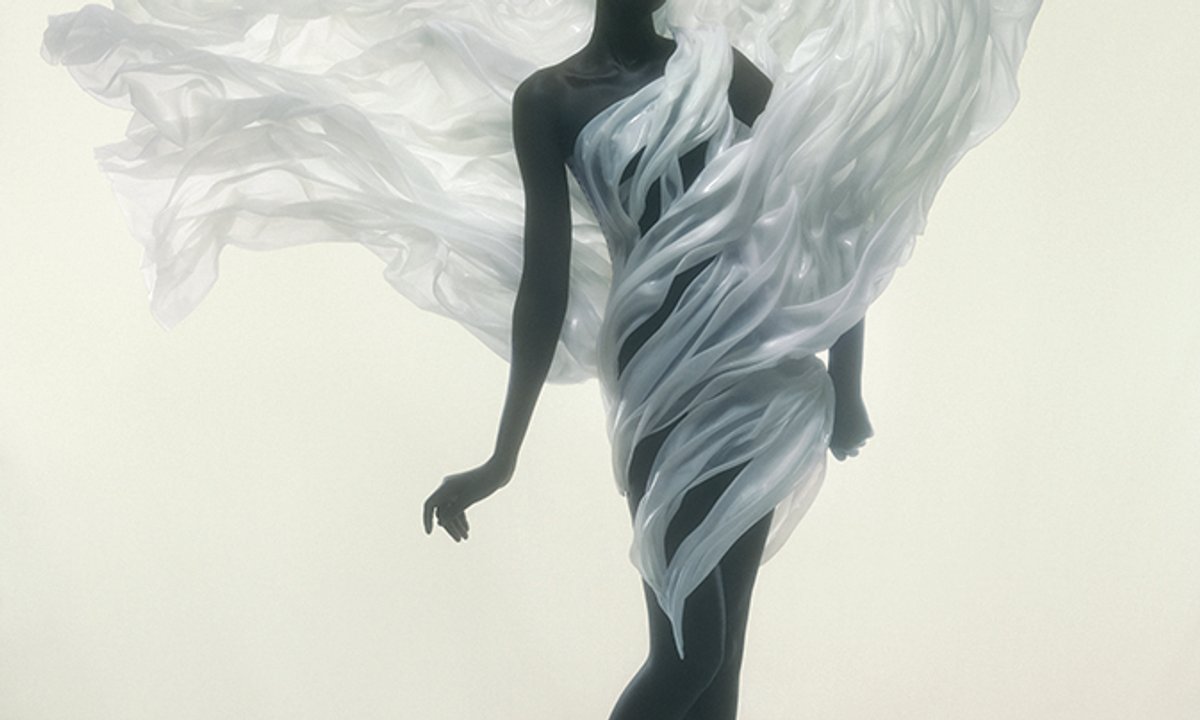
"The show brings together more than 140 haute couture looks by Van Herpen, who founded her fashion house in 2007 and quickly carved out a distinct place in the field through her wholehearted embrace of technology. One of the first designers to adopt 3D printing as a construction technique, she has also developed unconventional materials ranging from upcycled marine debris to fermented fibres. The resulting garments take their cues from fractals and tessellations to transform not only the wearer's body but also the space around it."
"This interdisciplinary sensibility shapes this show. The touring exhibition originated at Paris's Musée des Arts Décoratifs before travelling to Queensland, Singapore and Rotterdam. Displayed alongside Van Herpen's designs are works of contemporary art and design, scientific objects and natural-history specimens. Owing to shipping restrictions, the natural-history materials had to be sourced locally at each venue."
"The Brooklyn version, curated by Matthew Yokobosky, features works from the museum's own encyclopaedic holdings alongside specimens from the American Museum of Natural History, the Staten Island Museum and the Yale Peabody Museum. The former category includes objects from Papua New Guinea and Niue, as well as rare books-such as an 18th-century Dutch translation of Ovid's Metamorphoses that informed Van Herpen's autumn 2022 Meta Morphism collection."
"In many of Van Herpen's designs, nature becomes an active collaborator. A look from the Sympoiesis collection, for instance, was made in concert with the biodesigner Chris Bellamy and the University of Amsterdam using 125 million living bioluminescent algae. Van Herpen describes the piece as both "very challenging" and one o"
The exhibition presents more than 140 haute couture looks by Iris van Herpen, founded in 2007 and known for embracing technology. Her work includes early adoption of 3D printing and development of unconventional materials such as upcycled marine debris and fermented fibres. Garments draw inspiration from fractals and tessellations, transforming both the wearer’s body and the surrounding space. The touring exhibition pairs Van Herpen designs with contemporary art and design, scientific objects, and natural-history specimens. Natural-history materials are sourced locally at each venue due to shipping limits, including holdings from multiple museums for the Brooklyn presentation. Nature also collaborates in projects such as a Sympoiesis look made with bioluminescent algae.
Read at The Art Newspaper - International art news and events
Unable to calculate read time
Collection
[
|
...
]