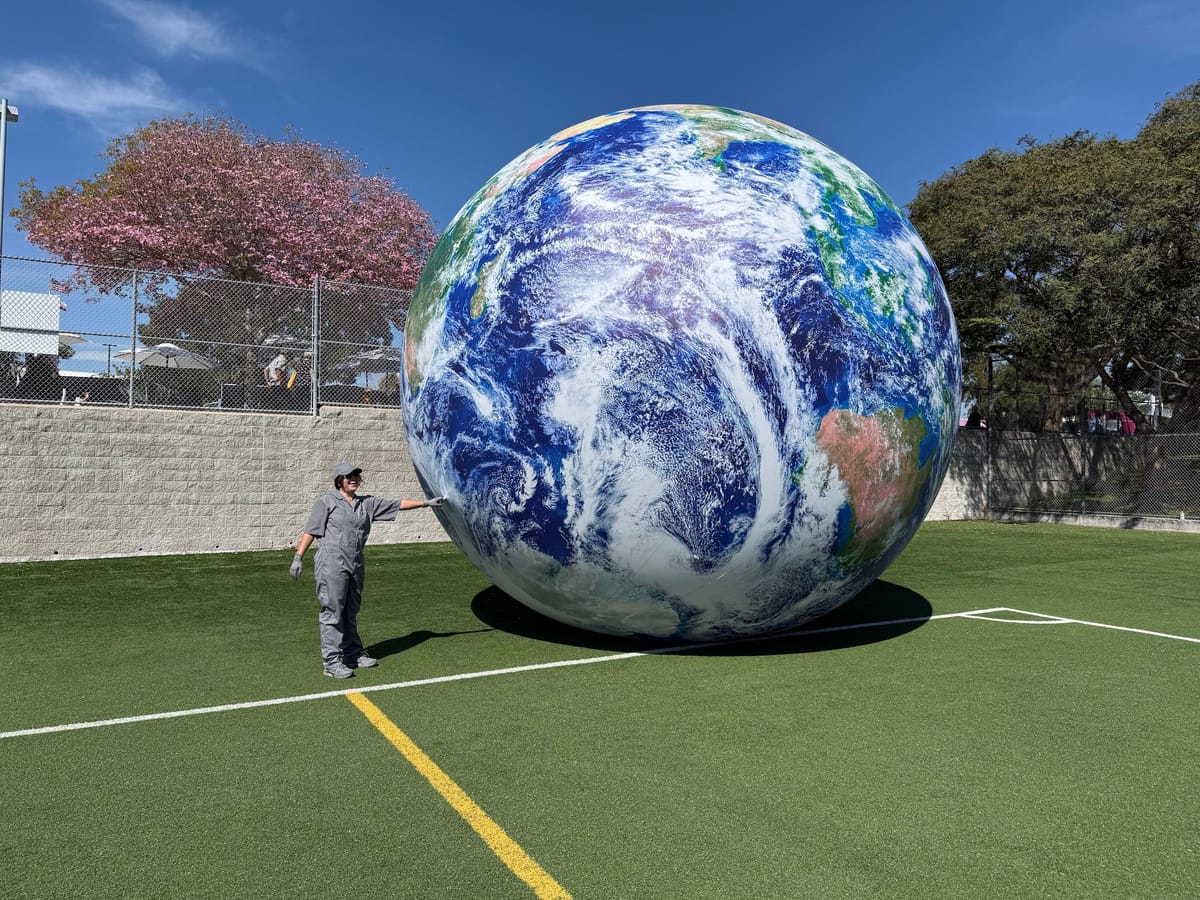
Frieze LA's 2026 opening drew large crowds and strong sales, but the fair simultaneously illustrated broader societal issues including class, labor, and immigration. Outside the tent, Amanda Ross-Ho performed a durational piece rolling an inflatable globe, symbolizing the Sisyphean struggle of artistic creation. Inside, Patrick Martinez's neon signs addressing immigration and deportation were displayed behind glass, their activist messages contained within the commercial space. These works exposed the fundamental tension between the capitalist art ecosystem that sustains artists and the progressive values many in the art world claim to support, raising questions about the art fair's role in addressing social issues.
"Alongside the blue-chip paintings and emerging artists on view, the fair also illustrated - intentionally or not - issues being confronted outside of the tent, such as class, labor, and immigration. It made palpable the tension between the kind of capitalism that the art fair represents and which our art ecosystem rests upon - and indeed which artists need to survive - and the progressive values that many in the art world profess to support."
"Outside the tent, Amanda Ross-Ho rolled a monumental inflatable globe around a soccer field in 'Untitled Orbit (MANUAL MODE)' (2026), her site-specific durational performance happening each day of the fair as part of Frieze Projects. With the sun beaming down on her, she struggled to steady the orb against wind gusts, exemplifying the Sisyphean (or Atlesian, depending on your perspective) task of being an artist, making meaning from the cacophony of life."
"Near the entrance to the tent, glass cases housed neon signs by Patrick Martinez that read, 'Deport ICE,' 'No Body is Illegal,' and 'Then They Came for Me.' Also visible on billboards throughout LA, their placement behind glass here seemed to temper their messages of solidarity - visible, but contained."
Read at Hyperallergic
Unable to calculate read time
Collection
[
|
...
]