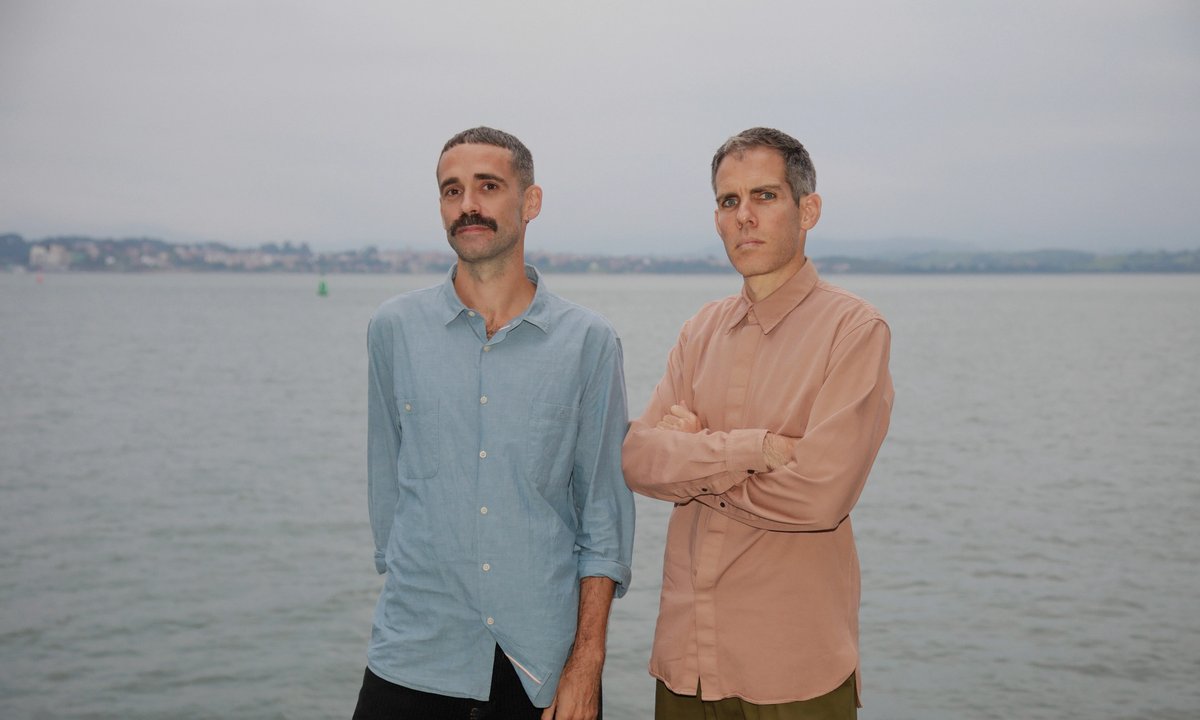
Daniel Fernández Pascual and Alon Schwabe, known as Cooking Sections, create long-term, site-specific projects that use food production and consumption to confront ecological and climate challenges. They began collaborating at Goldsmiths Centre for Research Architecture in 2013 and treat food as a lens on metabolism, ecology and intersectional environmental connections. Their 2020 installation Salmon: A Red Herring at Tate Britain employed a sculptural natural history diorama with sound and light to expose salmon-farming practices. The work documented crowded pens, blindness, deafness, sea lice, cannibalism, pollution from pesticides and fish excrement, and the use of synthetic dye to colour salmon flesh. The project earned a 2021 Turner Prize nomination and attention from multiple Tate galleries.
"Since the duo got together as fellow students at Goldsmiths Centre for Research Architecture in 2013, they have been using the production and consumption of food as the focus for numerous long-term, site-specific projects that address how we should live-and eat in particular-in the face of climate change. As they put it: "Food is both deeply connected to the environment and to ecology but at the same time is also intersectional: every living organism on this planet is invested and preoccupied with processes of metabolism, ingestion and the acquisition of nutrients.""
"I first became aware of Cooking Sections in 2020 when they showed their installation, Salmon: A Red Herring in the Art Now project room at Tate Britain. Salmon took the form of a sculptural natural history diorama using sound and light to expose the grim realities of how salmon are farmed. While sculptures of animals including a seal, a salmon, a shrimp and a flamingo were illuminated in shades ranging from pale pink to deep blood red, a voiceover related how salmon are crammed into pens for up to two years, with many ending up blind, deaf, riddled with sea lice and often driven to eat each other."
"Other depressing details included the destruction of marine life from the polluting pesticides and fish excrement leaching out from the UK's 76 fish farms, as well as the revelation that, in the absence of a natural diet of baby lobster or krill, all farmed salmon have to be fed synthetic dye pellets to colour their grey flesh a more commercially acceptable shade of pink."
Read at The Art Newspaper - International art news and events
Unable to calculate read time
Collection
[
|
...
]