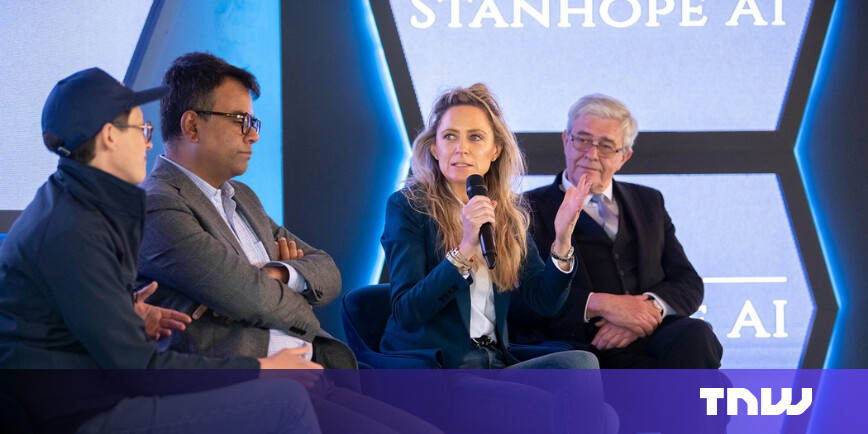
"London-based deep tech startup Stanhope AI has closed a €6.7 million ($8 million) Seed funding round to advance what it calls a new class of adaptive artificial intelligence designed to power autonomous systems in the physical world. The round was led by Frontline Ventures, with participation from Paladin Capital Group, Auxxo Female Catalyst Fund, UCL Technology Fund, and MMC Ventures. The company says its approach moves beyond the pattern-matching strengths of large language models, aiming instead for systems that can perceive, reason, and act with a degree of context awareness in uncertain environments."
"Stanhope is developing what it terms a "Real World Model", building on principles from neuroscience and computational theory to allow machines to learn and adapt on the fly. " We're moving from language-based AI to intelligence that possesses the ability to act to understand its world - a system with a fundamental agency," says Professor Rosalyn Moran, CEO and co-founder of Stanhope AI. Her team includes theoretical neurobiologist Professor Karl Friston, whose work on the Free Energy Principle informs the startup's methodology."
"Rather than relying on cloud-centric deep learning, Stanhope's models are designed to run efficiently on edge devices with limited data and power. That fits a broader industry shift toward on-device AI, where systems must operate reliably in dynamic settings such as autonomous vehicles, robots, and defence hardware. The firm says its technology is already being tested on drones and other autonomous platforms with international partners. Stanhope's funding comes amid sustained investor interest in AI and autonomy startups across Europe."
Stanhope AI, a London-based deep tech startup, closed a €6.7 million Seed round led by Frontline Ventures with participation from Paladin Capital Group, Auxxo Female Catalyst Fund, UCL Technology Fund, and MMC Ventures. The company is developing a "Real World Model" that draws on neuroscience and computational theory to enable machines to learn, adapt, perceive, reason and act with contextual awareness in uncertain physical environments. The team includes Professor Rosalyn Moran and Professor Karl Friston, whose Free Energy Principle informs the methodology. Models are optimized to run on edge devices with limited data and power and are being tested on drones and other autonomous platforms, reflecting strong investor interest in on-device AI and autonomy across Europe.
Read at TNW | Startups-Technology
Unable to calculate read time
Collection
[
|
...
]