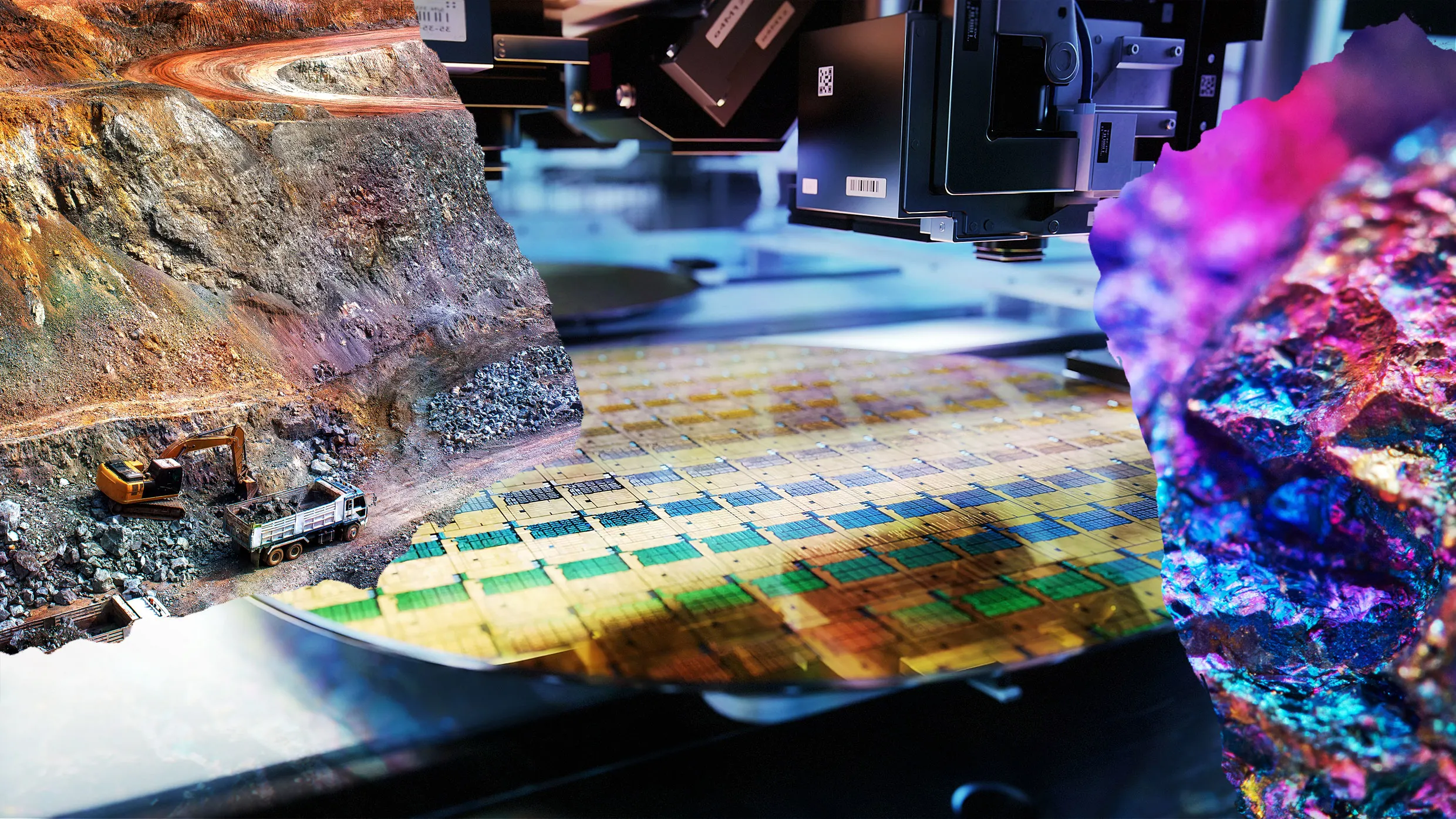
Generative artificial intelligence increases productivity but remains technologically immature, with large language models advancing rapidly and uncertain effects on work and daily life. AI's development drives substantial demand for materials and rare minerals. Historical examples such as cars and smartphones show how mass adoption changes behavior, creates new infrastructures, and generates demand for specialized materials often containing critical minerals. Dependence on unevenly distributed minerals grants leverage to producing nations, alters geopolitical relations, and motivates searches for new sources. Technological adoption supports expansion of the mining industry. Mass production innovations like Ford's assembly line enabled widespread car ownership and suburban growth.
"Generative artificial intelligence has become widely accepted as a tool that increases productivity. Yet the technology is far from mature. Large language models advance rapidly from one generation to the next, and experts can only speculate how AI will affect the workforce and people's daily lives. As a materials scientist, I am interested in how materials and the technologies that derive from them affect society. AI is one example of a technology driving global change-particularly through its demand for materials and rare minerals."
"Then, in 1913, Henry Ford transformed the industry by inventing the assembly line. Now, a middle class family could afford a car: Mass production cut the price of the Model T from US$850 in 1908 to $360 in 1916. While the Great Depression dampened the broad adoption of the car, sales began to increase again after the end of World War II."
Read at Fast Company
Unable to calculate read time
Collection
[
|
...
]