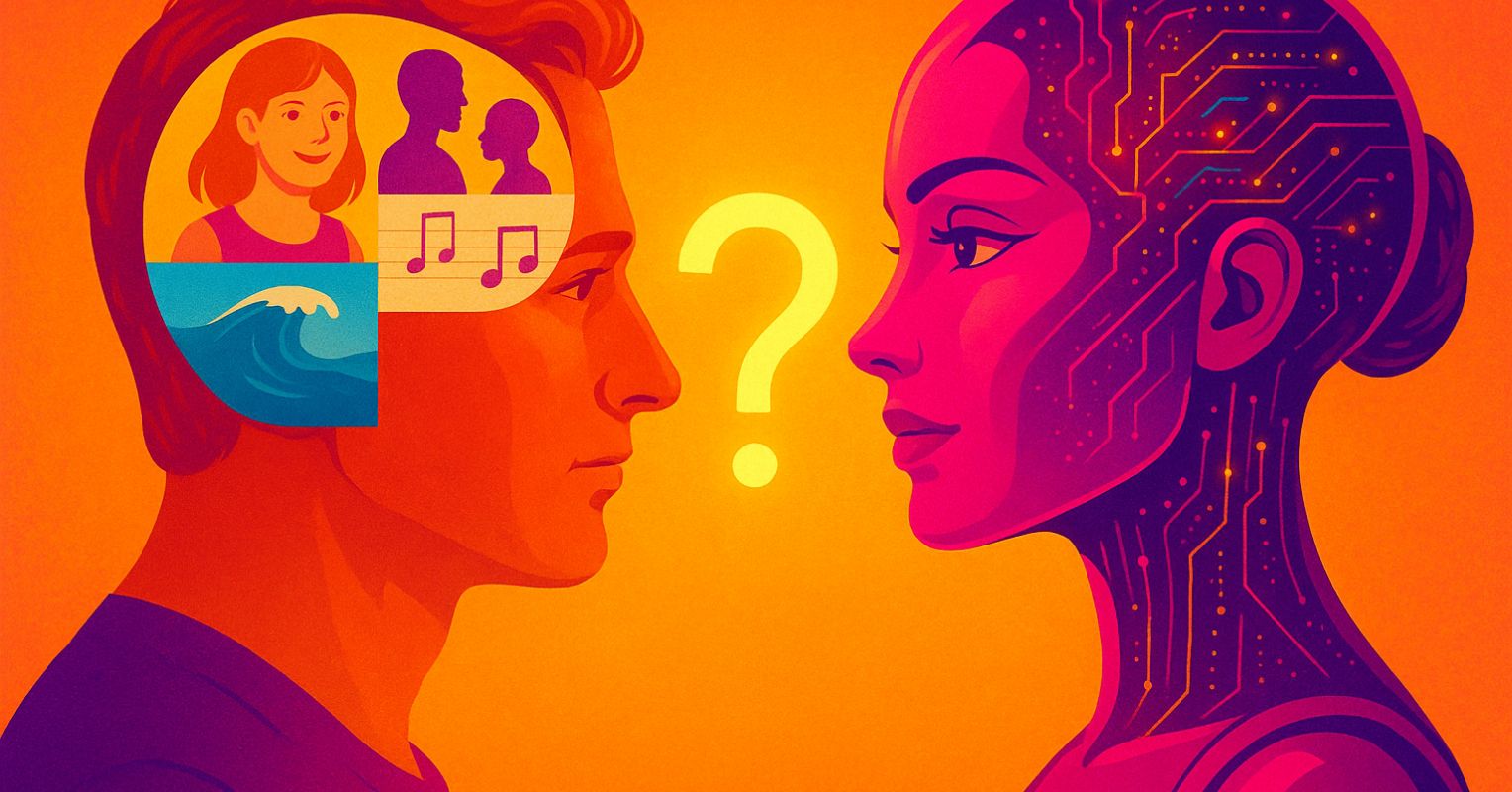
"For years, the question "Could AI be conscious?" seemed ludicrous to me. Now, with large language models (LLMs) writing love notes, sex stories, and therapy-style responses on command, the question is increasingly creeping into cultural discourse. In fact, in one survey, approximately 19 percent of responders thought that currently existing AI could be sentient, and about 38 percent felt that it could, someday, be a possibility (Anthis et al., 2025)."
"Some philosophers argue that consciousness in current LLMs is highly unlikely, yet others insist we should take seriously the possibility that future systems could cross that line. In fact, philosopher Eric Schwitzgebel, Ph.D., commented in a lecture I attended that we would be wise to stop advancing AI until we sort out this question because the implications of being wrong (perceiving consciousness where it's not, or ignoring consciousness where it exists) could be catastrophic."
"Opinions are starting to diverge: Scientists mostly deny current AI consciousness, while more heavy users are open to believing their favorite model might have some kind of inner life. Neuroscientists and philosophers propose competing theories, and they do not even agree on what would count as decisive evidence of consciousness. When consciousness itself is difficult to define, every related question becomes shaky: What are legitimate feelings? What counts as self-awareness? And crucially for intimacy, what does it mean to say "this entity cares about me"?"
No agreed definition of consciousness leaves assessments of human, animal, and machine consciousness uncertain. Large language models now produce emotionally resonant outputs, prompting some people to attribute inner life to AI. Survey data show nontrivial numbers who already consider current or future AI potentially sentient. Philosophers, neuroscientists, and scientists disagree on theories and decisive evidence, and heavy users are more willing to ascribe consciousness than mainstream scientists. Questions about feelings, self-awareness, and caring remain unresolved. Some caution against advancing AI until clarity exists, and increasing public perception of AI consciousness could shift outcomes toward legal adjudication.
Read at Psychology Today
Unable to calculate read time
Collection
[
|
...
]