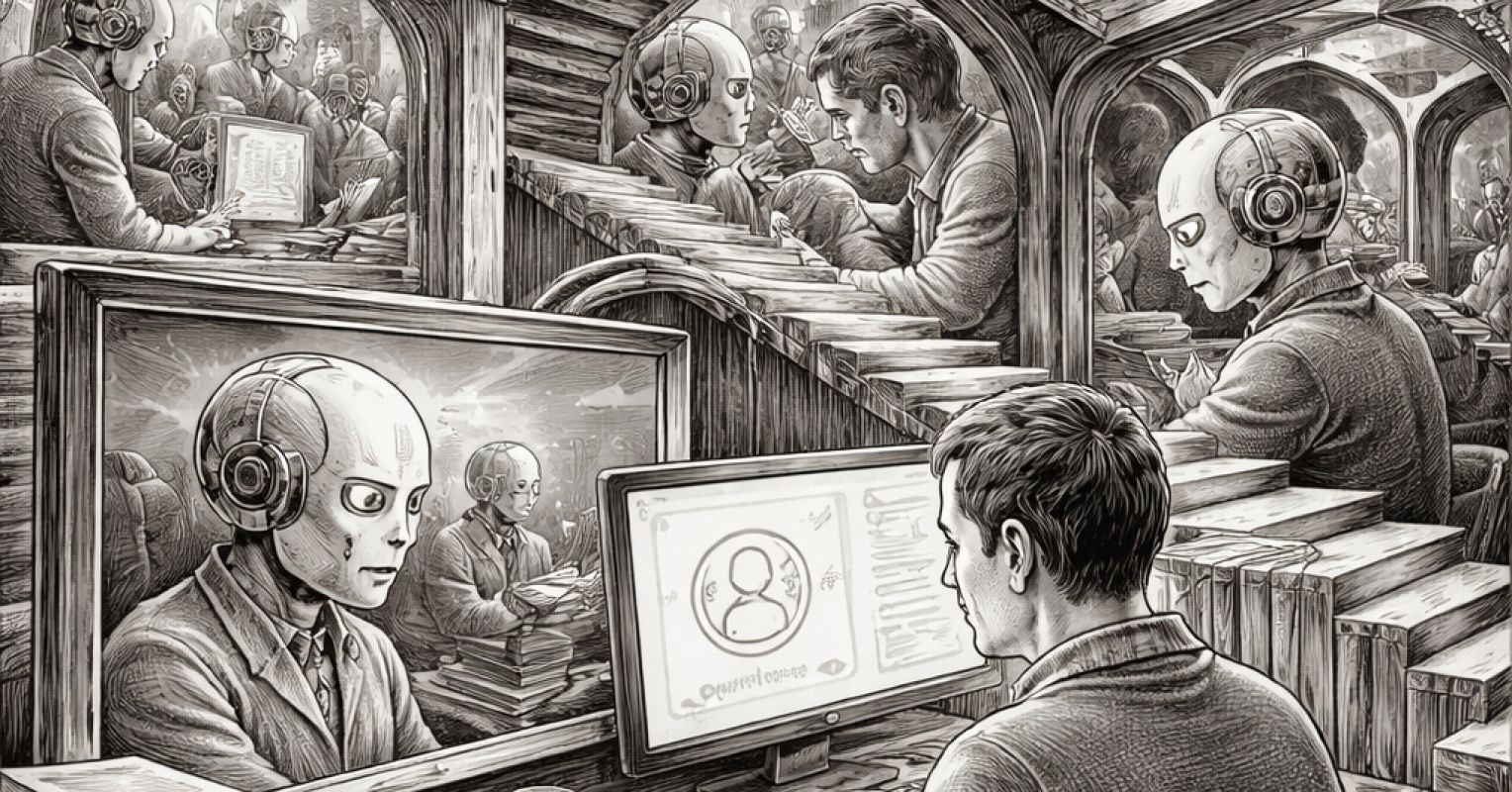
"Artificial intelligence is increasingly praised for making us sharper, faster, and more productive. From drafting text to solving complex reasoning problems, tools like ChatGPT promise cognitive augmentation at scale. Yet a growing body of psychological research suggests that something subtler, and potentially more consequential, is happening alongside these gains. AI may be improving what we do while quietly distorting how well we understand our own competence."
"Each question appeared alongside a ChatGPT window, and participants were required to consult the AI at least once per item, either to request a solution or an explanation. After completing the task, they estimated how many questions they had answered correctly and rated their confidence for each response. Objectively, the AI helped. Participants scored about three points higher on average than a historical comparison group whose members completed the same test without AI support."
Two experiments used LSAT logical reasoning problems with a ChatGPT window available for every item. Participants consulted the AI at least once per question, then estimated their number of correct answers and rated confidence for each response. Objective performance improved: average scores rose by about three points compared with a historical comparison group that completed the test without AI. Subjective self-assessment worsened: participants believed they had answered roughly 17 of 20 items correctly while actual averages were closer to 13. Generative AI thus boosted task accuracy while inflating perceived competence and undermining metacognitive precision.
Read at Psychology Today
Unable to calculate read time
Collection
[
|
...
]