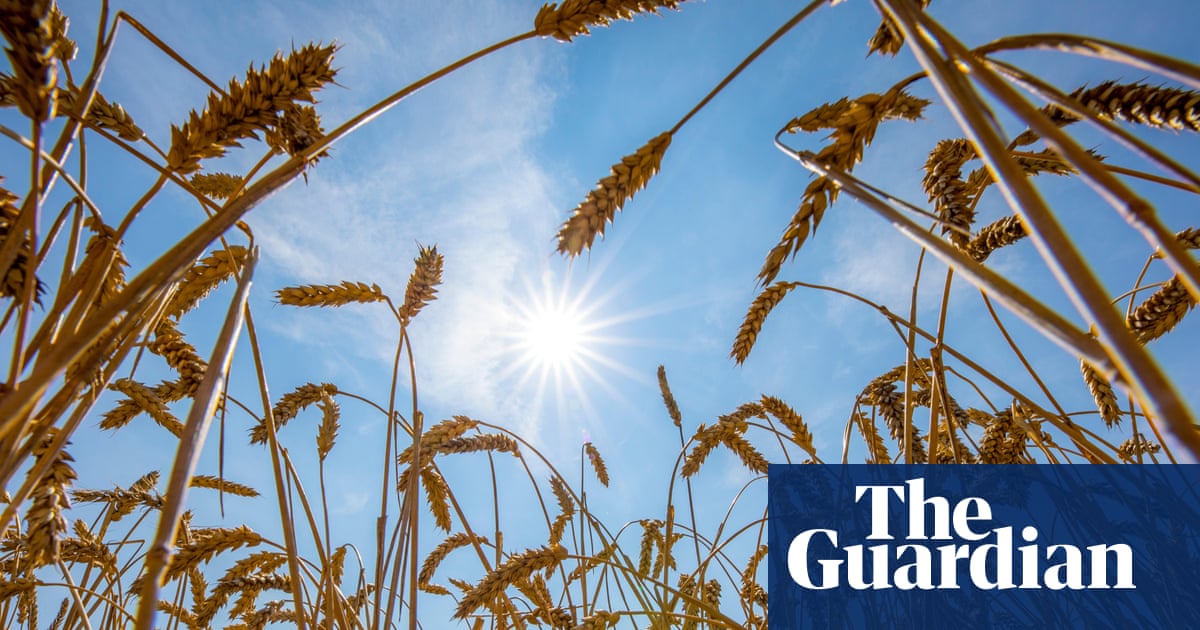
"Farmers could find it impossible to work safely for as many as 250 days of the year in already hot regions including much of India and south Asia, tropical sub-Saharan Africa and swathes of Central and South America."
"Extreme heat reduces yields from dairy cows and cuts the fat and protein content of milk. Pigs and chickens are unable to sweat and, as temperatures rise, face digestive tract breakdowns, organ failure and cardiovascular shock."
"Yields begin to decline at temperatures above 30C for most agricultural crops, with damage including weakened cell walls and the production of toxins. The yields of maize in some areas have declined by about 10%."
"Much more could be done to warn farmers, as heatwaves are often predictable. Weather forecasts and mobile phone communications could be used to alert farmers when extreme weather is expected."
Extreme heat is severely impacting global food systems, with farmers unable to work, livestock suffering from heat stress, and crop yields declining. The UN warns that heatwaves are pushing food supply to the brink, particularly in hot regions like India, sub-Saharan Africa, and parts of Central and South America. Livestock mortality rates are rising, and crop yields are decreasing significantly due to high temperatures. Ocean heatwaves are also affecting fish populations. Improved warning systems for farmers could mitigate some of these impacts.
Read at www.theguardian.com
Unable to calculate read time
Collection
[
|
...
]