"Rice is a staple crop for more than half of the world's population, and its sustainable production is vital to ensure global food security. However, rice is susceptible to several devastating fungal diseases, including blast disease caused by Magnaporthe oryzae and sheath blight by Rhizoctonia solani."
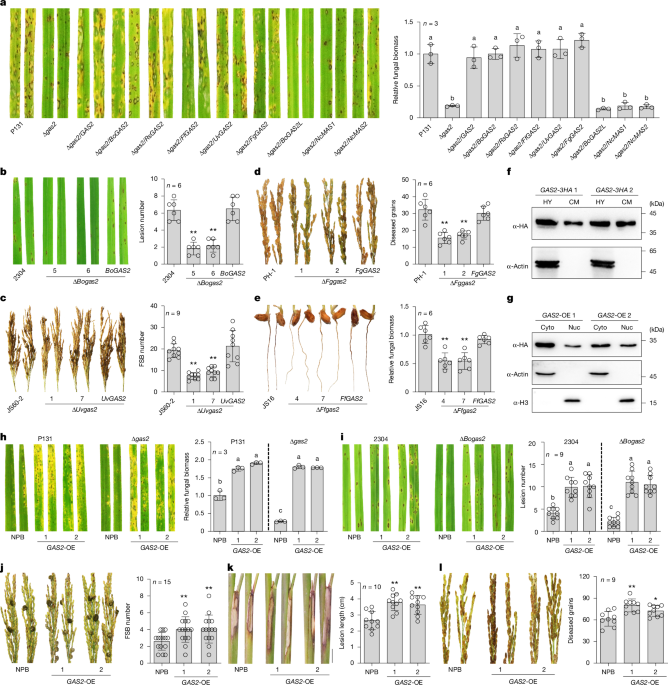
"Our findings show that diverse rice fungal pathogens have convergently evolved an effector-like protein, Gas2, which interacts with SnRK11A to prevent its ubiquitination-mediated degradation and promotes its nuclear translocation."
"Notably, rice lines with disrupted SnRK11A are resistant to several fungal diseases without compromising growth and yield in the field under normal farming conditions."
Rice is essential for global food security but is vulnerable to various fungal diseases. The study identifies SnRK11A as a key factor in susceptibility to these pathogens. The effector-like protein Gas2 interacts with SnRK11A, preventing its degradation and promoting its nuclear translocation. Increased SnRK11A levels during fungal infection inhibit SnRK11, which is responsible for resistance. Rice lines lacking SnRK11A show resistance to multiple fungal diseases while maintaining normal growth and yield, highlighting a potential strategy for enhancing disease resistance in rice cultivation.
Read at www.nature.com
Unable to calculate read time
Collection
[
|
...
]