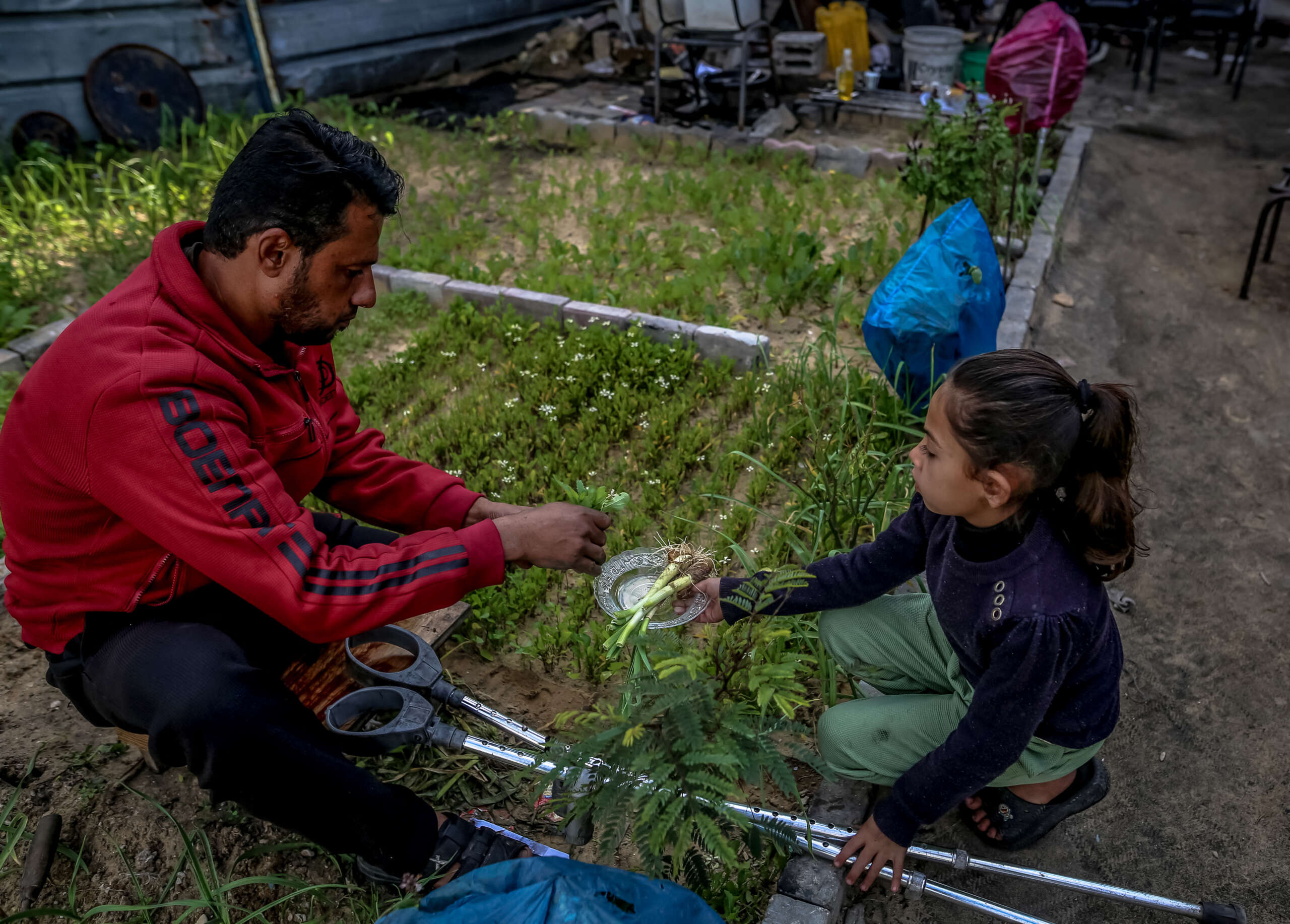
"Before the war, our home garden was more than just a patch of green. It was a refuge I retreated to whenever the world felt too heavy. Bougainvillea climbed the walls, and flowers in every color filled the corners - tended by my mother as if they were her own children."
"When the war began, our priorities shifted entirely. There was no longer space for beauty. Survival became the only goal. The flowers withered, and the once-vibrant garden turned into a silent gray space."
"By late 2025 and into early 2026, satellite analyses from the Food and Agriculture Organization and the UN Satellite Center show that up to 98 percent of fruit-bearing tree cropland - including olives and pomegranates - has been destroyed."
"Only a tiny fraction of Gaza's agricultural land - somewhere between 1.5 percent and 4 percent - remains both accessible and undamaged, mostly in limited southern areas, leaving the north largely off-limits due to restrictions."
Mohammed Ansir, a Palestinian, survived a leg injury and now tends to his garden in Gaza City. Before the war, the garden was a vibrant refuge filled with flowers and a pomegranate tree. However, the war shifted priorities to survival, leading to the destruction of much of Gaza's agricultural land. Satellite analyses indicate that up to 98 percent of fruit-bearing cropland has been destroyed, with only a small fraction of agricultural land remaining accessible and undamaged, primarily in the south.
Read at Truthout
Unable to calculate read time
Collection
[
|
...
]