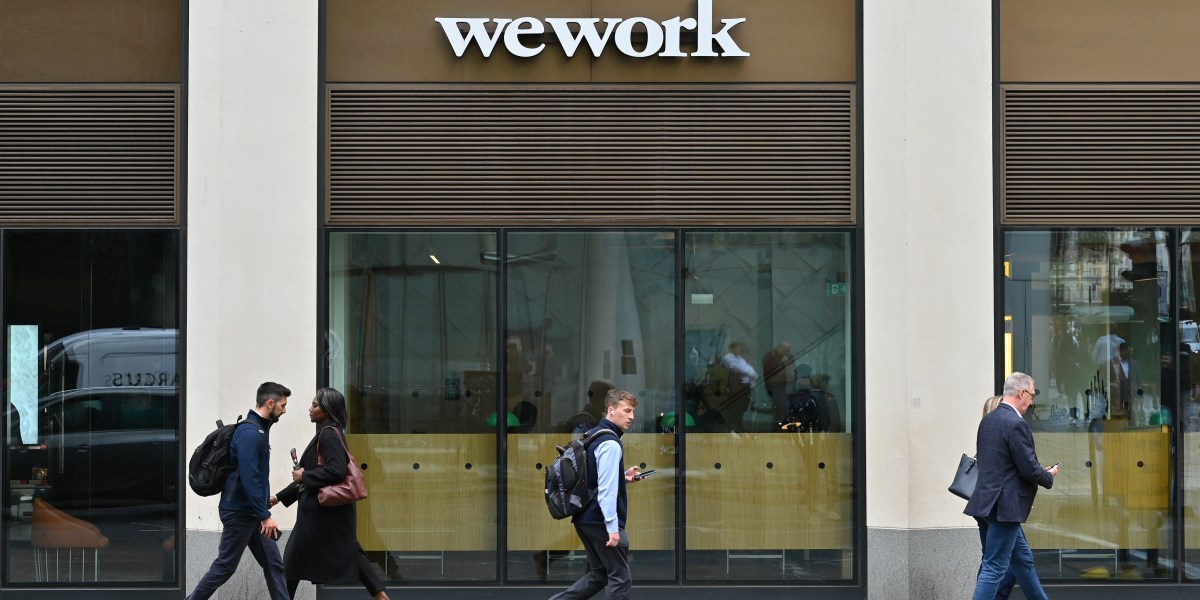
It turns out the return-to-office movement isn't just about productivity, collaboration or company culture. For a significant number of companies, it is about leases - those binding, long-term commitments to office spaces that are now sitting underused while hybrid work proves its staying power. A recent Resume.org survey of 900 business leaders peels back the polished justifications for workplace mandates and reveals the financial tether that's quietly shaping policy: the office lease.
"This is a moment where corporate America is backsliding on women," Sheryl Sandberg, the former Facebook executive who founded Lean In, tells Axios. Despite years of corporate pledges to advance women, 54% of HR professionals surveyed by the group now say women's career advancement is a priority at their organization - and that falls to 46% for women of color. That marks a sharp drop from 2017, when gender equity surged on to corporate agendas after Donald Trump's election and 88% of companies told Lean In it was a high priority.
"We're no longer just designing workplaces, we're actually designing experiences," said Yuen, at the Fortune Brainstorm Design forum in Macau on Dec. 2. "You've really got to make the campus or the workplace more than work, and that's the fun part of it."
Nearly six years after the coronavirus pandemic began, Meta-owned Instagram is bringing its employees back into the office for a full five days a week. Instagram head Adam Mosseri announced the news to staff in a Monday memo that was then published by journalist Alex Heath's Sources newsletter - Meta spokesperson Tracy Clayton confirmed its veracity to SFGATE. The five-day order, just for employees under Mosseri, goes into effect Feb. 2, giving employees a couple of more months with their current three-day mandate.
Unnecessary meetings and endless PowerPoints need to be replaced with clear objectives and more prototypes, he wrote. One-on-one meetings should also be biweekly by default, he added, and employees should feel free to decline meetings that fall within their "focus blocks." "Every six months, we'll cancel all recurring meetings and only re-add the ones that are absolutely necessary," he wrote.
Late last month, reports surfaced that Microsoft Teams would add a new feature in December of this year, which would pinpoint the location of any employee using the company's Wi-Fi. For example, if your Chicago-based manager has the expectation that you work in the New York office four days a week, but you only make it to the office two days a week, your boss will soon know.
Across KPMG's offices nationwide, employees say they prefer round tables. So with that feedback and more in mind, the Big Four consulting firm designed and opened a new, 450,000-square-foot office at Two Manhattan West in Manhattan's Hudson Yards neighborhood. The firm hopes the gleaming new headquarters will not only reassert its presence in New York City but also tempt its more than 5,000 employees in New York back to the office more often.
It may sound strange, but it's true, and a harbinger of a new détente between workers and employers. Five years after the pandemic, denizens of the white collar sector have been slowly but definitively strong-armed into returning to the office. An increasing number of companies have tightened their flexible work policies, which have idled commercial real estate across the country, and driven a number of business districts to the brink of desolation.
Since announcing the policy, Ford has sent some employees emails telling them that they are not badging in enough and warning that they could face termination if they do not improve their attendance, three current and former Ford employees told Business Insider. Two said they had received these emails despite complying with updated office attendance policies and having previous work-from-home arrangements signed off by their managers.
In 2020, Lisa was earning roughly $110,000 a year in a remote, corporate manufacturing role when she received an offer for a hybrid job that paid about $150,000. After talking it over with her husband, she landed on an unconventional solution: Take the new job - and keep the old one, too. For 18 months, Lisa secretly worked two full-time roles, earning roughly $250,000 in 2021 and averaging 40 to 50 hours a week across both jobs.