Yoga
fromYoga Journal
1 day ago5 Yoga Practices on YouTube to Help You Find Your Calm
Yoga provides a safe space to process emotions and find calm through various practices tailored to individual needs and preferences.
Instead of guessing where your body is in space, you receive immediate physical feedback when you rest or press part of your body against the support. Practicing poses against a wall can reduce the intensity of a pose. But it can also increase the challenge. A wall isn't just a 'make the pose easier' prop.
Though there are as many asanas as there are species of living creatures in the universe, the old hatha yoga manuals report there are just 32 that are beneficial for humans, and Chair Pose is included among them. Chair is essentially a half-squat, or a half-stand: The feet are flat on the floor, the shins are angled forward about 45 degrees over the feet, the thighs are almost parallel to the floor, and the torso stretches up and back with the arms reaching upward.
Any pose is a laboratory, an opportunity to access the deepest streams of life flowing within us. For us to penetrate a pose this deeply, we must know the right questions to ask of it and the right experiments to conduct. But knowledge alone will not take us to the core of an asana. We must also approach it with reverence and absorption.
At the heart of yoga philosophy is the belief that stillness is not simply the absence of movement, but a profound engagement with our inner landscape. Practices such as asana (postures), pranayama (breath control), and meditation serve as gateways to this stillness, allowing us to cultivate awareness amidst chaos. Through these disciplines, we learn to quiet the mind's incessant chatter and tune into our true essence.
If the goal to to offer a truly transformative practice-and a class students want to return to again and again-a welcoming environment for all should be the goal. But what, exactly, does that include? In short, the vulnerability that comes with yoga requires a container that supports it. Paying attention to the accessibility, vibe, and clarity in and around any class is a strong place to start.
There is a quality of awareness that develops as we move to a deeper level in our practice of yoga. At first, our bodies seem dense and impervious, our muscles thick from exertion. Slowly we begin to differentiate and reclaim the various parts of our body. We learn the placement of the feet, the work of the legs, the lift of the rib cage, the lengthening of the spine, the carriage of the arms and head.
Physiologically speaking, feeling hot-headed is your body's regulatory answer to anger. Contemporary science has shown that your heart rate increases, your blood pressure rises, and your core body temperature climbs as the emotion activates the sympathetic nervous system, which is the body's fight-or-flight response.
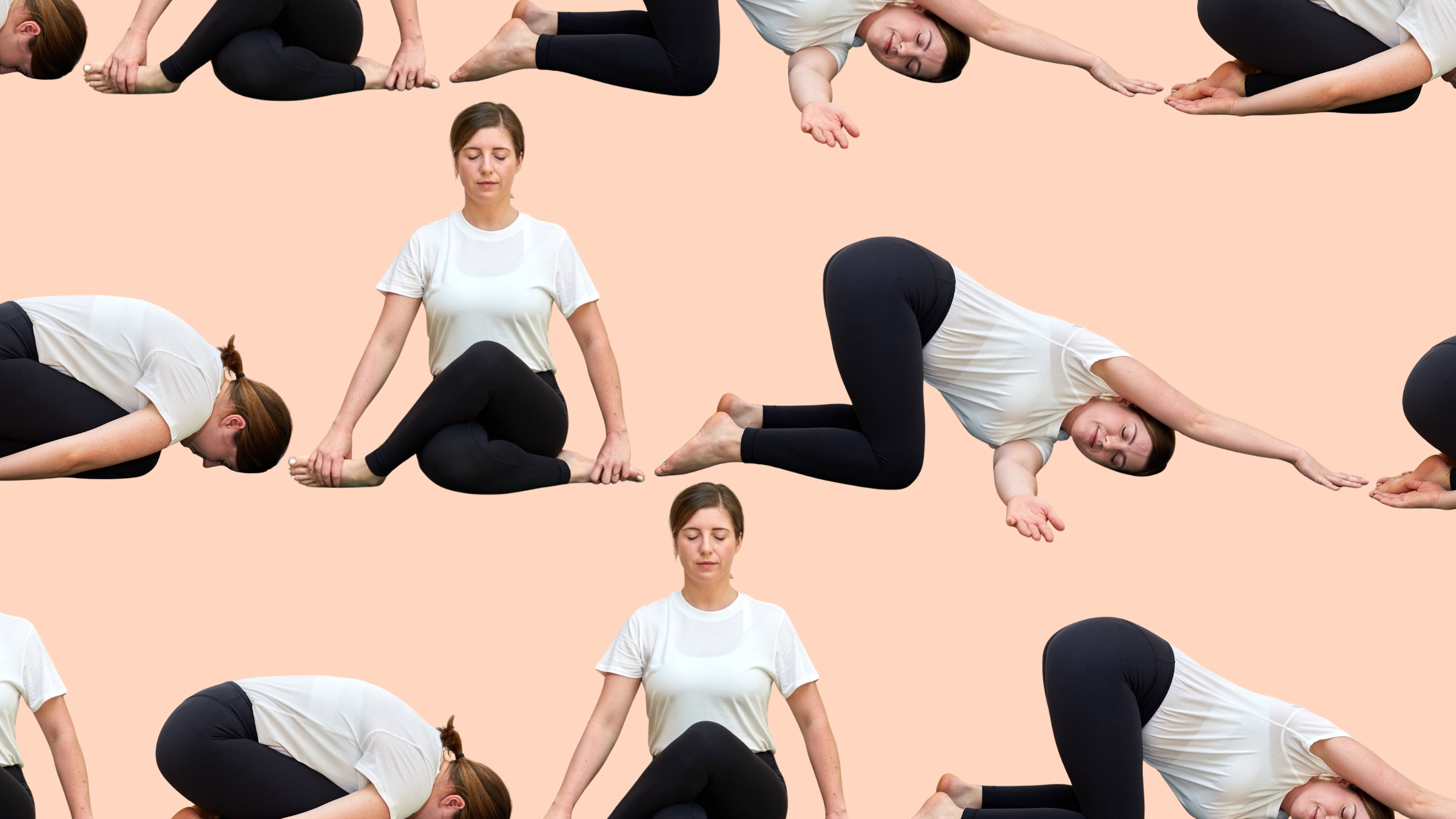
Whenever this spiral occurs, I've found that certain yoga poses for anxiety—or at least, poses that ease my anxiety—help stop the madness. And they do so in very little time. Dropping into my favorite shapes quickly slows my mental chatter, slowing my sense of urgency to far more reasonable and manageable levels.
"I can't do yoga because I'm not flexible." These might be the most damaging words in the wellness world. And yet, so many people say them-and believe them. But here's the truth: a gentle yoga for beginners practice has absolutely nothing to do with flexibility. In fact, when you approach yoga from the perspective of breath and muscle activation-as we do in the AYAMA™ method-you begin to understand that real yoga isn't about stretching at all.
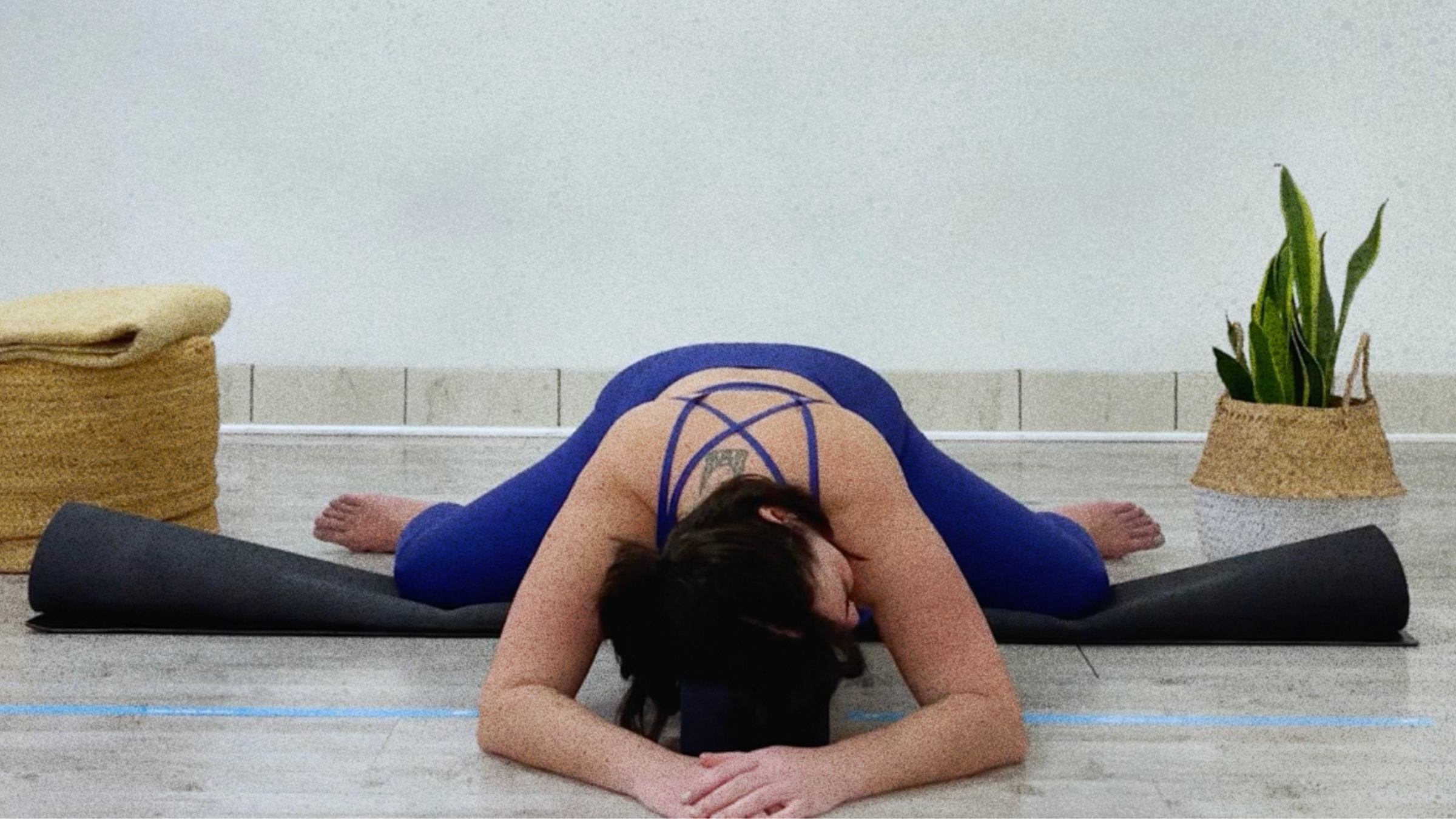
This calming bedtime yoga practice is all about getting comfortable and allowing your system to downshift. With supportive shapes and plenty of ease, you'll set yourself up for seriously nourishing rest. Let yourself ease into this practice. Move slower than you'd like, allow yourself to luxuriate in the movement, and think of releasing any stress or tension you may be holding onto from your day. Then let the poses do the rest.
AI tools like ChatGPT have become pretty much inescapable. The generative chatbots are designed for mental outsourcing, helping humans research, learn, ideate, and even create. As these tools gain in popularity, there's a question of discernment that seems to be haunting us all: what is AI useful for, and what undertakings should be reserved for humans alone? Having ChatGPT help craft an itinerary for an upcoming vacation, for example, is helpful; having it finish a song you've been writing is...less so.
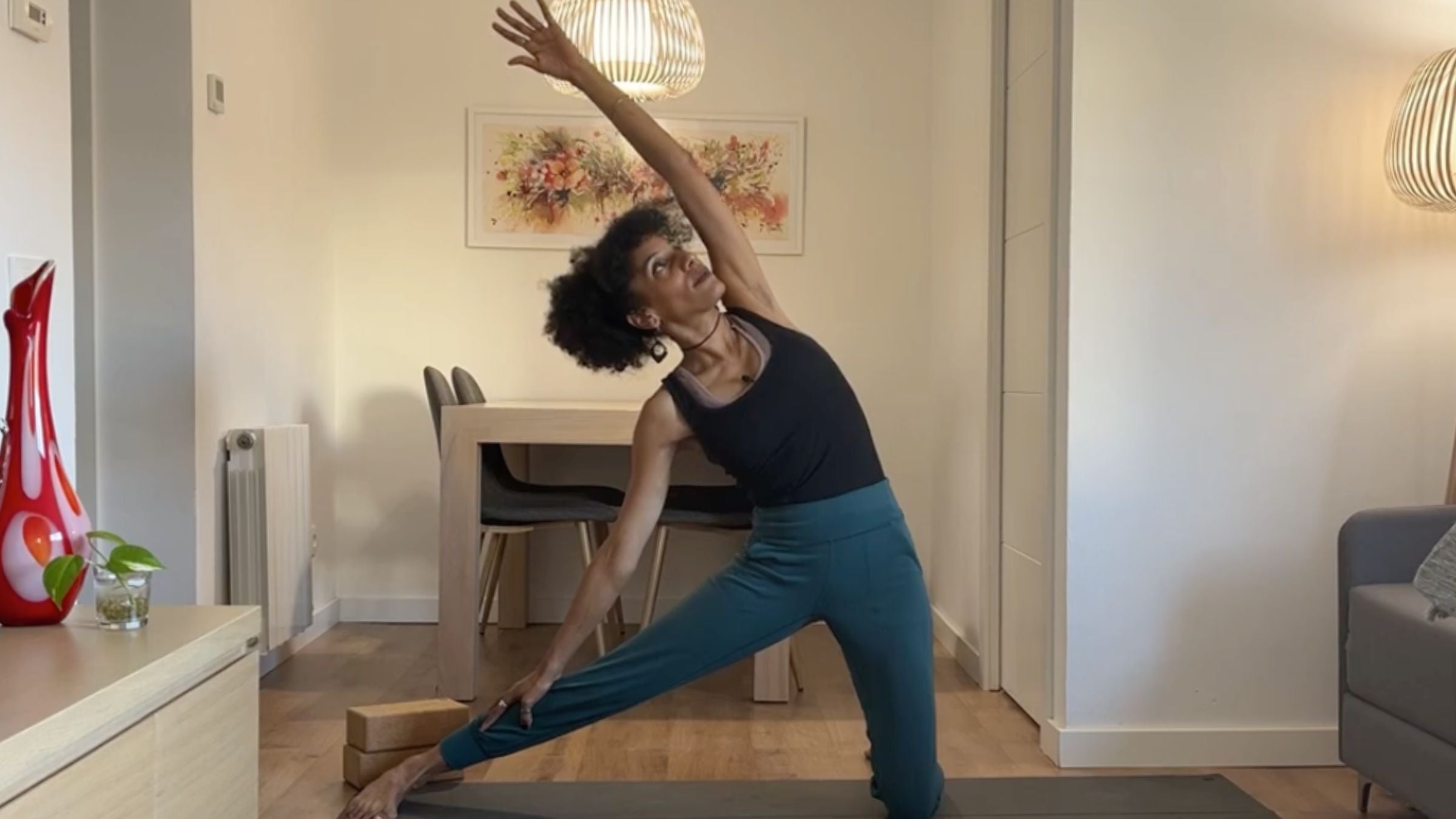
Turning on a yoga practice on YouTube was my method of choice for slowing down. I quickly scrolled through the overwhelming number of options for "slow" and "gentle" yoga practices, a task which was almost enough to dissuade me from taking a break. "I can rest later," I thought. But I knew better. Later usually turns into late at night which turns into tomorrow which easily turns into never.
"To become fully mature as human persons, we must bring to life within ourselves the dynamics that fashioned the cosmos. We must become these cosmic dynamics and primordial powers in a new human form. That is our task: to create the human form of the central powers of the cosmos.... The powers that build the universe are ultimately mysterious, issuing forth from and operating out of mystery. They are the most awesome and numinous reality in the universe. Humans are these dynamics brought into self-awareness.'
Whenever we talk about practicing yoga for the heart chakra, our focus is releasing tension around the heart, including the chest as well as the upper back and shoulders. More than that, the anahata, or heart chakra, has to do with our ability to give and receive love as well as our ability to feel compassion and empathy toward ourselves and others in the world.
Many of us spend a large part of our days sitting. Commuting, working at a desk, and scrolling on our phones. Without realizing it, we stand up from whatever task we were doing and feel the tension that's accumulated in the body and the mind. Although movement is essential for our physical, mental, and emotional well-being, it isn't always realistic to squeeze in a workout or make it to the yoga studio regularly.
I vividly recall watching Saved By the Bell as a little girl and being drawn to the character of Zack Morris. My grandfather Tati, however, would repeatedly mention AC Slater and the fact that a Latino cast member on an American TV show was amazing. After renting Baz Luhrmann's Romeo + Juliet on VHS and gushing over Leonardo DiCaprio, I would listen to my grandfather point out John Leguizamo in the cast.
PCOD is closely associated with stress, insulin resistance, and hormone imbalance. Yoga can to address the root cause through a variety of ways: Balances Hormones Certain yoga postures stimulate endocrine glands like the thyroid, ovaries pituitary gland, as well as adrenal glands. They help to regulate the release of hormones. Enhances blood circulation Yoga boosts circulation of blood to pelvic regions, thereby improving the function of the ovaries.
To her followers and yogic practitioners, Kali Maa is not a scary goddess. She is the ultimate Mother. She represents the slayer of illusion and the symbol of truth that brings freedom. She is the symbol of the cycle of time, transformation, the loss of self and awakening to the spiritual realm. In yoga, Kali Maa is linked to inner cleansing. She helps awaken the kundalini and gives courage. This courage helps us face our darkest sides.
Remaining present in the modern world includes noticing the good. We're not talking toxic positivity here. We're referring to a simple commitment to also noticing what's good in the world even as you navigate what's not. Whether you find these reminders burrowed in a news story, the feeling of being on your mat or out on a run, or the eyes of a loved one doesn't matter. Noticing them does.
Headstand (Sirsasana) is often called the "king of poses" because of the many benefits it affords. It teaches balance and poise, increases the strength of the arms, positively affects the cardiovascular system, and allows, more than many poses, a few minutes for mental and physical stillness. It's a difficult pose, involving many precautions and prerequisites. Many Westerners feel that if they can practice Headstand, they are practicing "real" yoga.
Health insurance plays a vital role in safeguarding Indians from mounting healthcare costs. With medical inflation rising and hospital bills becoming unaffordable, having robust individual health insurance is no longer an option but a necessity. Recognising this, the Indian insurance regulator made a crucial change in April 2024. Now, health insurance and individual health insurance plans must cover hospitalisation cases where the patient is admitted for as little as two hours.
I had no idea what to practice, when to practice, or for how long. As a result, my practice lacked structure, variety, and inspiration. Then, I discovered an online yoga & meditation platform rooted in Himalayan wisdom. It wasn't just about movement; it was about building a relationship with myself. I started with 15 minutes a day. That was it. Sometimes, just breathwork. Other times, meditation. And occasionally, a full-body kriya that left me buzzing with energy.
Gina was one of the golden girls of my circle-charming, smart, and seriously cool. As our other friends rode through their mid-20s on roller coasters of elation and despair, Gina maintained an almost daunting level of emotional perspective. She gave birth to a child who experienced cognitive impairments and cared for him without losing either her detachment or her sense of humor. She went through cancer surgery with her usual rueful grace.
The winter blues are very real. The lack of light and cold temperatures can pull you into a slump-but practicing yoga can help you feel more like yourself and help you overcome some of the symptoms of seasonal affective disorder. All it takes is a willingness to commit to some movement, even-or especially-when you're feeling a bit blah. This grounding morning flow helps you overcome winter sluggishness with some breath-guided stretching and slow activation.