#waiting-lists
#waiting-lists
[ follow ]
#healthcare #nhs #emergency-departments #mental-health #rural-health #access-to-care #healthcare-access
#healthcare

Healthcare
fromwww.theguardian.com
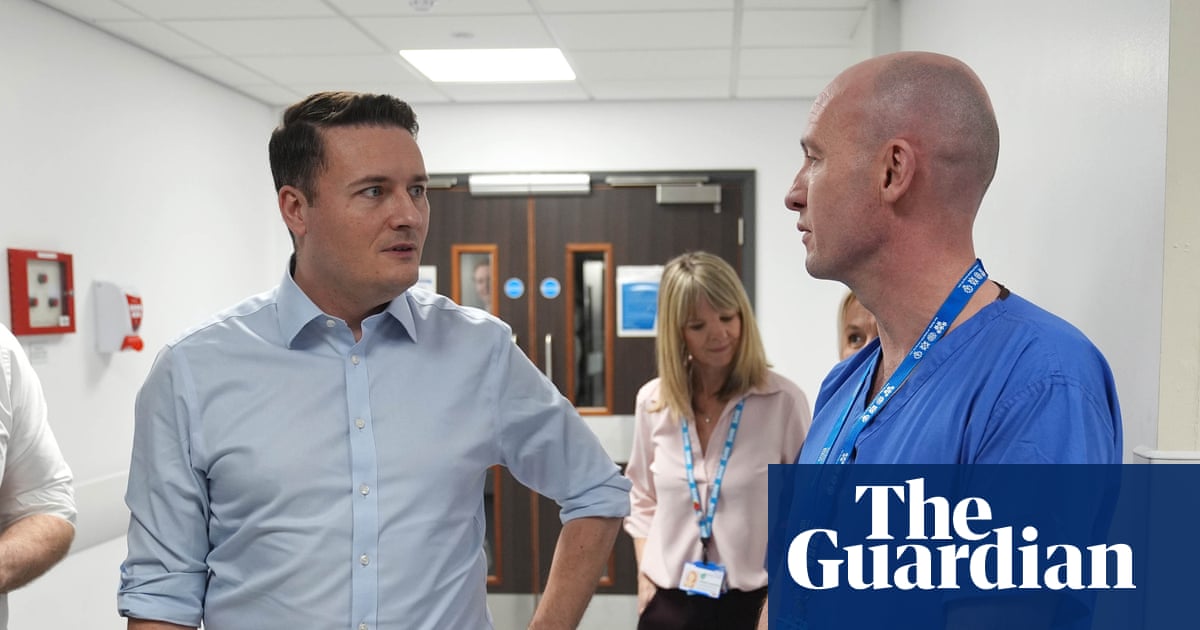
3 days agoNHS patients should be able to write up their own medical records and not have to rely on Post-it notes | Will Parman
Patients with complex health needs struggle to communicate symptoms effectively, risking important information being overlooked during medical appointments.


Healthcare
fromwww.theguardian.com
3 days agoNHS patients should be able to write up their own medical records and not have to rely on Post-it notes | Will Parman
Patients with complex health needs struggle to communicate symptoms effectively, risking important information being overlooked during medical appointments.
Artificial intelligence
fromFuturism
2 days agoMillions of Americans Are Talking to AI Instead of Going to the Doctor, and It's Giving Them Horrendously Flawed Medical Advice
AI chatbots are not reliable for medical advice, with failure rates exceeding 80% for ambiguous symptoms and 40% for straightforward cases.

fromPsychology Today
6 days agoHow Community-Based Healthcare Builds Engagement
Most people leave doctor visits with prescriptions, but still feel unsure—instructions make sense, but no one asks about their life. In contrast, when a provider knows your name, remembers your story, and explains care in a way that fits you, the experience feels different—and that difference matters.
Healthcare
Medicine
fromwww.theguardian.com
1 month agoWhy did my GP just use Google? What I've learned about the health system, as a doctor and a patient
Bedside manner and clinical knowledge are equally essential in medicine; kindness and clear communication directly improve patient engagement and health outcomes.
Europe politics
fromIndependent
1 month agoThis Working Life: 'We should have direct access to patients - we have a backlog for the dentist, and the patient is losing out'
Sviatlana Anischuk, Irish Dental Hygienist's Association president, relocated from Belarus to Ireland at 21 due to political circumstances and pursued a career in healthcare.
Public health
fromwww.theguardian.com
1 month agoPatients face long journeys for medicines as pharmacies cut weekend hours
One in six English pharmacies have reduced weekend hours since 2022, causing over 20% loss of weekend opening hours and forcing patients to travel long distances or seek emergency care.
fromwww.cbc.ca
2 weeks agoOffice space for emergency care: East-end Toronto hospital says patient demand is more than double capacity | CBC News
The emergency department at Michael Garron Hospital was built to care for about 150 patients a day, but now sees more than 300 patients daily, amounting to about 107,000 patients last year in a space designed for 50,000 annually.
Healthcare
fromwww.npr.org
2 months agoHospitals are posting prices for patients. It's mostly industry using the data
The idea echoes a policy implemented during his first term, when Trump suggested that requiring hospitals to post their charges online could ease one of the most common gripes about the health care system the lack of upfront prices. To anyone who's gotten a bill three months after treatment only to find mysterious charges, the idea seemed intuitive. "You're able to go online and compare all of the hospitals and the doctors and the prices,"
US news
#mental-health

Healthcare
fromwww.theguardian.com
4 weeks agoThank God they're still alive': Kaiser therapists claim its new screening system puts patients at higher risk by delaying their care
Changes in patient screening at Kaiser Permanente have led to concerns about delayed care for high-risk mental health patients.

Public health
fromKqed
2 months ago'Delay' and 'Deny': Even Health Insurance Companies Agree Prior Authorization Process Is Broken | KQED
Prior authorization often delays or denies medically ordered care; a high-profile assassination of an insurer executive helped trigger bipartisan state laws limiting prior authorization.
fromLos Angeles Times
1 month agoThere were 13 full-service public health clinics in L.A. County. Now there are 6
Because of budget cuts, the Los Angeles County Department of Public Health has ended clinical services at seven of its public health clinic sites. As of Feb. 27, the county is no longer providing services such as vaccinations, sexually transmitted infection testing and treatment, or tuberculosis diagnosis and specialty TB care at the affected locations, according to county officials and a department fact sheet.
Public health
fromBoston.com
1 month agoMassachusetts ER doctors say long wait times reflect a health system under strain
For Massachusetts emergency physicians, that dream captures a simple truth: long ER waits rarely steam from care inside the department. Instead, doctors say they're the result of bottlenecks across a system stretched thin by staffing shortages, aging patients, limited hospital beds, and gaps in primary care.
Healthcare
Healthcare
fromBusiness Matters
1 month agoBuilding Better Systems: A Conversation with Healthcare Leader Daniel Tuffy
Daniel Tuffy is a healthcare leader who progressed from clinical physical therapy to executive roles, focusing on operational excellence, workforce engagement, and reducing provider burnout through trust-based leadership.
Public health
fromBronx Times
2 months agoOUR FORGOTTEN BOROUGH | Health care in the Bronx is a dangerous game of hurry up and wait - Bronx Times
The Bronx faces a severe health-care crisis: understaffed hospitals, slow EMS response times, poor hospital rankings, and nurse strikes threaten patient care.
fromLondon Business News | Londonlovesbusiness.com
1 month ago'The chaos continues': Sustained winter pressures batter an underprepared Emergency Care system - London Business News | Londonlovesbusiness.com
The government, and health service leaders, must pay attention to the chaos inside Emergency Departments this winter, which are buckling under the pressure because of a failure to prepare for predictable surges in seasonal illnesses. That's the key takeaway from NHS England's latest stats on the pressures the Urgent and Emergency Care system is under in England, published today, according to the Royal College of Medicine (RCEM).
Public health
fromArs Technica
2 months agoHaving that high-deductible health plan might kill you, literally
The issue is particularly critical right now for people who have insurance plans through the Affordable Care Act marketplace. Prices for those plans have skyrocketed this year after Congress failed to extend critical tax credits. Without those credits, monthly premiums for ACA plans have, on average, more than doubled. Early data on ACA enrollments for 2026 not only suggests that fewer people are signing up for the plans, but also that those who are enrolling are often choosing bronze plans, which are high-deductible plans.
Public health
Healthcare
fromFortune
1 month agoHealthcare has been propping up a shaky labor market. For the first time in over four years, the sector shed thousands of jobs | Fortune
Healthcare lost 28,000 jobs in February, marking its first decline in four years and exposing the labor market's dangerous dependence on a single sector for growth.
fromLondon Business News | Londonlovesbusiness.com
2 months ago'Failure to prepare' for winter has left A&E patients out at sea - London Business News | Londonlovesbusiness.com
Today's data, from NHSE's latest weekly winter situation report, covers the week ending 25 January. It showed that bed occupancy in English hospitals remains dangerously high, at 94.6%, while more than 14,000 people medically fit to be discharged from hospital were still stuck in beds. On a given day, there were on average 50,368 patients who had been in a hospital bed for seven days or longer, showing problems lie at the 'back door' of hospitals.
Public health
Healthcare
fromComputerWeekly.com
1 month agoElectronic health records are still creating issues for patients | Computer Weekly
All NHS trusts in England must implement electronic patient record systems by March 2026, though rollouts have faced integration challenges, staff training issues, and reports of patient harm.
fromBoston.com
2 months agoMassachusetts emergency room wait times rank among the longest in the U.S.
If you find yourself in need of emergency care in Massachusetts, it could take a while. The Bay State ranks No. 3 in the U.S. for longest average time patients spend in the emergency department, according to World Population Review. Patients here spend an average of 189 minutes - more than three hours - in the ER before leaving the hospital. Only Maryland (228 minutes) and Delaware (195 minutes) report longer average delays.
Healthcare
fromBusiness Matters
2 months agoThe Rise of Telemedicine: How Digital Health is Reshaping Medical Equipment Demand
Between March 2020 and March 2022, over 100 million telemedicine services were delivered to approximately 17 million Australians. The Australian government invested $409 million to make telehealth permanent, whilst the UK announced £600 million for digital health infrastructure in April 2025. Patient adoption is equally impressive: 60% find telemedicine more convenient than in-person appointments, 55% report higher satisfaction with teleconsultations, and 74% of millennials prefer virtual appointments for routine care. These aren't temporary shifts; they represent a fundamental transformation in healthcare delivery.
Healthcare
Healthcare
fromHealthcare Brew
2 months agoHow health systems are competing with AI search tools for patients
AI-powered search tools and chatbots are reducing web traffic to health providers, threatening traditional online patient acquisition and prompting health systems to change marketing strategies.
Healthcare
fromwww.bbc.com
1 month agoBBC investigation finds 50,000 people waited over 24 hours in A&E corridor care
Over 52,000 patients in north-west England waited longer than 24 hours for hospital admission in 2025, with corridor care becoming a widespread crisis affecting nearly one in five admitted patients.
fromIndependent
1 month agoCost of medical IT system to hit 61m - and it is still only rolled out in one hospital
The chair of the Oireachtas Health Committee has described a €10m increase in the cost of a national medical laboratory IT system as "an omnishambles". The health service signed a €33m contract for the system known as MedLis with Oracle Health in 2015 and agreed a €17.9m contract extension for it in 2022.
Healthcare
[ Load more ]