Graphic design
fromAcolorbright
17 hours agoAesthetics of AI
Branding is crucial in the AI market due to low product differentiation, with visual identities evolving to create a friendly and distinct appeal.
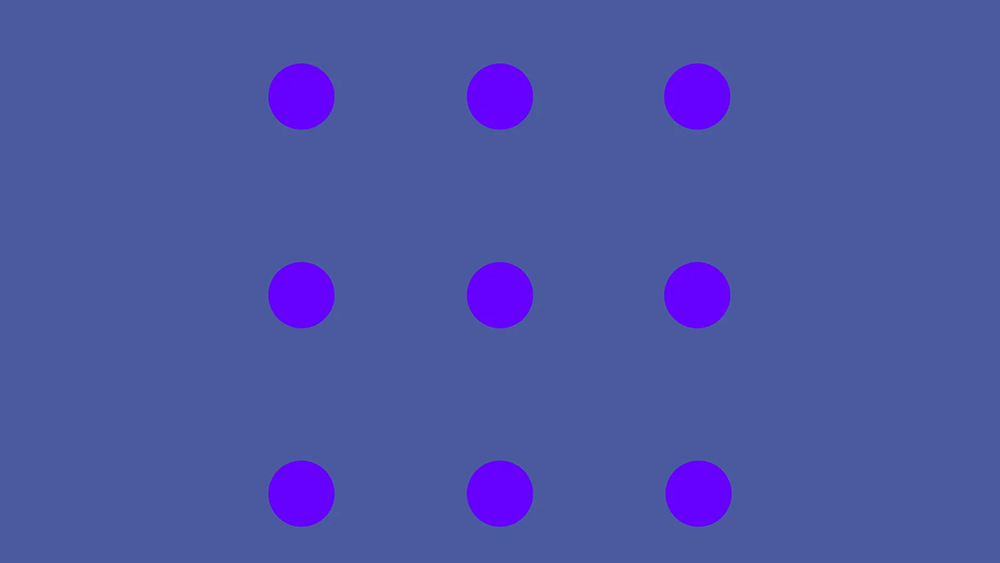
'In this paper a novel optical illusion is described in which purple structures (dots) are perceived as purple at the point of fixation, while the surrounding structures (dots) of the same purple colour are perceived toward a blue hue.'
Viewpoints are structures designed for observing the landscape from elevated positions. They act as devices that organize the gaze and establish a direct relationship between the body and the territory.
Decades of research in environmental psychology and building science reveal that indoor conditions can profoundly affect human health and behavior. Lighting influences circadian rhythms and sleep patterns. Air quality impacts cognitive performance and respiratory health. Temperature and acoustics shape comfort and concentration.
Beauty, it turns out, is capable of launching not just an armada of ships, but a cascade of the same feel-good chemicals you get from being in love, eating chocolate, exercising, and having orgasms- dopamine, endorphins, serotonin, oxytocin. It also lowers stress, blood pressure, and heart rate.
Real estate with ocean views, stunning mountain vistas, and wide-open green spaces sell at premium prices because humans find those settings pleasing [1-5]. Certain color combinations in fashion-such as brown and forest green-blend harmoniously, while others, such as hot pink and orange, clash. And our eyes like certain proportions in visual objects (like buildings and human faces) but not others.
When Sonos released its redesigned app in May 2024, the backlash was immediate and brutal. Users couldn't access basic features like volume control and alarms. Systems became unusable. The company's stock plummeted 25%. Eventually, the CEO was replaced, and lawsuits claimed over $5 million in damages from customers who'd lost functionality they'd paid for.
Yes and no, says cognitive scientist Tomer Ullman, the Morris Kahn Associate Professor of Psychology, who with Halely Balaban recently published a paper titled "The Capacity Limits of Moving Objects in the Imagination." If you're like most people, you probably thought about some of these things, but not others. People build mental imagery hierarchically, starting with the ideas of "person," "room," "ball," and "table," then placing them in relation to one another in space, and only later filling in details like color.
Close your eyes and picture an apple. Most people see something-a faint, slightly blurry image, less vivid than a real apple. A few, however, will see it as clearly as if it were sitting right in front of them. This ability is called hyperphantasia. Hyperphantasia, literally meaning "beyond imagination," refers to exceptionally vivid mental imagery. It is often described as the opposite of aphantasia, a condition in which people report little or no ability to form mental images.
In 2011, researchers Jason Tangen, Sean Murphy, and Matthew Thompson at the University of Queensland discovered a striking visual illusion while preparing a set of face images for a study. As they were going quickly through the faces to check their spatial alignment, they started noticing that the faces appeared highly distorted, almost cartoonish. They then realized that these distortions were most pronounced when the faces were flashed about 4-5 times per second in peripheral vision.