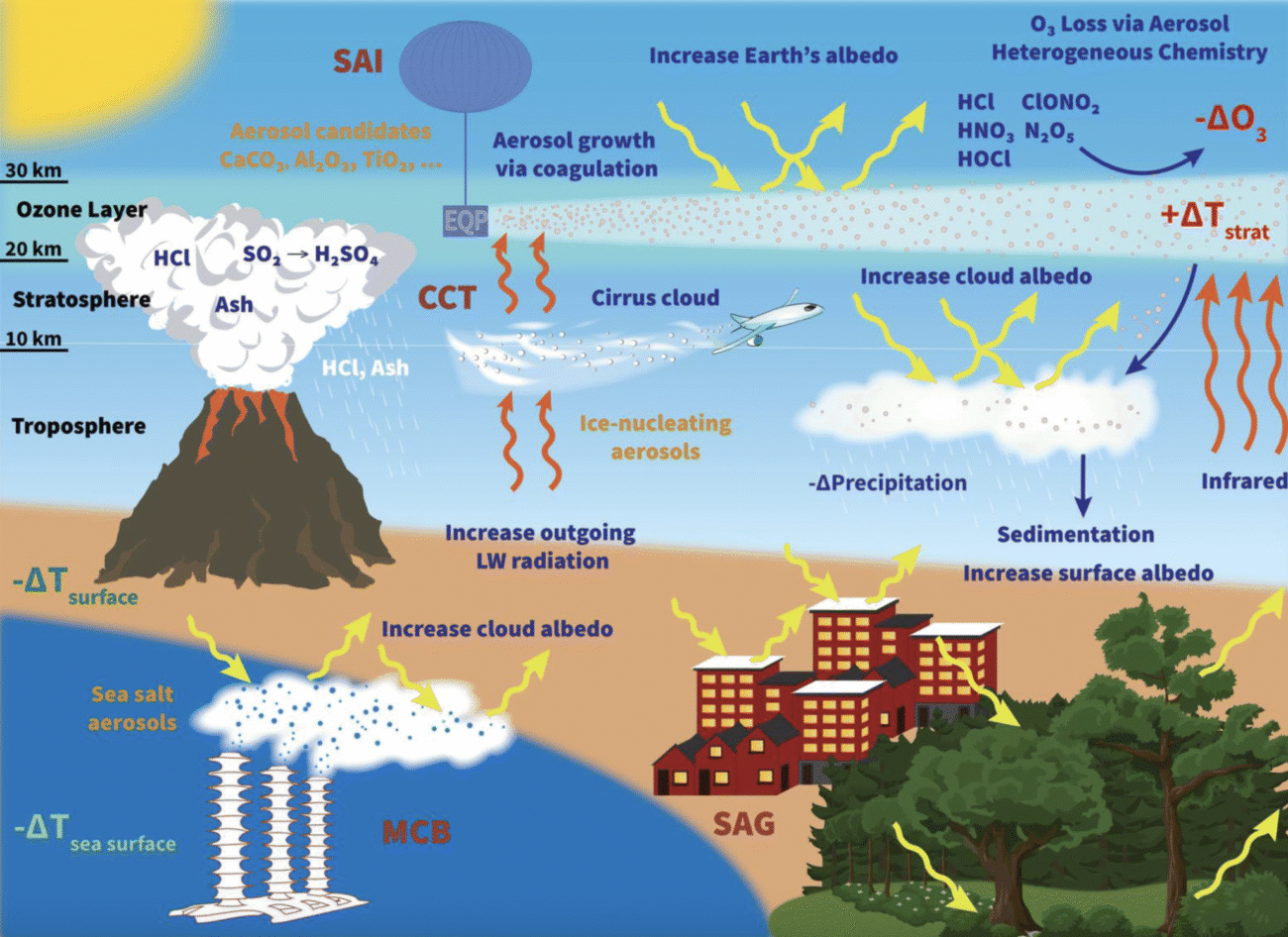
The big picture: Solar radiation management - reflecting more of the sun's energy back into space - is a subset of geoengineering that's shifting from fringe science and conspiracy theory into mainstream policy debate. How it works: Solar radiation management, or solar geoengineering, aims to cool the planet by reflecting sunlight. The most-discussed method involves injecting sulfuric-acid particles into the upper atmosphere, mimicking the cooling effect of volcanic eruptions.
Advocates for geoengineering-or, at a minimum, of pursuing research into geoengineering-say that such risks impose obligations. They note that, since attempts to limit warming have failed, it's incumbent on humanity to consider all the options. "If sunlight reflection could save lives and protect the environment, it is at least worth discussing," David Keith and Zeke Hausfather, both climate scientists, wrote in a recent essay for the Times. "I don't think we have the luxury of saying there are certain options we don't explore and study," Yedvab, the co-founder of Stardust, said. "Just as a metaphor, if there is one person in a household who's in a crisis, you want to make sure that you have all the options in front of you of how to deal with this crisis."