#nosql

[ follow ]
Python
fromRealpython
3 days ago

TinyDB: A Lightweight JSON Database for Small Projects - Real Python

TinyDB is a lightweight, pure-Python, document-oriented NoSQL database storing JSON documents and offering simple CRUD for small, local, single-process projects.
fromInfoQ
5 days ago

Firestore Adds Pipeline Operations with Over 100 New Query Features

Google has overhauled Firestore Enterprise edition's query engine, adding Pipeline operations that let developers chain together multiple query stages for complex aggregations, array operations, and regex matching. The update removes Firestore's longstanding query limitations and makes indexes optional, putting the database on par with other major NoSQL platforms. Pipeline operations work through sequential stages that transform data inside the database.
Software development
fromdeath and gravity
3 weeks ago

DynamoDB crash course: part 1 - philosophy

A table is a collection of items, and an item is a collection of namedattributes. Items are uniquely identified by apartition key attribute and an optionalsort key attribute. The partition key determines where (i.e. on what computer) an item is stored. The sort key is used to get ordered ranges of items from a specific partition. That's is, that's the whole data model. Sure, there's indexes and transactions and other features, but at its core, this is it. Put another way:
Software development
fromInfoWorld
2 months ago

Document databases - understanding your options

DocumentDB joining the Linux Foundation expands MongoDB-compatible document database options, complicating selection while offering PostgreSQL-based alternatives for developers.
Software development
fromInfoWorld
3 months ago

Building a scalable document management system: Lessons from separating metadata and content

Split document metadata and content into separate stores to achieve faster, scalable, and lower-cost document systems.
fromChannelPro
4 months ago

From real-time to reasoning: Why NoSQL is core to agentic AI

AI agents are steadily becoming embedded in enterprise workflows: automating customer interactions, coordinating operations, and reasoning across complex datasets. However, if you take a closer look beneath the surface, many organizations are struggling with the technical challenge of supporting them in real time. Legacy data architectures aren't built for this. To make agents performant, scalable, and accountable, IT leaders are turning to something familiar, but more flexible: NoSQL.
Artificial intelligence
#sql
fromMedium
11 months ago
Data science

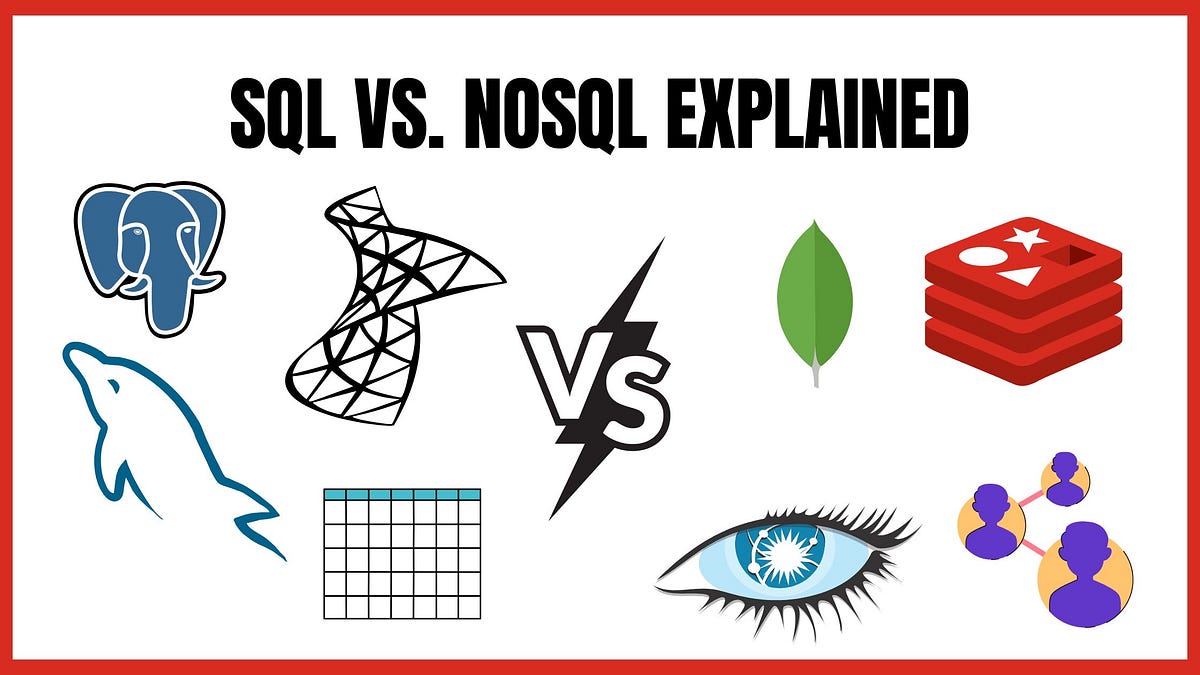
SQL vs. NoSQL Explained: When to Use Which and Why It Matters to Modern Data Management

fromMedium
11 months ago
Data science

SQL vs. NoSQL Explained: When to Use Which and Why It Matters to Modern Data Management

#couchbase
fromInfoQ
6 months ago

New Rust Client Enables Building Safe, High-Performance Apps with Aerospike

Aerospike officially releases its Rust client, supporting high-throughput, low-latency applications, driven by the language’s growing adoption in various industries.
Software development
E-Commerce
fromHackernoon
7 months ago

A Tale from Database Performance at Scale | HackerNoon

Database selection should be based on workload analysis to align technology with business needs.
Video games
fromHackernoon
7 months ago

"Build a High-Performance Video Streaming App with ScyllaDB and NextJS" | HackerNoon

A new video streaming app featuring essential functionalities and powered by ScyllaDB for optimal performance has been launched on GitHub.
fromMedium
11 months ago

SQL vs. NoSQL Explained: When to Use Which and Why It Matters to Modern Data Management

SQL is a standard language used to manage and manipulate relational databases. It allows you to query, update, and manage data in structured tables.
Data science
Data science
fromMedium
11 months ago

Database Revolution Series: A Modern Guide to Data Management

Graph databases excel at managing complex relationships and interconnected data, significantly outperforming traditional relational databases.
[ Load more ]