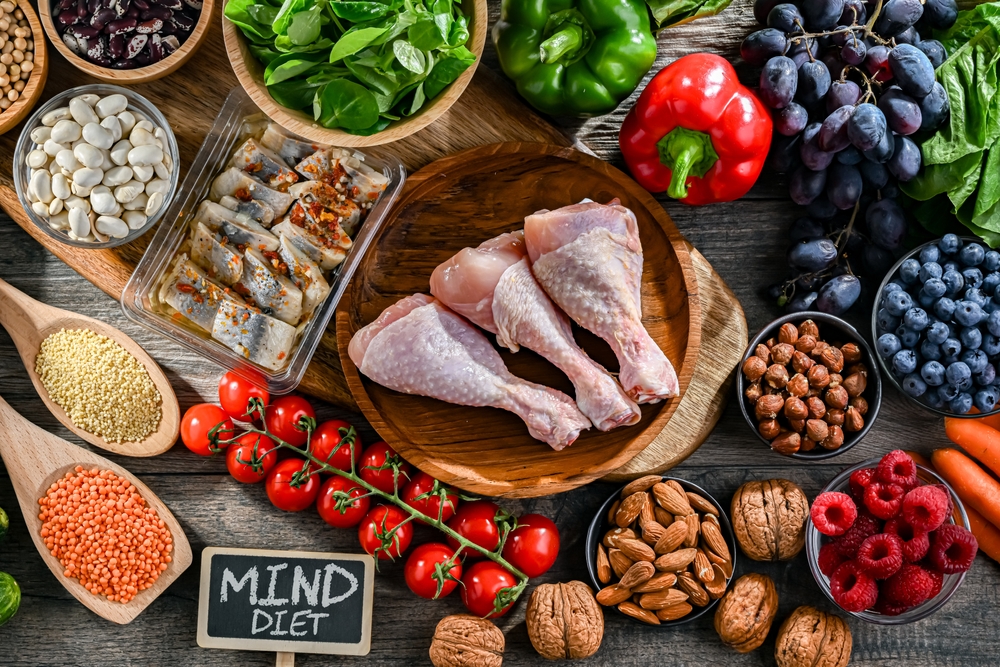
Research increasingly demonstrates that healthy nutrition improves mental health, and an entirely new subspecialty has formed to support this. Nutritional psychiatry is expanding rapidly, with research growing 15-fold from 2000 to 2024, reflecting the increasing acceptance of diet's role in mental health.
I just make protein a priority. I try to get it in every meal and every snack. Research suggests these amounts are best for staying full and supporting muscle health.
"People tend to immediately think of neurons when they think about how the brain works. But we're finding that astrocytes, what we used to think of as just secondary support cells, are also participating in how our brains regulate how much we eat."
We compared how participants fared while eating their habitual diets with how they responded to the two diets that were low in ultraprocessed foods. During the periods when participants ate fewer ultraprocessed foods, they naturally consumed fewer calories and lost weight, including total and abdominal body fat. Beyond weight loss, they also showed meaningful improvements in insulin sensitivity, healthier cholesterol levels, fewer signs of inflammation, and favorable changes in hormones that help regulate appetite and metabolism.
It might come as a surprise to learn that the brain responds to training in much the same way as our muscles, even though most of us never think about it that way. Clear thinking, focus, creativity, and good judgment are built through challenge, when the brain is asked to stretch beyond routine rather than run on autopilot. That slight mental discomfort is often the sign that the brain is actually being trained, a lot like that good workout burn in your muscles.
The Dietary Guidelines for Americans aim to translate the most up-to-date nutrition science into practical advice for the public as well as to guide federal policy for programs such as school lunches. But the newest version of the guidelines, released on Jan. 7, 2026, seems to be spurring more confusion than clarity about what people should be eating. The latest dietary guidelines, published on Jan. 7, 2026, have received mixed reviews from nutrition experts.
Diet culture norms have led to a multibillion-dollar industry promoting diets that each come with their own set of rules, with each claiming it's the only way to be healthy or lose weight. When access to nutrition information is at an all-time high online, people are often left digging through conflicting information when trying to figure out what to eat or what a healthy diet look likes.
In a recent article for Vogue, California-based physician Dr. Chris Renna said: "Stronger leg muscles are linked to better cognitive function in aging mainly through their effects on blood flow, metabolic health, brain structure, and physical/social activity patterns." Muscle mass starts to decline at age 30. As the largest muscle group in the body, maintaining muscle strength in the thighs and glutes is especially important for healthy aging-and apparently, brain function.
While it may seem like setting a weight-related goal is just the kickstart you need, consider how doing so may actually destroy your motivation in the long run. Motivation is a finicky beast. It's often fleeting-here today, gone tomorrow. Motivation researchers found that there are different types of motivation, which sit on a spectrum with extrinsic motivation at one end and intrinsic motivation at the other.
When I first read that, I was skeptical. But after trying it myself and digging deeper into the studies, the mechanisms started making sense. When we actively look for things to appreciate, we're essentially rewiring our brain's default mode. Instead of scanning for threats and problems (which our brains love to do), we're training it to notice the good stuff. It's like changing the channel from a disaster documentary to something that doesn't spike your cortisol.