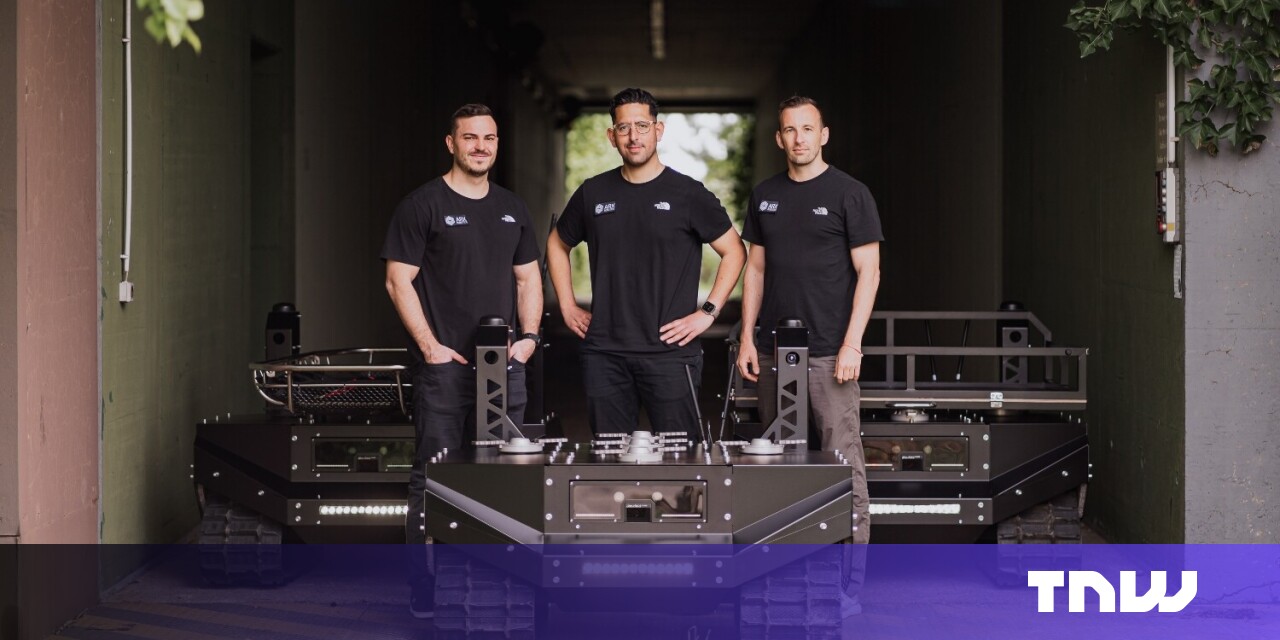
Germany's Hanover Industrial Fair has introduced a Defence Production Area, featuring around 30 companies that offer products with potential military applications, marking a significant shift in focus.
Today's prominent founders and investors communicate in a visual grammar that shares a great deal with the aesthetic languages of Italian Futurism, primarily, but also of 'return to order' neoclassicism, World War II-era propaganda, and modernist museum branding.
The outage left millions of Starlink customers in the dark back in August of 2025, dealing a blow to the company's image as an always-on satellite internet provider.
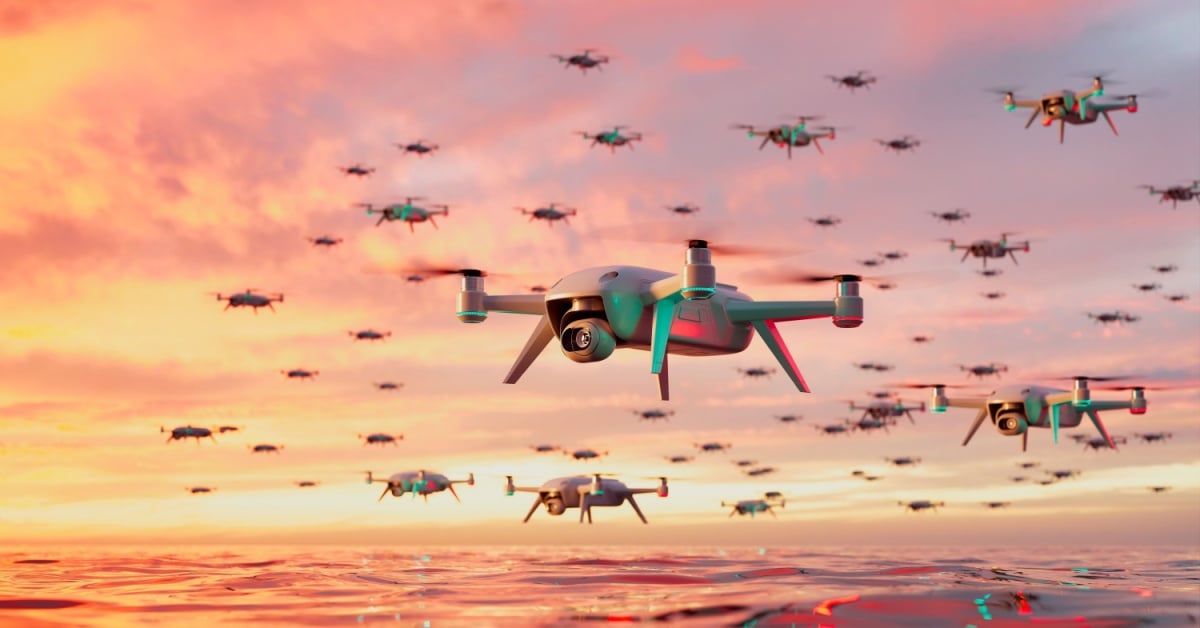
Army Secretary Dan Driscoll stated that the interceptor drones are 'incredible' and currently cost about $15,000 each, with expectations to reduce costs to below $10,000 as production scales.
"Artificial Intelligence is a coming storm that threatens to alter - and I believe, improve - all organizations. The pace of technological change today means that the Fed does not have the time to sit back and ruminate about changes for months and years on end."
I have been working in Ukraine since 2019, first as an active Green Beret advising in an official capacity, then after leaving that service, directing special operations on the ground and more recently carrying hard-won lessons back to NATO before they are forgotten or overtaken by the next news cycle.
Number one is speed takes priority over perfection. We can iterate to get to operational capability. And the second is that early soldier feedback is critical in order to make sure we're getting the right technology for the future fight, and then we want to be able to prove the demand signal before we spend big dollars on programs.
According to the Secretary of Defense Pete Hegseth's memorandum on the Strategy, this AI-first status is to be achieved through four broad aims: Incentivizing internal DOD experimentation with AI models. Identifying and eliminating bureaucratic obstacles in the way of model integration. Focusing the U.S.'s military investment to shore up the U.S.'s "asymmetric advantages" in areas including AI computing, model innovation, entrepreneurial dynamism, capital markets, and operational data.
The US Army's biggest AI gamble may not be on autonomous weapons, but instead whether Silicon Valley software can tackle the service's most tedious and, more often than not, grueling administrative jobs. Think less uncrewed aircraft and more behind-the-scenes tasks like recruiting, equipment maintenance, and endless gear inventories. Through a mix of new tools, redesigned workflows, and data integration, logisticians