KDE Linux was created and is maintained by the KDE team. According to the KDE Linux website, this distribution is 'Designed to be safe, maintainable, functional, and modern, KDE Linux will be the best choice for home use, enterprise workstations, public institutions, pre-installation on computers you can buy, and more.'
The solution, according to Microsoft, is to get rid of it and buy a computer that can run Windows 11. But that's not good enough. This ThinkPad - like millions of other PCs in the same boat - is still perfectly functional.
The Prism Linux installer makes installing this Arch-based distribution so easy that anyone, regardless of experience, can install Linux. During installation, you can choose which desktop environment you want.
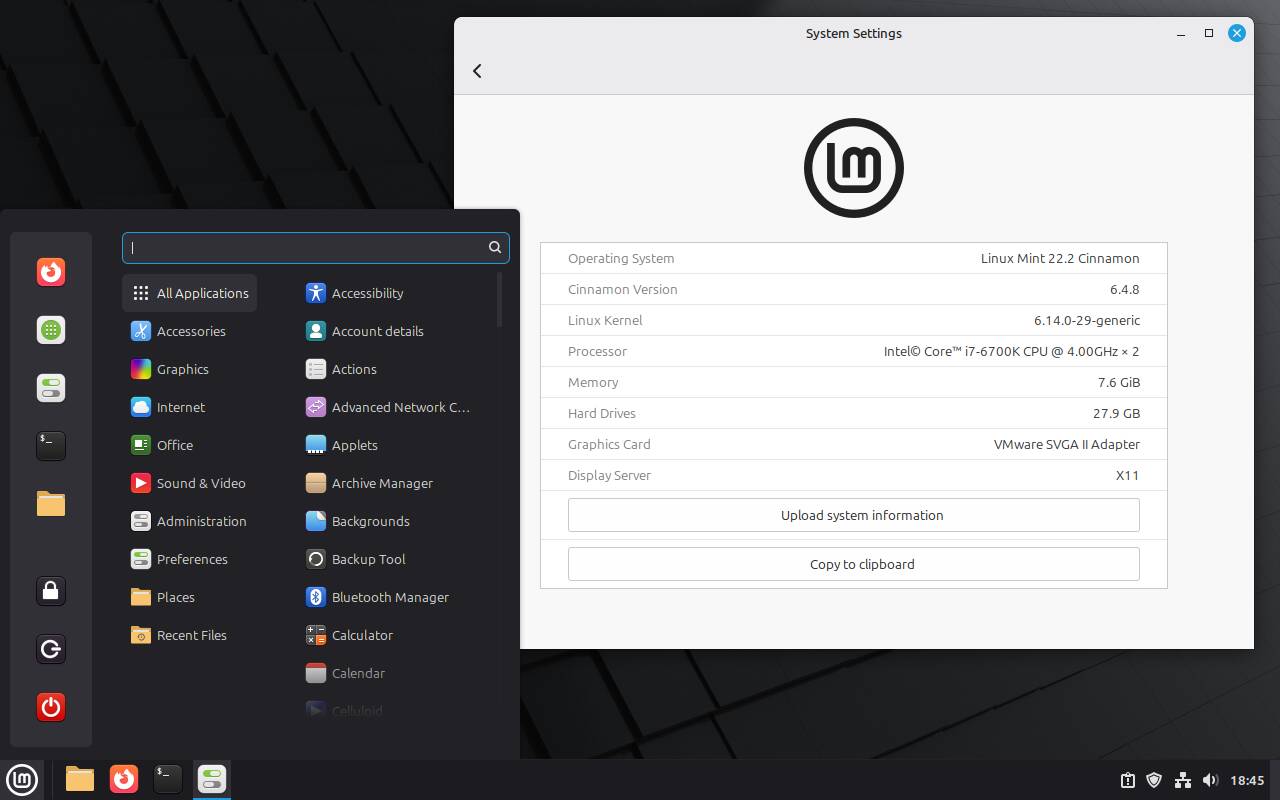
Linux Mint 22.3 Zena is a classic point release. There's nothing earth‑shattering in this release, but it boasts polish, quality‑of‑life fixes, and Cinnamon desktop refinements. This update makes Mint, once more, one of the best desktops for people who just want their PC to work. If you liked Mint 22.1 and 22.2, 22.3 feels like the next logical distro you'll want to live in until Mint 22.x is no longer supported in 2029.
When I talk to users looking to make this leap, the first thing I want to discuss is the desktop environment. After all, I'd rather not send Windows users to a distribution that uses GNOME, hyprland, i3, or any other DE that in no way resembles Windows. Recently, I stumbled upon a distribution called VailuxOS that uses KDE Plasma to create a somewhat Windows-esque desktop that would make any user of a Microsoft OS feel right at home.
You may have noticed that many European Union (EU) governments and agencies, worried about ceding control to untrustworthy US companies, have been embracing digital sovereignty. Those bodies are turning to running their own cloud and services instead of relying on, say, Microsoft 365 or Google Workspace. If you prize your privacy and want to control your own services, you can take that approach as well.
My favorite Linux desktop distribution, Linux Mint, is considering slowing down its release cadence. That's because, as lead developer Clement "Clem" Lefebvre explained, while releasing often has worked very well, it produces "these incremental improvements release after release. But it takes a lot of time, and it caps our ambition when it comes to development. ... [so] We're thinking about changing that and adopting a longer development cycle."
Every time I've had to install Windows (which is a nightmare), it seems there's always work to do to get it working as needed. You may need to install drivers and software, remove ads, update the system (which can take a long time), remove bloatware, tweak the UI, disable taskbar and lock screen widgets, disable system notifications, enable system protection, and more.
Manjaro is a sweet Arch-based Linux distribution, and it has the fans to prove it. Manjaro is designed to take Arch to new heights of user-friendliness, and it succeeds quite well. Of course, there are always those who believe everything can be improved, which is why a small team of developers decided to fork Manjaro and create Elegance. The beauty of Elegance isn't in the UI, although the developers have made Cinnamon look pretty good.
Origami Linux was conceived in 2021, which makes it relatively new for an operating system. The goal behind this distribution was to create something beautiful and secure. To achieve that, the developer decided to take the COSMIC desktop and marry it with an immutable Fedora base. That's not all. Also: The best Linux laptops in 2026: Expert tested for students, hobbyists, and pros You could also opt for an Arch base that includes the CachyOS kernel, or a version created specifically for NVIDIA GPUs.
A trade-free operating system, that's what Tromjaro means. But what does a trade-free operating system have to offer? Well, it means a lot, especially if you're tired of the imbalance between those who have versus those who want. From the developers' perspective, this "trade-free" OS wants nothing from its users, such as no data collection and no demands for attention: "This is the purest form of free and the most honest one."
Also: This Linux distro has one of the smartest security features I've seen (and I've tested dozens) However, that's not to say someone with minimal familiarity with the command line would fail with this distribution. For example, if you only need open-source software, NixOS could be a viable option. If, however, you need apps like Chrome, Slack, and Spotify, you might run into some frustration that will send you packing back to Ubuntu, Linux Mint, or Windows.