#freud

[ follow ]
fromOregon ArtsWatch * Arts & Culture News
1 week ago

Freud on cocaine? Psychoanalyze that! * Oregon ArtsWatch

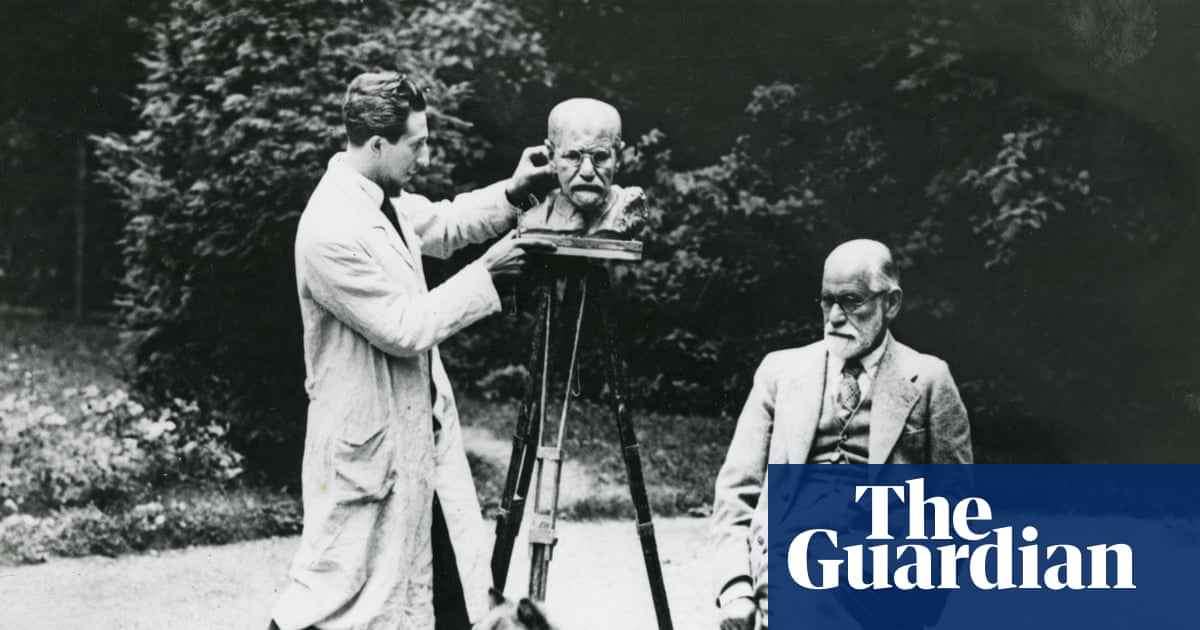
Freud was an avid cocaine user early in his career - a quite exuberant one, indulging a gram-a-day habit. In the late 1800s, cocaine was not a street drug, and Freud wrote glowingly about its beneficial uses - which he believed could be experienced without any risk of addiction. He prescribed cocaine to patients and recommended it enthusiastically to friends, his future wife, Martha, even Martha's hostile mother; with the help of cocaine, he succeeded in briefly winning over his future mother-in-law.
Arts
#dreams
Psychology
fromThe New Yorker
1 week ago

Weike Wang on Recurring Dreams and Loneliness

Daily routines closely correspond to recurring dream imagery, while dream interpretation frameworks shape how childhood and subconscious material are used in fiction.
#psychoanalysis
fromwww.london-unattached.com
8 months ago
Arts

Dr Freud Will See You Now, Mrs Hitler

A fictional 1905 encounter between Sigmund Freud and young Adolf Hitler depicts an Oedipal bond that accelerates Hitler's megalomania and antisemitism.
fromPsychology Today
10 months ago
philosophy

Awakening From the Dream of Reason

Freud's exploration revealed the irrational depths of the mind, challenging the Enlightenment's rational perspective.
philosophy
fromPsychology Today
3 weeks ago

You May Be a Freudian

Freud's ideas on the human condition emphasize the interplay of culture, spirit, and mental health, challenging purely biological explanations.
fromVulture
2 months ago

The Gay Romance Novel You Should Actually Read

Sigmund Freud believed that every crush has a strand of disgust, that people are attracted to what repulses them. The enchantment of an infatuation always counterbalances the reality that our lovers - irksome, confusing, and unflaggingly human - depart from whatever ideal archetype we have stored in our heads.
Writing
fromPsychology Today
9 months ago

Children of the Abyss: How Nietzsche Impacted Psychoanalysis

Who was Nietzsche? Philosopher, psychologist, poet, madman, provocateur-these names orbit around him but never settle. He is the "strange German," dismissed by some as the father of nihilism and amorality, revered by others as the prophet of self-becoming. No thinker has hovered so closely to the abyss or beckoned so many to peer into its depths. Fewer still have so haunted the origins of the psychoanalytic revolution, both as inspiration and as fateful warning.
philosophy
fromThe Conversation
9 months ago

Freud would have called AI a 'narcissistic insult' to humanity - here's how we might overcome it

The first insult by science was Copernicus's discovery that we are not at the center of the universe, followed by Darwin's evolution theory and Freud's insights into the unconscious.
philosophy
fromApaonline
10 months ago

APA Member Interview: Jonah Branding

Sigmund Freud, as an early 20th-century Viennese Lamarckian, should take human nature to be highly malleable, leading to a paradox in his views against this idea.
philosophy
fromPsychology Today
10 months ago

Psychotherapy and Religious Values

In psychology, anyone who gets involved in or tries to talk in an analytic, careful way about religion is immediately branded a meathead; a mystic; an intuitive, touchy-feely sort of moron.” - Robert Hogan (1979)
philosophy
fromPsychology Today
11 months ago

Instead of Trying to Be Perfect, Choose to Be Authentic

Pursuing an authentic life is the most meaningful path; perfectionism often leads to insecurity and feelings of unworthiness. Coping mechanisms may stem from false beliefs.
Mindfulness
philosophy
fromAeon
11 months ago

One woman's nose and two men's hubris: a nasogenital tale | Aeon Essays

The late 19th-century nasogenital reflex theory linked nose surgeries to reproductive health, highlighting early misconceptions in medical science.
[ Load more ]