#educational-technology
#educational-technology
[ follow ]



#personalized-learning

Education
fromeLearning Industry
1 month agoPersonalized Learning: How New Tech Assists With Student-First Awareness
The shift to personalized learning emphasizes student-first awareness, leveraging technology to address individual needs and reduce cognitive overload.
fromWIRED
6 months agoOnline learning
Parents Fell in Love With Alpha School's Promise. Then They Wanted Out
A Brownsville microschool relied on personalized software and adult 'guides' instead of teachers, leading to excessive practice requirements, emotional distress, missed lunches, and academic setbacks.


#higher-education
Higher education
fromInside Higher Ed | Higher Education News, Events and Jobs
2 months agoWhat History, Evidence, Competing Views Say About AI, Higher Ed
A significant shift in higher education is occurring, influenced by technology, requiring a balance between historical understanding and present innovation.
Online learning
fromInside Higher Ed | Higher Education News, Events and Jobs
11 months ago65 Percent of Students Use Gen AI Chat Bot Weekly
Higher education stakeholders prefer human-led learning and face-to-face instruction over generative AI tools despite increasing engagement with such technologies.
#artificial-intelligence-in-education
Education
fromChalkbeat
2 months agoHow are NYC schools using AI? Share your experience with us as the city prepares new guidance.
NYC schools Chancellor Kamar Samuels is developing an AI policy for schools while educators already use AI tools widely, with 67% of students reporting the technology harms critical thinking skills.
Education
fromComputerWeekly.com
2 months agoMPs launch inquiry into use of tech in education | Computer Weekly
MPs are investigating how artificial intelligence and technology can improve education while addressing risks of inequality, safeguarding concerns, and the need for values-based decision-making frameworks.
fromEngadget
2 months agoChatGPT will now generate interactive visuals to help you with math and science concepts
Starting today, ChatGPT will generate dynamic visuals when you ask it to explain select scientific and mathematical concepts, including the Pythagorean theorem, Coulomb's law and lens equations. When ChatGPT responds with an interactive visual, you'll be able to tweak any variables and the equation itself, allowing you to see how those changes affect the solution.
Online learning
fromeLearning Industry
2 months agoBalancing Personalization nd Privacy n Adaptive Learning
Adaptive learning refers to educational systems that use data, algorithms, and Artificial Intelligence to tailor learning experiences to individual users. Unlike traditional one-size-fits-all instruction, adaptive models adjust content, pacing, assessments, and feedback based on learner performance, behavior, and preferences.
Online learning
Online learning
fromFortune
2 months agoWe're economists who designed a chatbot to help our students reason instead of cheat. Meet 'Macro Buddy' | Fortune
An AI tutor trained on course materials improved exam performance when combined with group study, outperforming individual study and group study without AI assistance.
fromPsychology Today
2 months agoThe Impact of Tech on Young Minds
Evidence accumulated over the past twenty years indicates that the extensive social and educational introduction of computers into classrooms has resulted in a measurable decline in students' academic and cognitive abilities. These results clarify the need for pedagogical, educational, and technological resources to be aligned with principles that strengthen the universal cognitive capacities required for learning.
Education
fromCornell Chronicle
2 months agoDuffield Engineering showcases XRP robot at Governors Cup | Cornell Chronicle
The XRP is already used in 180 countries, as well as six graduate courses here at Cornell. And the governors of New Hampshire, Minnesota and Ohio have pledged and are already working toward putting at least one in every high school.
Education
#learning-management-systems
Education
fromFast Company
2 months agoI tested 200 edtech tools. These are the ones worth using
After testing over 200 educational tools, top-tier options provide valuable resources for teaching, learning, and content organization across all levels, with Pathwright exemplifying an elegant alternative to complex learning management systems.
Education
fromFortune
2 months agoAmerican schools weren't broken until Silicon Valley used a lie to convince them they were-now reading and math scores are plummeting | Fortune
Utah's student test scores declined after implementing computer-adaptive testing in 2014, reflecting a global trend of declining academic performance correlated with increased classroom technology use.
California
fromwww.mercurynews.com
2 months agoAI images scandalized a California elementary school. Now the state is pushing new safeguards
A California school's AI tool generated sexualized imagery during a fourth-grade homework assignment, prompting state education officials to release updated AI safety guidelines for schools.
Education
fromFortune
3 months agoThe U.S. spent $30 billion to ditch textbooks for laptops and tablets: The result is the first generation less cognitively capable than their parents | Fortune
Widespread school laptop programs and increased classroom screen time correlate with declining standardized-test performance and reduced cognitive capability in Gen Z.
Higher education
fromInside Higher Ed | Higher Education News, Events and Jobs
3 months agoShould Degrees Come With Lifetime Professional Education?
Knowledge is accelerating rapidly, making degrees insufficient for lifetime expertise and requiring continuous, curated, technology-enabled updates to keep students workplace-ready.
fromMail Online
3 months agoExpert reveals the least intelligent generation in history
Dr Jared Cooney Horvath, a former teacher-turned-neuroscientist, revealed that the generation born between 1997 and the early 2010s has been cognitively stunted by their over-reliance on digital technology in school. Since records have been kept on cognitive development in the late 1800s, Gen Z is now officially the first group to ever score lower than the generation before them, declining in attention, memory, reading and math skills, problem-solving abilities, and overall IQ.
Education
Privacy professionals
fromeLearning Industry
4 months agoKids Learning Under Surveillance: The Human Rights Cost Of AI In Schools
Widespread AI and EdTech use in schools creates surveillance that collects excessive student data, threatening children’s privacy and human rights without adequate safeguards.
fromdesignboom | architecture & design magazine
5 months agoattachable board allows engineers to make their electronic prototypes behind their phones
A way to let people learn and practice electronics, the magnetic device brings prototyping, coding, and testing into a single system centered on a smartphone. Instead of asking users to buy computers, microcontrollers, and displays, Commi Board uses the phone as the main interface and processing unit. The attachable board for electronic prototypes also connects through USB-C or Bluetooth. Commi Board is modular, as users place electronic components directly onto the board.
Gadgets
Education
fromeLearning
5 months agoHow Smartphones Are Shaping the Next Generation of Learners - eLearning
Smartphones provide adaptable, accessible learning tools supporting varied learning styles, instant feedback, collaboration, and primary educational access when used with clear rules and good apps.
fromeLearning Industry
5 months agoThe Art And Science Of Learner Engagement And Teacher Empowerment
You know those learning moments that just click? There's something magical happening there, but it's not all magic. It's part creativity, part strategy. It's what happens when learners feel connected, curious, and genuinely confident in what they're doing. And here's the thing: behind every one of those moments is a teacher who has what they need to make it happen. For educational publishers, this is where the real opportunity lives. It's at that sweet spot where engaged learners and empowered teachers come together.
Online learning
fromPsychology Today
5 months agoWhen AI Asks the Questions, Human Beings Can Benefit
Asking a question is often thought of as a way to solicit information, or in some situations, assess what one already knows-as in taking a test. Research from the learning sciences, however, has shown that questions can benefit learning in yet other ways. For instance, we can use questions to practice recalling important information or to help us think more deeply about a topic.
Education
fromZDNET
6 months agoI tried NotebookLM's new visual aids - it said I went to 'Borkeley'
Having debuted just a little over two years ago, the platform feels like an early glimmer of what truly useful AI will look like in the future. If you've never tried it, think of it like a study or research assistant that can quickly generate materials that fit your particular learning style, and that can (in theory) accelerate the process of you coming to grips with a new subject.
Education
Higher education
fromInside Higher Ed | Higher Education News, Events and Jobs
6 months agoFeatured Gig: Innovation Project Experience Designer at Grand Valley
The innovation project experience designer will incubate and manage immersive, emerging-technology projects to advance teaching, learning, and digital transformation across Grand Valley State University.
fromeLearning Industry
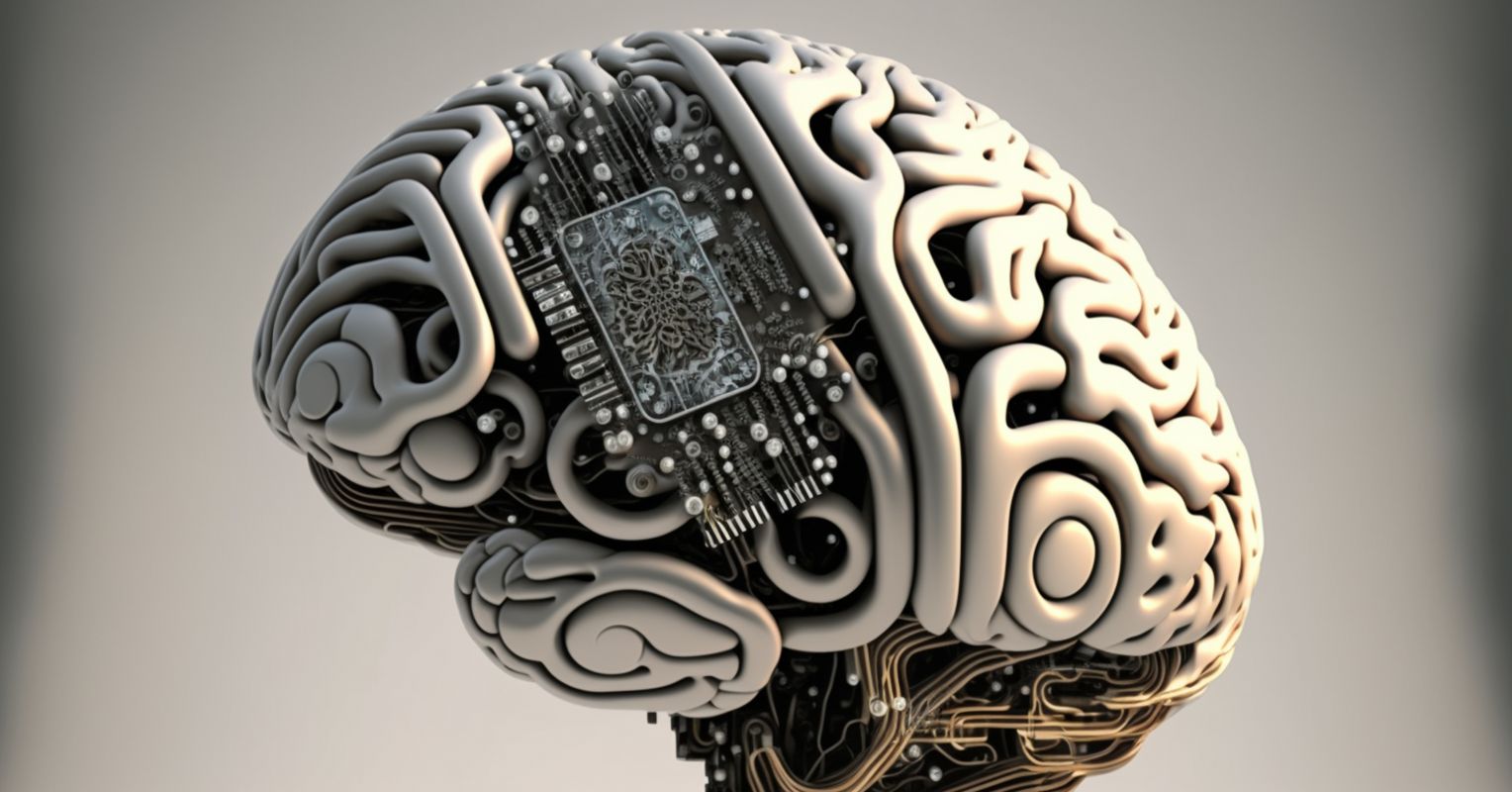
7 months agoNeuroadaptive Learning And The Rise Of Brain-Computer Interfaces In Education
Not long ago, the idea of computers understanding how students feel or think sounded like science fiction, but today, it is becoming a reality. This is called neuroadaptive learning, and it's basically a combination of education, neuroscience, and AI. This approach allows learning systems to adapt in real time based on what's happening in a student's brain, creating a personalized and responsive experience.
Education
fromInside Higher Ed | Higher Education News, Events and Jobs
7 months agoWithout AI "Quiet Cars," Learning Is At Risk
In the late 1990s, a group of commuters would board the early-morning Amtrak train from Philadelphia to Washington, D.C. They'd sit in the first car behind the locomotive, enjoying communal, consensual silence. Eventually and with the conductor's help, their car was officially designated as a noise-free zone. Soon after, Denise LaBencki-Fullmer, an Amtrak manager, recognized the value of a peaceful ride and institutionalized the program as the quiet car. At the request of passengers, it soon spread to a number of other commuter services.
Higher education


fromInside Higher Ed | Higher Education News, Events and Jobs
7 months agoFeatured Gig: eLearning Developer at UConn
The e-learning developer 1 plays a central role in this effort by collaborating with instructional designers, faculty and staff to design and deliver high-quality courses that meet compliance requirements and research-based standards. Beyond content development, the role supports faculty growth and creates opportunities to integrate new technologies, experiment with innovative solutions and strengthen both teaching and learning. This work ensures that students benefit from inclusive, engaging and flexible educational experiences in an evolving digital environment.
Higher education
fromwww.amny.com
8 months agoOp-Ed | Bridging the digital divide: Providing 350,000 students with FREE chromebooks | amNewYork
To bridge the digital divide and provide all our students with the technology they need to succeed no matter their zip code or income this school year, we are providing 350,000 brand new Chromebooks to New York City public school students with LTE or 5G access. These free devices will be distributed to students at more than 1,700 schools to help bring them on a level playing field for academic success.
New York City


fromeLearning Industry
9 months agoThe Learning Revolution: Why Methodology, Not Just Technology, Is The Next Big Thing In EdTech
The EdTech sector has witnessed explosive growth with innovations like AI-powered platforms and adaptive learning systems, promising to revolutionize how we teach and learn.
Online learning
fromInside Higher Ed | Higher Education News, Events and Jobs
11 months agoFeatured Gig: Associate Director at Yale's Poorvu Center
The Poorvu Center is seeking a new associate director to integrate quantitative methods into teaching, addressing the unique challenges of student quantitative literacy.
Women in technology
fromSitePoint Forums | Web Development & Design Community
11 months agoHow Can Tangible Coding Kits Like Matatalab Support Early Computational Thinking in Kids?
Matatalab's hands-on coding kits blend physical play with learning, promoting foundational programming concepts for young learners through interactive, screen-free experiences.
Online learning
fromeLearning Industry
11 months agoAI Terminology For L&D Professionals: A Glossary
Artificial Intelligence is becoming an integral part of Learning and Development, offering transformative possibilities like personalized learning, automation, and content creation for training programs.
Artificial intelligence
[ Load more ]