The most dangerous assumption in quality engineering right now is that you can validate an autonomous testing agent the same way you validated a deterministic application. When your systems can reason, adapt, and make decisions on their own, that linear validation model collapses.
Dependabot sounded the alarm on a large scale. Thousands of repositories automatically received pull requests and warnings, including a high vulnerability score and signals about possible compatibility issues. According to Valsorda, this shows that the tool mainly checks whether a dependency is present, without analyzing whether the vulnerable code is actually accessible within a project.
LinkedIn has redesigned its static application security testing pipeline (SAST) to provide consistent, enforceable code scanning across a GitHub-based, multi-repository development environment. The initiative was a result of the company's shift-left strategy by delivering fast, reliable, and actionable security feedback directly in pull requests, strengthening the security of LinkedIn's code and infrastructure and helping protect members and customers.
It allows developers to test code, review pull requests, and more, but also exposes them to attacks via repository-defined configuration files, Orca says. "Codespaces is essentially VS Code running in the cloud, backed by Ubuntu containers, with built-in GitHub authentication and repository integration. This means any VS Code feature that touches execution, secrets, or extensions can potentially be abused when attackers control the repository content," the cybersecurity firm notes.
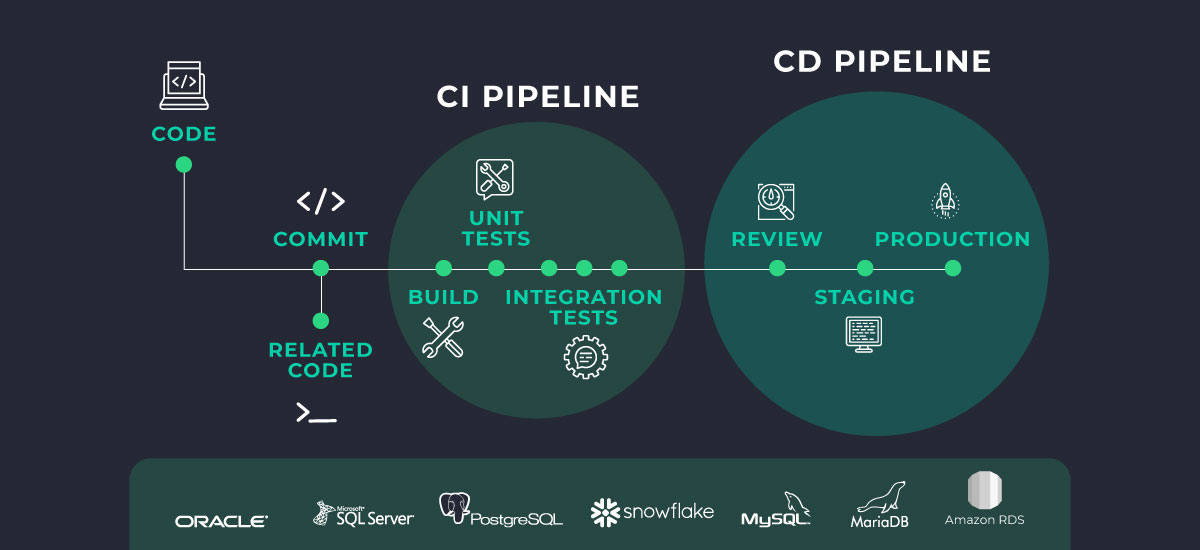
DBmaestro is a database release automation solution that can blend the database delivery process seamlessly into your current DevOps ecosystem with minimal fuss, and without complex installation or maintenance. Its handy database pipeline builder allows you to package, verify, and deploy, and gives you the ability to pre-run the next release in a provisional environment to detect errors early. You get a zero-friction pipeline, which is often not the case with database delivery process.
The main advantage of going the Multi-Cloud way is that organizations can "put their eggs in different baskets" and be more versatile in their approach to how they do things. For example, they can mix it up and opt for a cloud-based Platform-as-a-Service (PaaS) solution when it comes to the database, while going the Software-as-a-Service (SaaS) route for their application endeavors.
The real cost of poor observability isn't just downtime; it's lost trust, wasted engineering hours, and the strain of constant firefighting. But most teams are still working across fragmented monitoring tools, juggling endless alerts, dashboards, and escalation systems that barely talk to one another, which acts like chaos disguised as control. The result is alert storms without context, slow incident response times, and engineers burned out from reacting instead of improving.
Central to the GA release is Agentic Chat. This functionality builds on the previously introduced Duo Chat but goes a step further by leveraging context from virtually every part of GitLab. Think of issues, merge requests, CI/CD pipelines, and security findings. Agentic Chat can not only advise, but also actually perform actions on behalf of developers, depending on the rights and approvals that have been set.
Manual database deployment means longer release times. Database specialists have to spend several working days prior to release writing and testing scripts which in itself leads to prolonged deployment cycles and less time for testing. As a result, applications are not released on time and customers are not receiving the latest updates and bug fixes. Manual work inevitably results in errors, which cause problems and bottlenecks.
Industry professionals are realizing what's coming next, and it's well captured in a recent LinkedIn thread that says AI is moving on from being just a helper to a full-fledged co-developer - generating code, automating testing, managing whole workflows and even taking charge of every part of the CI/CD pipeline. Put simply, AI is transforming DevOps into a living ecosystem, one driven by close collaboration between human judgment and machine intelligence.
The reason for this is Snap - a Linux application packaging format - creates a local Trash folder for each VS Code version, one that's separate from the system-managed Trash, according to a VS Code bug report dating back to November 11, 2024. Not only that, but Snap keeps older versions of VS Code after updates, potentially multiplying the number of local Trash folders and the trashed-but-not-deleted files therein. Emptying the system Trash folder doesn't affect the local instances.
Giving coding agents full access to all of Ramp's engineering tools is what makes Inspect truly innovative. Instead of only letting agents write basic code, Ramp's system runs in sandboxed virtual machines on Modal. It works seamlessly with databases, CI/CD pipelines, monitoring tools like Sentry and Datadog, feature flags, and communication platforms such as Slack and GitHub. Agents can write code and ensure it works by using the same testing and validation processes that engineers use every day.
We build production platforms with AI every day, and we work with teams doing the same with their own stack -Cursor, Claude Code, Copilot. The difference shows up fast. By day two, some codebases are already harder to change than they were yesterday. Others keep getting easier. The difference is never the model. It's what the code lands in. The teams we work with that hit a wall? It's always the same story.
Oracle is taking steps to "repair" its relationship with the MySQL community, according to sources, by moving "commercial-only" features into the database application's Community Edition and prioritizing developer needs. The "new era" was discussed at a pre-FOSDEM MySQL and Friends event in Belgium. According to a summary seen by The Register, it focused on reinvigorating the MySQL community after a period under Big Red's watch in which the project's headcount fell and developers considered alternatives to the venerable database.