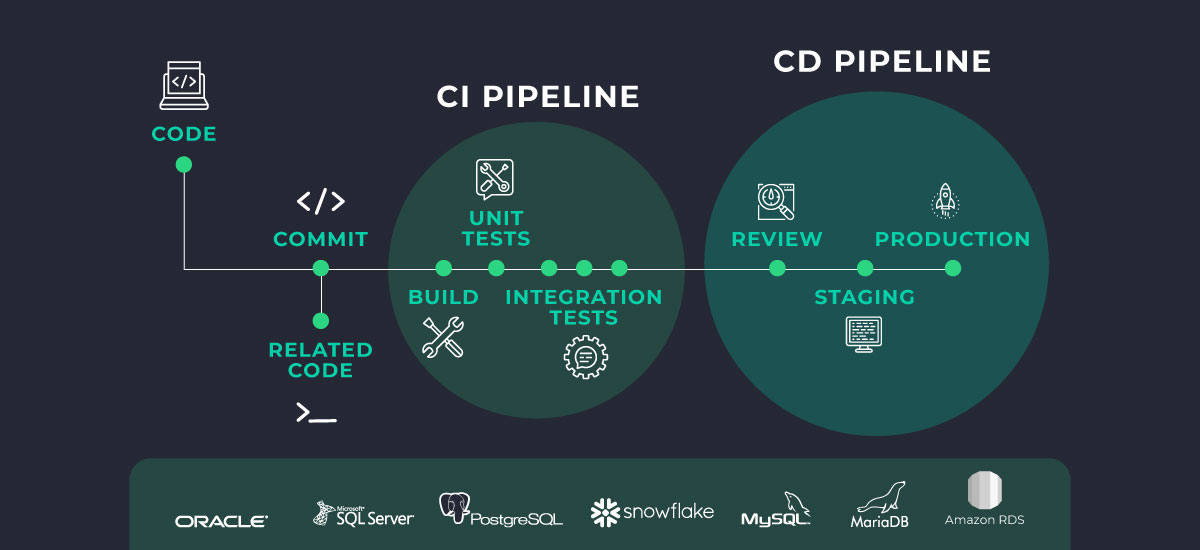
"A proper version control mechanism is vital for managing any application development process. It is more significant when moving from slow and monolithic development processes to leaner and faster agile developments. However, the database is an important aspect that is left out of the agile development process. In this article, we will see what you can achieve by implementing database version control into your CI/CD pipeline."
"Once you start reading this article, the first question you would get is what's the meaning of database version control. The same can be done for the database to keep track of all the changes done by different team members. This can include database schema, indexes, views, stored procedures, functions, database configurations, etc. The database version control acts as a single source of truth, allowing you to properly view, track and manage all the modifications done to your databases."
Database version control records schema, indexes, views, stored procedures, functions, and configuration changes in a source-controlled repository, providing a single source of truth. It aligns database changes with application code to enable automated CI/CD pipelines, faster releases, and reliable deployments. Databases are often omitted due to perceived complexity, fear of breaking production, separate team responsibilities, and lack of tooling. Implementing version control improves collaboration, enables rollbacks, enforces auditing, and reduces drift across environments. A unified tool is essential to manage multiple database platforms consistently, handle branching and merges, and provide auditing and approvals. Specialized tools like DBmaestro automate deployments, enforce guardrails, and simplify change management.
Read at Dbmaestro
Unable to calculate read time
Collection
[
|
...
]