Gadgets
fromThe Verge
10 hours agoSony's latest gaming headset offers great open-back audio
The H6 Air is a lightweight, open-back gaming headset that offers a natural sound experience and comfort, but lacks noise isolation.
Streaming hasn't killed physical media. It's made us crave it more. CDs are back in rotation, showing up in record stores, apartments, and design studios with a renewed sense of purpose.
The DuoBell works by emitting two sounds the headphone can't cancel. One sound is designed to be within a frequency in ANC's narrow blind spot that it can't invert, and another is too fast and confusing for ANC to process.
Music has become the backdrop to almost everything, cooking, working, reading, but the hardware that plays it often looks like a leftover from a tech store, plastic boxes that clash with furniture. There is a tension between wanting good sound in every room and not wanting your living space to feel like a gadget shelf. A speaker that behaves like hi-fi but looks like it belongs on a sideboard can quietly solve that.
The ring-like portable speaker has a lanyard that lets users hook it onto a backpack or simply carry it around the wrist. Another option is to wear it around the neck, turning the device into a personal stereo system that surrounds the user with sound while remaining lightweight and portable.
The original KEF Muo launched back in 2015 and felt like a turning point in portable hi-fi. Serious, designer Bluetooth speakers from a respected hi-fi brand were rare back then-with only a few brands like Bang & Olufsen and Loewe interested in combining pretty and portable. These early designs were still given the side-eye by most traditional audio.
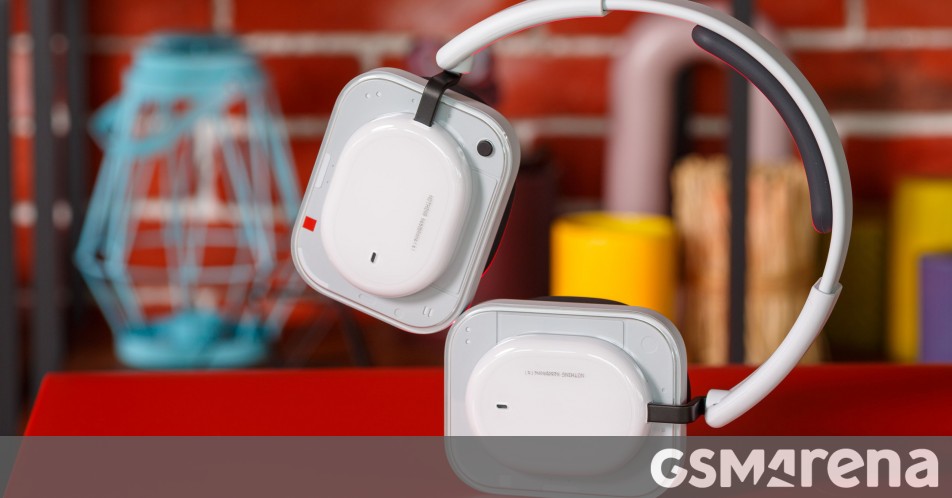
Nothing launched its Headphone (a) alongside its Phone 4a series on March 5th, with compatibility with the Phone 4a Series via ChatGPT to hear Nothing News or Essential Space, its information hub app. Nothing nailed the audio quality in its previous headphones, as I've written while testing its open-ear Nothing Open and the Nothing Ear (a). It's no different here, with neutral and clear sound fit for all-day listening.
What's wild about this jump in stamina is that it's disproportionate to the battery's capacity. The Kilburn II ships with a 5,200 mAh cell, while the new model is only about 5% bigger: 5,500 mAh. Clearly, some big efficiencies have been gained.
They boast clear, vibrant sound that helps bring games, videos, and music to life in a way your monitor and cheaper speakers can only dream of. They stay true to that sound profile even when you crank the volume up, without any distortion or crackling. One of the areas you're compromising on is the bass. A number of our other, more expensive speaker sets include a dedicated subwoofer, which makes a huge difference with those big explosions in your favorite game or movie,
Most consumers believe punchy bass and sizzling highs are key to a good speaker. If that sounds like your taste, then you have a lot of options available for you (because a lot of manufacturers cater to booming bass). But the mark of a truly good speaker is the ability to blend the sound in such a way that you hear it as the artist intended.
As discovered by Dealabs, Sony will likely unveil its LinkBuds Clip (WF-LC900), which features an open-ear design with the buds attaching around the earlobe. A listing from an Indonesian retailer revealed the design and key specs of the LinkBuds Clip, which are expected to feature adaptive volume control, 360 Reality Audio support and background music effect found on previous LinkBuds models.
When I sit at my desk to work, I play music in the background to avoid getting distracted. For an immersive listening experience that encourages productivity, I typically throw on a pair of headphones, with my current rotation consisting of the Bose QuietComfort Ultra, Sony Ult Wear, and Sennheiser HD 660S2. Also: Spotify vs. Apple Music: I've tried both streaming services, and prefer this one
If open-ear audio were a house party, then most wireless headphones would be gazing in longingly at the jubilation, hands pressed to the window, glass fogged, a single tear trickling down their theoretical, closed-audio cheek. That's because it's been mostly earbud-style form factors that have enjoyed the fruits of that ecosystem, like Bose's Ultra Open Earbuds, Nothing's Ear Open, or the fantastic Soundpeats Clip1.
I've spent a lot of time testing headphones, and I always find a new favorite with every new release. But one pair of headphones will always hold a special place in my heart, years after their launch: the Beats Solo 3 on-ear headphones. The Solo 3 awakened my passion for headphones; they were the first pair I spent more than $50 on. I bought a Rose Gold pair in high school with the money from my first job, and they stuck with me throughout college.
There's something oddly comforting about watching the vinyl resurgence happen in real time. We've collectively decided that convenience isn't everything, that sometimes the ritual matters as much as the result. But while turntables have been getting their moment in the spotlight, another piece of audio history has been quietly staging its own comeback: the dedicated digital audio player. Enter the DAP-1, a concept device from Frankfurt-based 3D artist
For some time now, I -- like many audiophiles -- have looked down upon such earbuds. And although these aren't anywhere near the best earbuds I've experienced, the sound they produced was quite surprising. There was rich, clear bass, clean highs, and (mostly) mellow mids. For me, that's a winning combination out of the box. And, thanks to the EarFun app (and a firmware upgrade) the noise cancellation and connection stability were both much improved.


.png)


