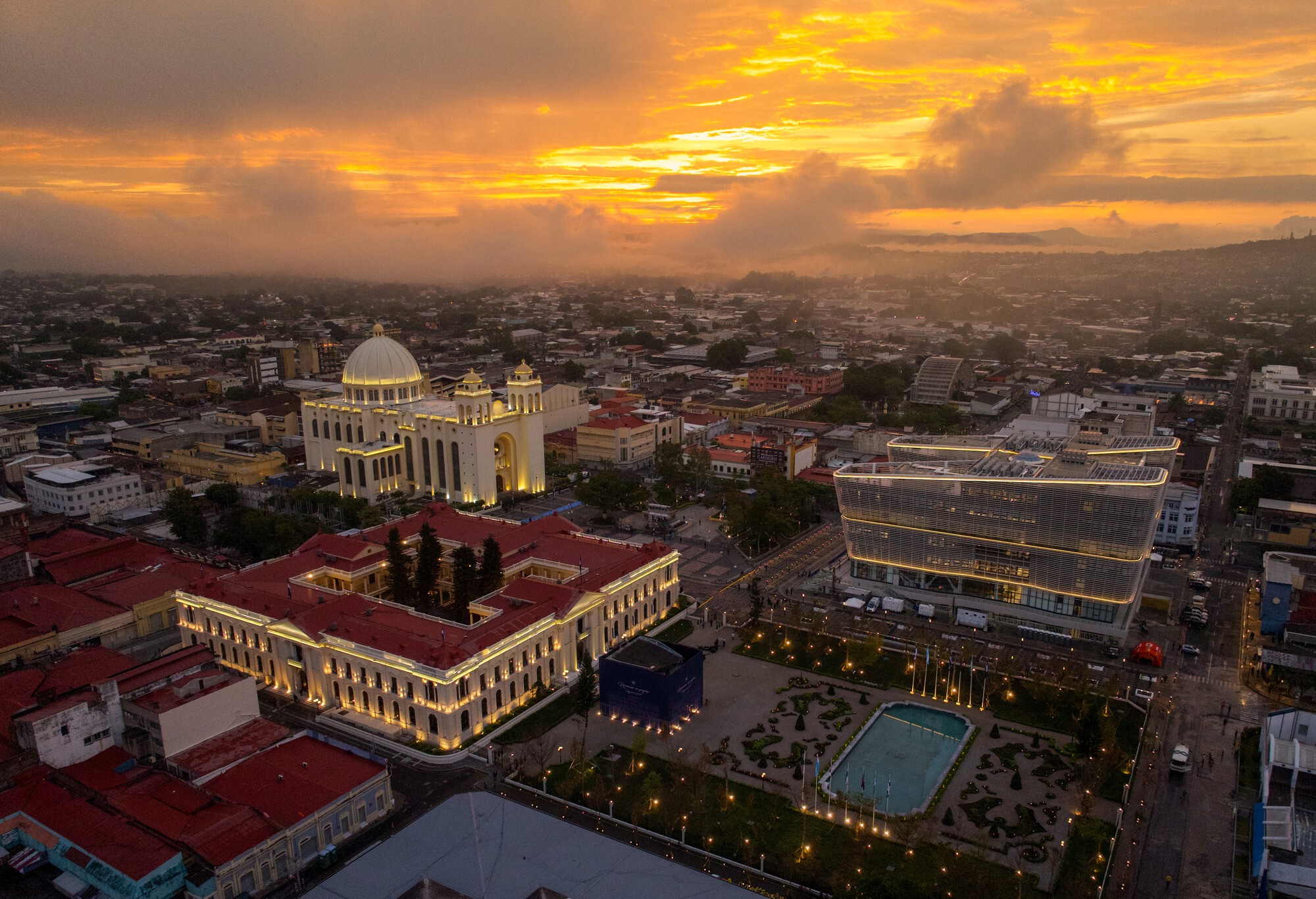
"Historic center renewal has become a recurring strategy in Central American cities seeking to reassert the symbolic, economic, and functional relevance of their traditional cores. These processes often combine physical rehabilitation, institutional investment, and stricter control over public space. San Salvador offers a recent and instructive case, which allows for understanding of how interventions in inherited civic spaces balance infrastructure improvement with heritage conservation and social regulation."
"San Salvador, the capital of El Salvador, was founded by the Spanish in 1545 in a valley framed by the San Salvador Volcano to the west and Lake Ilopango to the east. As with many colonial cities in Spanish America, its initial urban structure followed the guidelines outlined in the Laws of the Indies. These 16th-century laws required a rectilinear grid (a chessboard-like street layout) organized around a central square."
Historic center renewal has become a common strategy across Central America to restore symbolic, economic, and functional relevance to traditional urban cores. Such interventions combine physical rehabilitation, institutional investment, and stricter control of public space to reshape civic life. San Salvador illustrates how these measures balance infrastructure upgrades with heritage conservation and social regulation. The city originated under Spanish colonial planning in 1545, centered on a plaza (La Libertad) and a rectilinear grid mandated by the Laws of the Indies. Over time the core evolved into a Microcentro organized around three plazas—La Libertad, Plaza Morazán, and Plaza Gerardo Barrios—reflecting layered historical urban development.
Read at ArchDaily
Unable to calculate read time
Collection
[
|
...
]