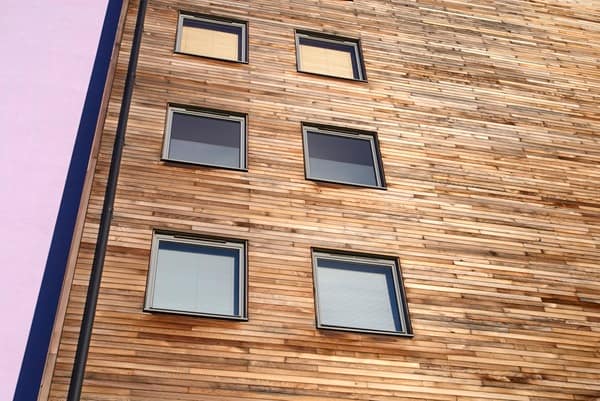
"Timber cladding has become a defining feature of contemporary construction across the UK. Once associated mainly with rural housing and architectural one-offs, it is now widely used across residential developments, commercial buildings, education projects, and urban regeneration schemes. Its appeal is often described in visual terms, but appearance alone does not explain its continued growth. Timber offers flexibility in design, a lower embodied carbon profile than many alternatives, and the ability to integrate effectively within modern wall systems when specified correctly."
"At the same time, timber cladding operates within one of the most demanding regulatory environments in Europe. Fire safety, durability, moisture control, and long-term maintenance expectations have reshaped how timber is assessed and approved. The material is no longer viewed as inherently simple or forgiving. Instead, it is treated as a technical façade solution whose performance depends on informed specification and careful detailing."
"A common source of failure in timber-clad buildings is the assumption that cladding functions purely as a decorative skin. In reality, timber cladding forms part of a layered external wall system that includes battens, ventilation cavities, membranes, insulation, and fixings. Each element plays a role in moisture management and structural stability. The UK climate places sustained pressure on façades through prolonged rainfall, variable humidity, and seasonal temperature changes."
Timber cladding is widely used across residential, commercial, education and regeneration projects due to visual appeal, design flexibility, lower embodied carbon and compatibility with modern wall systems. The material faces strict regulation for fire safety, durability, moisture control and maintenance. Timber cladding must be specified and detailed as a technical façade solution rather than a decorative skin. Proper systems include battens, ventilation cavities, membranes, insulation and fixings to manage moisture and structural stability. The UK climate causes expansion and contraction and sustained moisture exposure that can lead to deformation if movement is restricted or moisture is trapped. Species choice, processing, installation and maintenance determine long-term performance.
Read at London Business News | Londonlovesbusiness.com
Unable to calculate read time
Collection
[
|
...
]