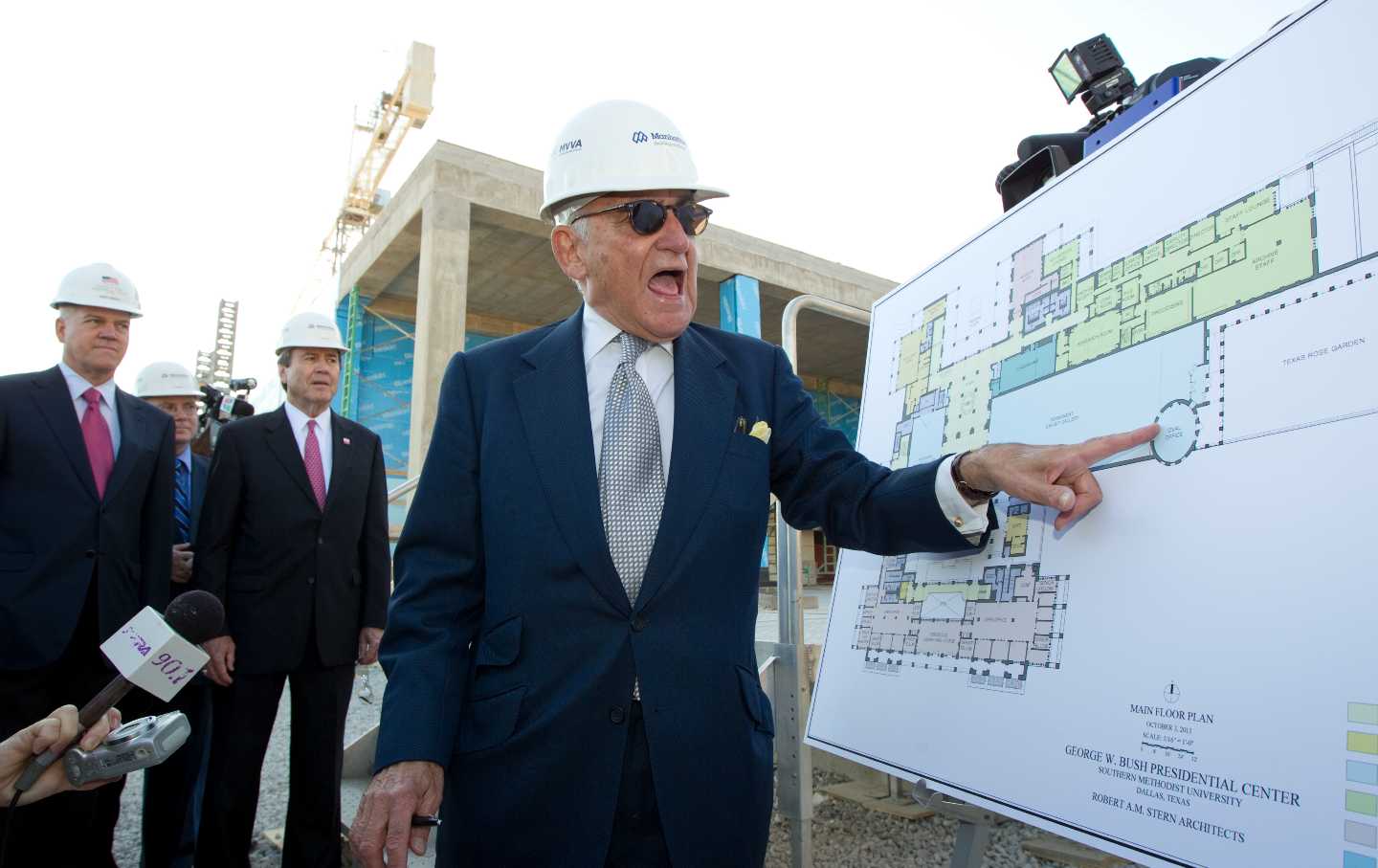
"The architecture of Stern's generation, which reached its zenith in the 1980s and '90s was, despite its fun colors and cartoonish irony, one whose clientele consisted largely of the elite and the institutions that fostered their rise to power. In this, Stern participated more happily than perhaps any of his peers."
"Born in 1939 to a middle-class family, and graduating with an MArch from Yale in 1965, he got his start designing Manhattan penthouses and summer houses for the well-heeled along the windswept coasts of New England. The coastal homes were often informed by the shingled vernacular of the late 19th and early 20th century so beloved of his peers like Robert Venturi and Charles Moore."
Robert A.M. Stern, a prominent postmodern architect who passed away at 86, exemplified neoliberal architecture from the 1980s-90s despite its playful colors and ironic aesthetics. His work primarily catered to wealthy elites and powerful institutions, establishing a career pattern beginning with Manhattan penthouses and New England coastal homes. Stern's designs drew from late 19th and early 20th-century shingled vernacular architecture, later expanding into a dedicated house-replication office within his firm RAMSA. His conservative, neoconservative approach—both architecturally and politically—remained consistent throughout his career. His most famous work, 15 Central Park West, exemplifies his signature style of imitating prewar architectural grandeur while serving the city's most privileged residents.
Read at The Nation
Unable to calculate read time
Collection
[
|
...
]