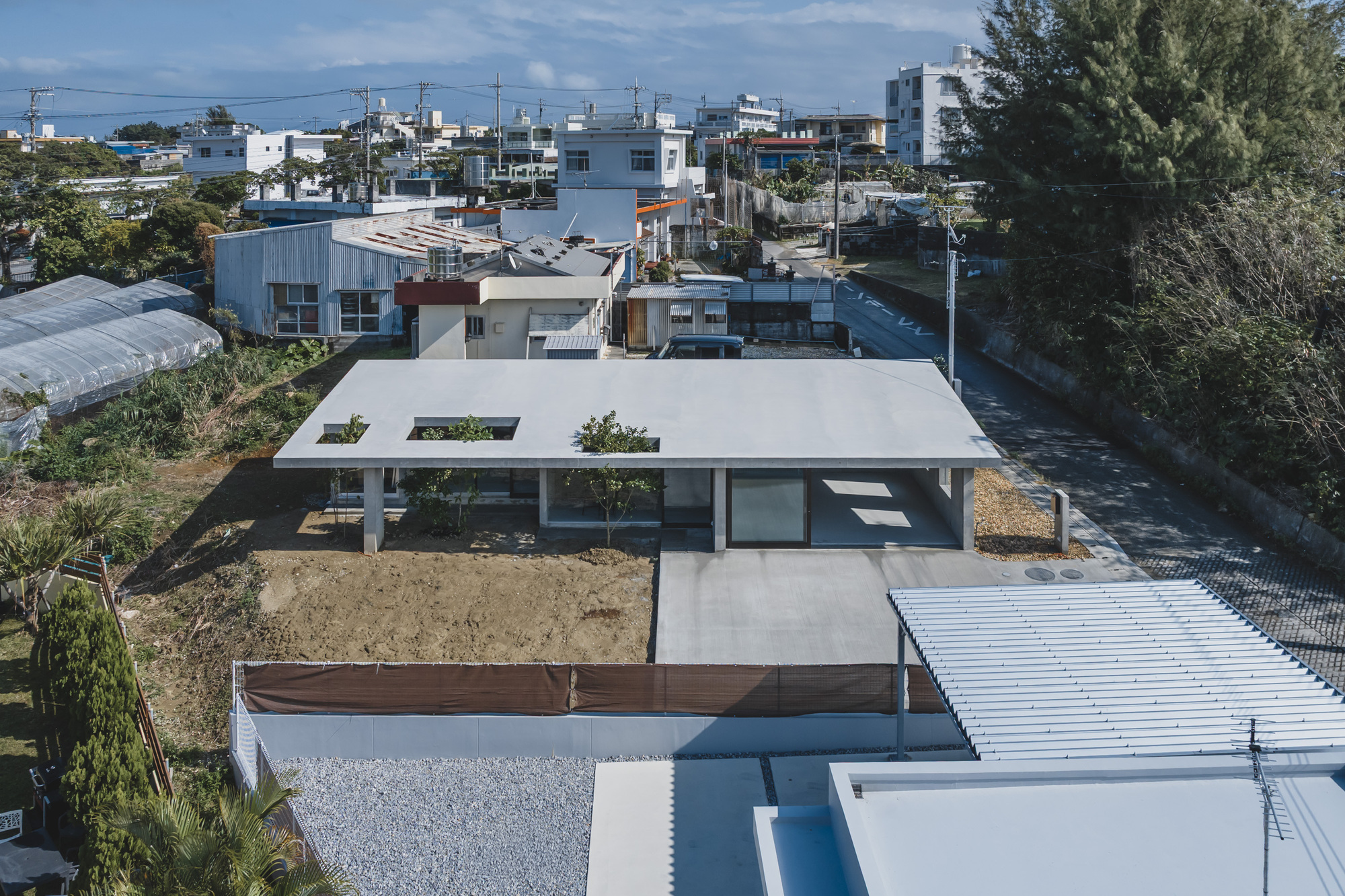
"The design did not begin by organizing these demands simply as functions or rooms. Instead, it took as its starting point how the architecture might respond to the environmental conditions specific to this place: intense sunlight, humid air, and winds that shift direction with the seasons."
"Rather than creating a container that satisfies individual requirements, the aim was to establish a frame that could receive both life and environment, and continue to evolve over time."
The house in Uruma, Okinawa, is designed for clients transitioning to a new life stage after raising children. It accommodates various activities like work and hobbies but prioritizes environmental responsiveness over simple functional organization. The design addresses intense sunlight, humidity, and seasonal winds, aiming to create a flexible framework that integrates life and environment. This approach allows the architecture to evolve over time, reflecting the clients' needs and the surrounding conditions.
Read at ArchDaily
Unable to calculate read time
Collection
[
|
...
]