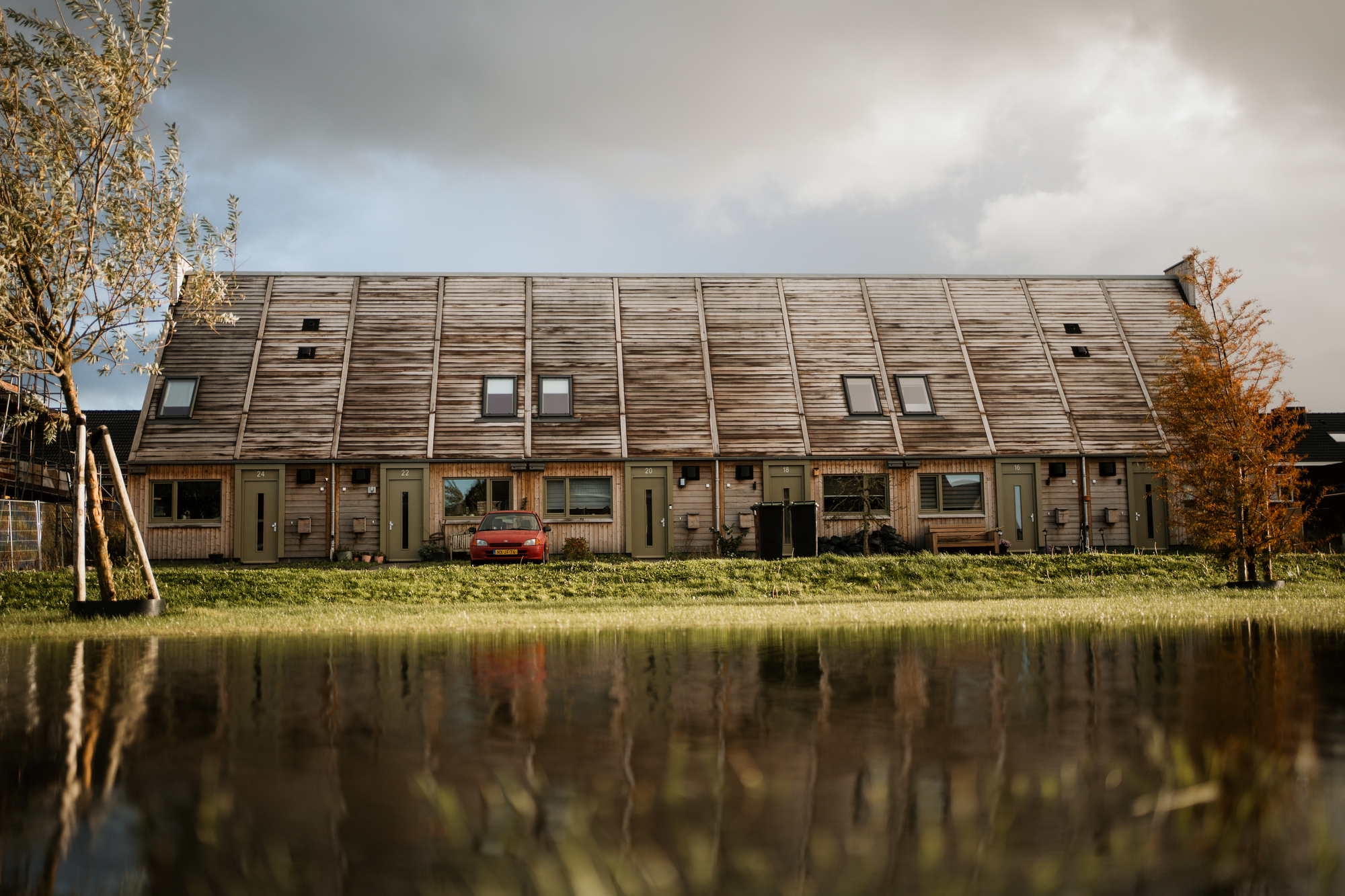
The carbon-negative neighborhood in Marknesse consists of 12 affordable rental homes designed with a high percentage of biobased materials. The project aims to create scalable housing solutions that reduce CO₂ emissions and reliance on fossil resources. It reinterprets the traditional Dutch 'Delft Red' brick house by incorporating circular design principles and wooden chimneys that serve as bat habitats. The initiative targets first-time buyers and low-income households, establishing a replicable model for social housing constructed with natural materials and setting a new standard for biobased construction.
"The project comprises 12 affordable rental homes built with a high percentage of biobased materials, aiming to develop scalable housing solutions that minimize CO₂ emissions and reduce reliance on fossil resources."
"The design reinterprets the traditional Dutch brick house, known as the 'Delft Red' typology, characterized by red brick facades and orange-red roof tiles, while introducing wooden chimneys that double as habitats for bats."
"From a technical standpoint, the project achieves a notably high share of renewable and circular raw materials, reaching 76%, with the entire above-ground structure composed primarily of natural materials."
Read at ArchDaily
Unable to calculate read time
Collection
[
|
...
]