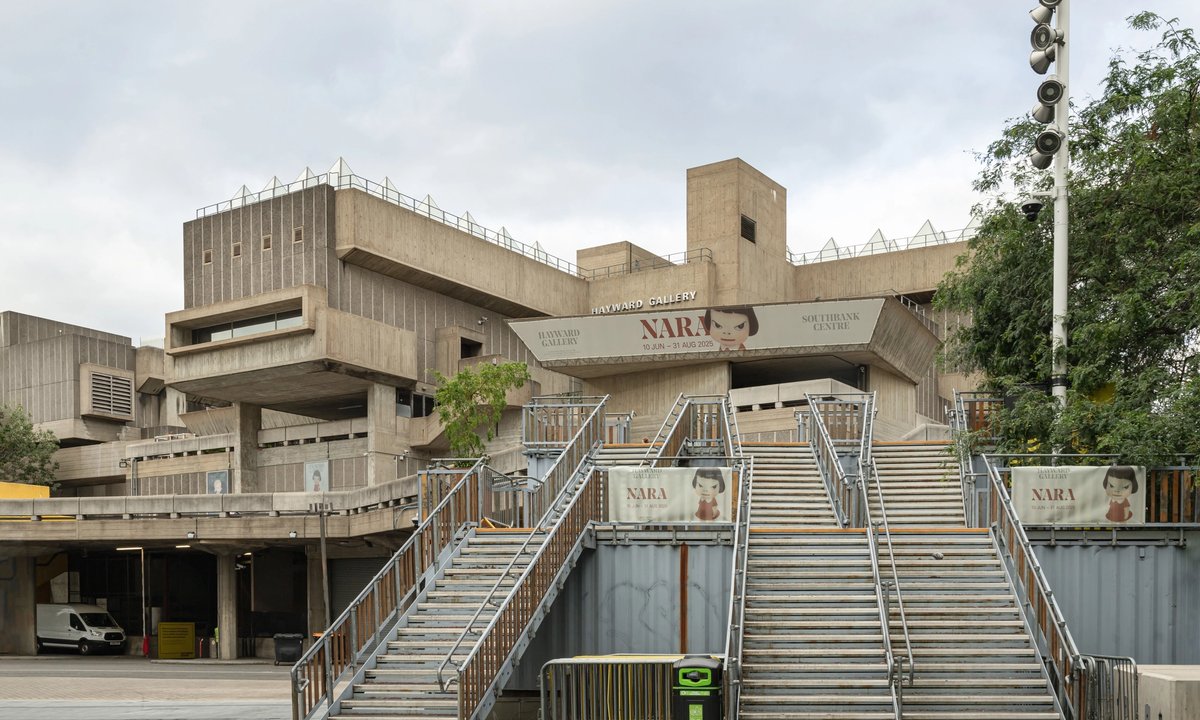
"London's Southbank Centre has been awarded Grade II listed status by the UK Department for Culture, Media and Sport, giving the controversial Brutalist landmark statutory heritage protection. The vast venue-a symbol of post-war optimism initially built in 1951 under a Labour government-comprises a set of concrete buildings including the Royal Festival Hall, the Purcell Rooms and the Queen Elizabeth Hall, which opened in 1967, along with the Hayward Gallery which followed in 1968."
"The Grade II listing covers the Hayward Gallery, Purcell Room and Queen Elizabeth Hall-all designed by a team led by architect Norman Engleback as head of the Greater London Council's architecture department-as well as the skatepark undercroft, terraces, walkways and staircases around the complex. The Royal Festival Hall was previously listed as Grade I in 1988."
"Historic England, which registers listed buildings, says that it is of historic importance given that "the Hayward Gallery was the first major building project undertaken in conjunction with the Arts Council, it is a key example of a purpose-built gallery for temporary and touring exhibitions, and one of the first in England to experiment with modern styling and planning". It is also noted its architectural importance, stating that its designation was in part due to its "use of exposed concrete in which the building's monumental scale is countered by the fine texture and tactility of its surface finishes, executed with exemplary technical skill"."
London's Southbank Centre has been given Grade II listed status for the Hayward Gallery, Queen Elizabeth Hall and Purcell Room, extending statutory protection to terraces, walkways and the skatepark undercroft. The Royal Festival Hall retains its Grade I status from 1988. The complex comprises concrete post-war buildings completed between 1951 and 1968 and marks its 75th anniversary with events including an Anish Kapoor exhibition. Historic England highlighted the Hayward as a pioneering Arts Council collaboration and an early purpose-built modern gallery, praising its exposed concrete, monumental scale and finely executed surface finishes. A centre spokesperson called for government investment to sustain the buildings.
Read at The Art Newspaper - International art news and events
Unable to calculate read time
Collection
[
|
...
]