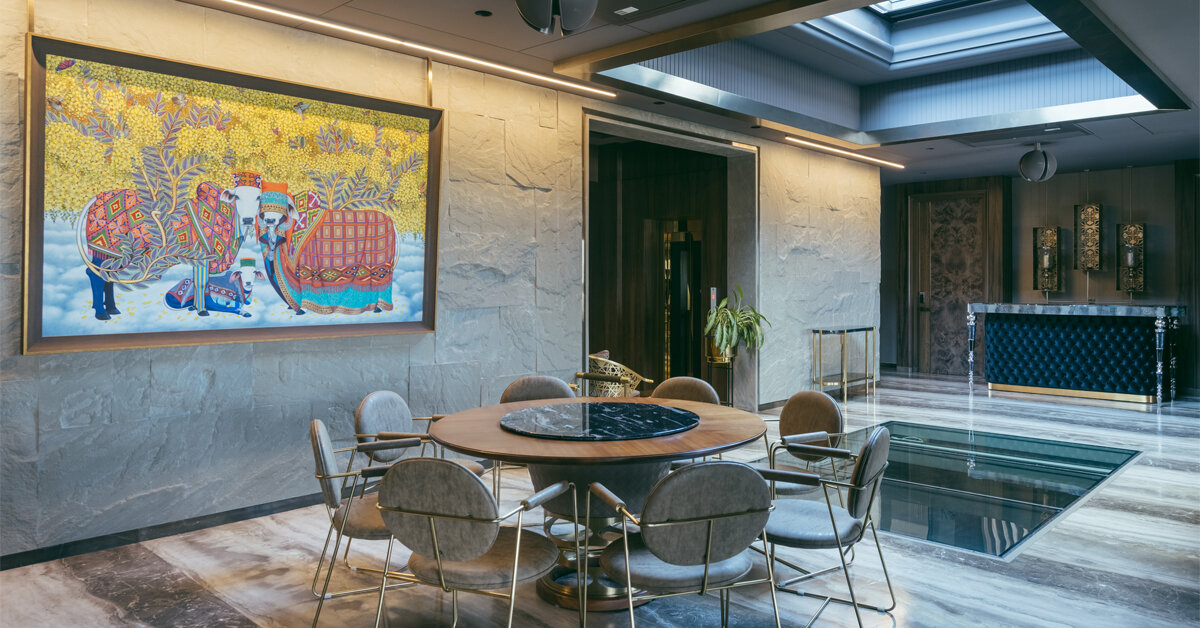
"The penthouse residence by Metaphors is defined by a balance of extremes, where bold neo-classical elements are combined with the raw mass of brutalism. The architectural program rejects a singular aesthetic, instead opting for a material collision that pairs deep-veined, sculpted marbles with intricately detailed ceilings and embossed wall panels. This allows the residence to function as a versatile home, shifting between an expansive stage for high-society hosting and a series of intimate, quiet sanctuaries for family life."
"Based in India, Metaphors was co-founded by Anand Bhagat and the late Amala Sheth, gaining early recognition for designing large-scale IT campuses and commercial spaces during the country's technological boom. The firm's expertise spans hospitality, residential, and institutional sectors, always prioritizing functional and contextually sensitive design. Bhagat, a certified naturalist and martial artist, steers the studio's vision through his personal mantra, 'AUM' - Aesthetics, Utility, and Mindfulness."
"To animate the interiors, Metaphors utilizes a sequence of strategic ceiling cut-outs that allow natural light to penetrate the deep plan. These openings transform the atmosphere of the home throughout the day, casting shifting shadows across the heavy stone surfaces and textured wall treatments. The spatial organization follows this logic of contrast; while the brutalist influence introduces a sense of permanence and austerity, the neo-classical detailing provides a rhythmic ornamentation that softens the structural rigor."
Metaphors' penthouse pairs bold neo-classical ornamentation with brutalist massing, combining deep-veined sculpted marbles, intricately detailed ceilings, and embossed wall panels to create a material collision. The residence functions both as an expansive stage for high-society hosting and as a collection of intimate, quiet family sanctuaries. Strategic ceiling cut-outs introduce natural light into the deep plan, producing shifting shadows across heavy stone surfaces and textured walls throughout the day. Spatial organization relies on contrast: brutalism contributes permanence and austerity while neo-classical detailing adds rhythmic ornamentation that softens structural rigor. Practice prioritizes aesthetics, utility, and mindfulness with technical precision and contextual sensitivity.
Read at designboom | architecture & design magazine
Unable to calculate read time
Collection
[
|
...
]