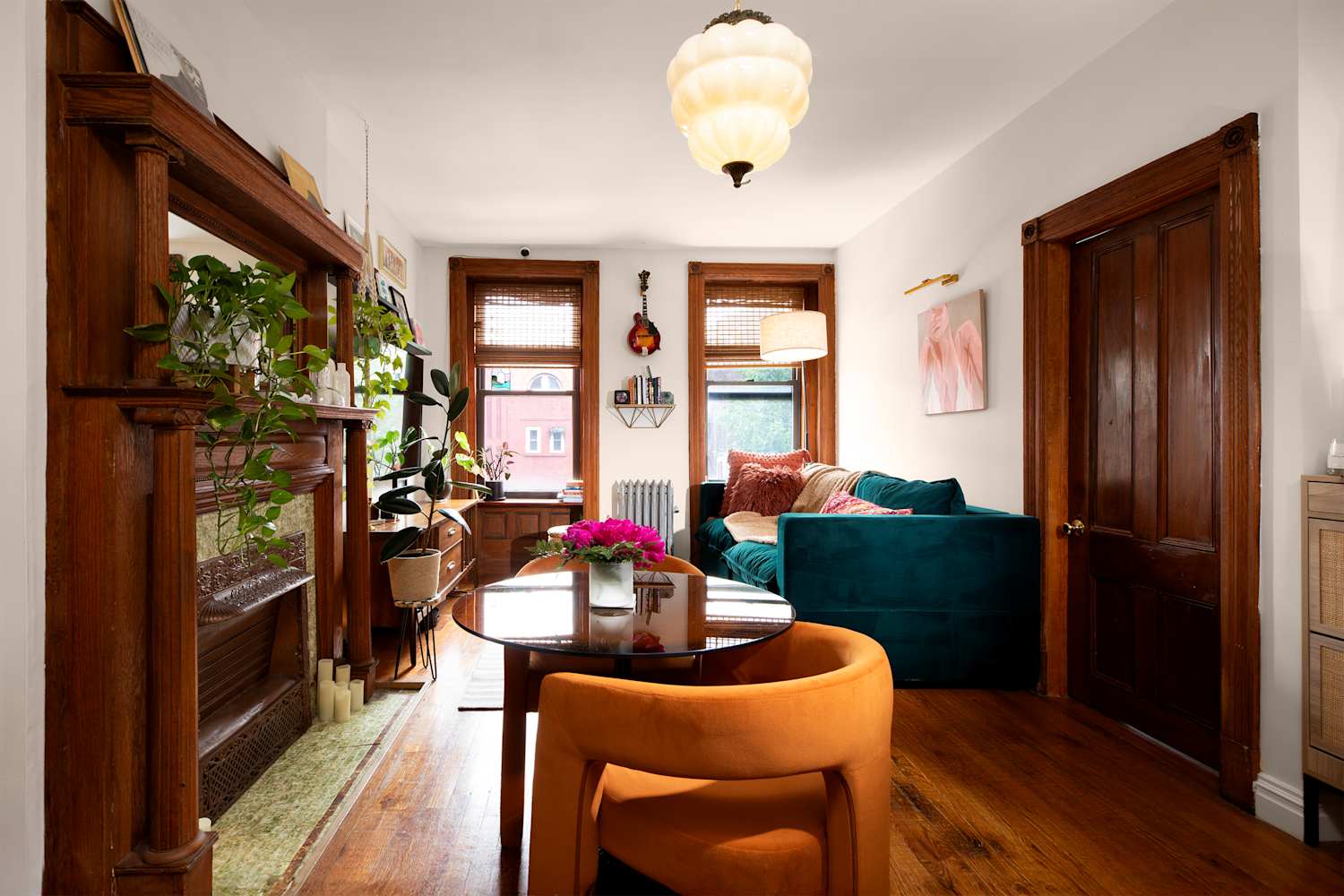
"I moved into a new apartment a few months ago, and have been constantly looking for ways to make it feel lived-in and inviting without it looking cluttered. In a quest to add some warmth and charm to the space, I brought in primarily wood furniture. While the rest of my home looked great, I felt that my den (which has a different tone of hardwood flooring from the rest of my house) looked a bit chaotic."
"Introducing too many mismatched wood finishes is a common interior design mistake that can create a disorganized look. On the other hand, trying to keep all of your furniture the same tone is equally cringe, and can flatten the space. So, like my mom, I always try to stick to no fewer than two and no more than three wood finishes to keep a space looking perfectly layered and harmonious."
Limit wood finishes in a room to two or three to prevent a chaotic or flattened appearance. Establish a hierarchy of tones: a base (flooring or largest furniture), a contrast (secondary tone for depth), and an accent (smaller pieces or shelving). Prefer tones that share undertones—warm, cool, or neutral—to maintain cohesion, while allowing some variation for interest. Selecting pieces from the same wood species can help ensure consistent undertones. Avoid both too many mismatched finishes and a single uniform tone to keep the space layered and inviting.
Read at Apartment Therapy
Unable to calculate read time
Collection
[
|
...
]