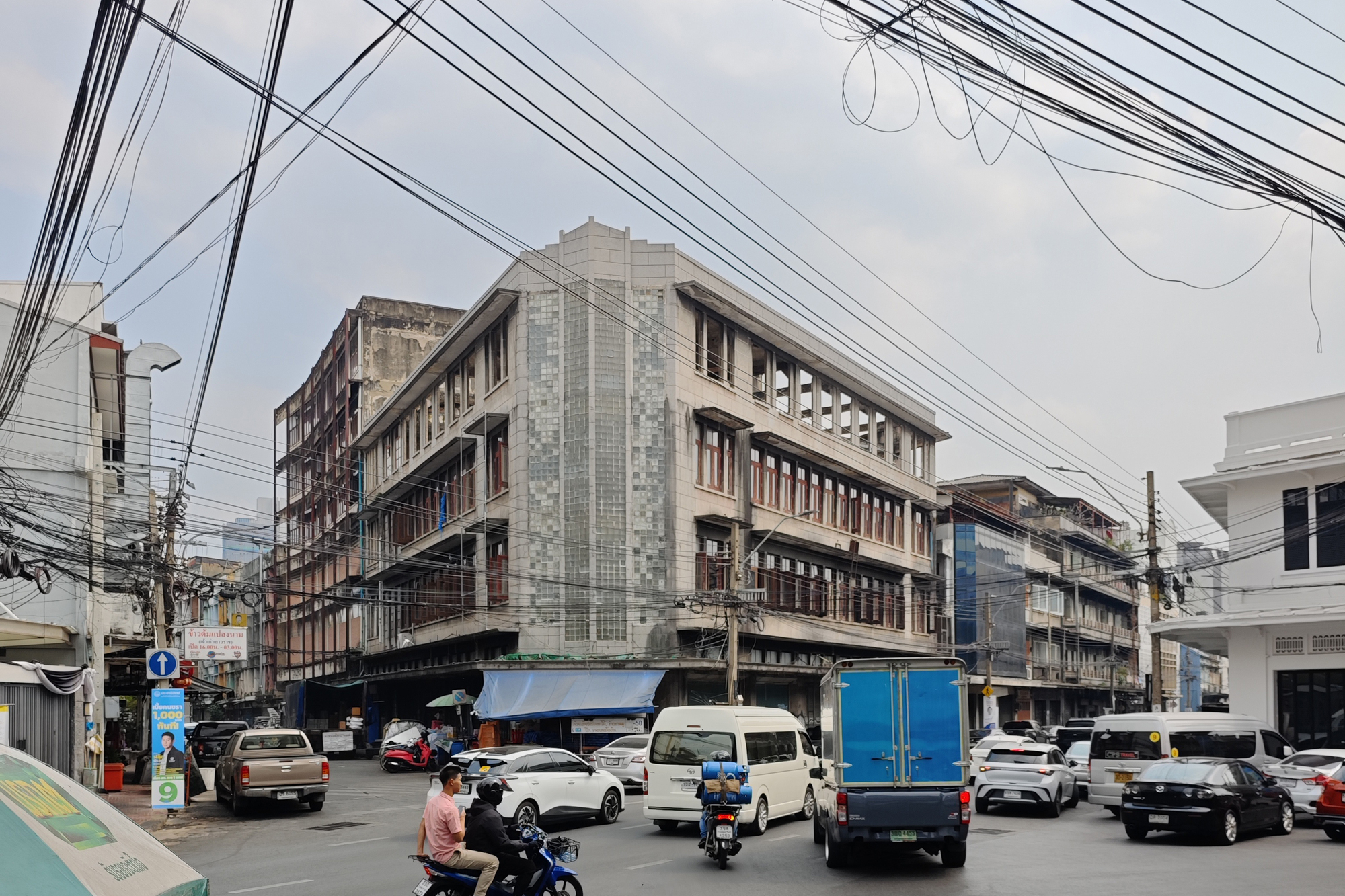
"Architectural heritage is not only what a building was, but what itcontinues to become: a long process of building, rebuilding, and re-occupying over time. Where opportunities allow, this continuity produces a layered condition -one in which visitors can witness, experience, and feel the gradual shifting of a building's fabric, materiality, spatial order, and patterns of use, and occasionally even participate in that transformation."
"Yet many projects-particularly those driven primarily by commercial imperatives-do not choose to value, or even to recognize, this slower work of adaptive reuse and heritage continuation. Developments governed by a numbers-only logic often opt for the easier path of demolition and rebuild: maximizing plot ratio, GFA, and rentable area with the efficiency of a clean slate. And still, every now and then, an opportunity surfaces that allows us to see-and to enjoy-the city's process of architectural "heritaging" in real time."
"Adaptive reuse is perhaps more widely publicized in Europe, but across Asia, there are also numerous deliberate examples that preserve heritage fabric and extend its dialogue through carefully staged transformations. Particularly noteworthy are museum and gallery projects-not only because their program requirements can be comparatively flexible (even if top-tier institutions often demand rigorous standards for dimensions, lighting, and temperature/humidity control), but because many emerging or community-scale museums can operate with a more casual tolerance."
Architectural heritage constitutes an ongoing cycle of building, rebuilding, and re-occupying that produces layered conditions in which visitors can witness shifts in fabric, materiality, spatial order, and use. Commercially driven developments often prioritize demolition and rebuilding to maximize plot ratio, gross floor area, and rentable area, neglecting slower processes of adaptive reuse. Occasionally opportunities arise that reveal the city's active process of heritaging. Adaptive reuse occurs across Europe and Asia, with museums and galleries often serving as apt candidates due to flexible program needs and public orientation. Converting formerly private or restricted structures into public cultural spaces enables sustained engagement with architectural layers.
Read at ArchDaily
Unable to calculate read time
Collection
[
|
...
]