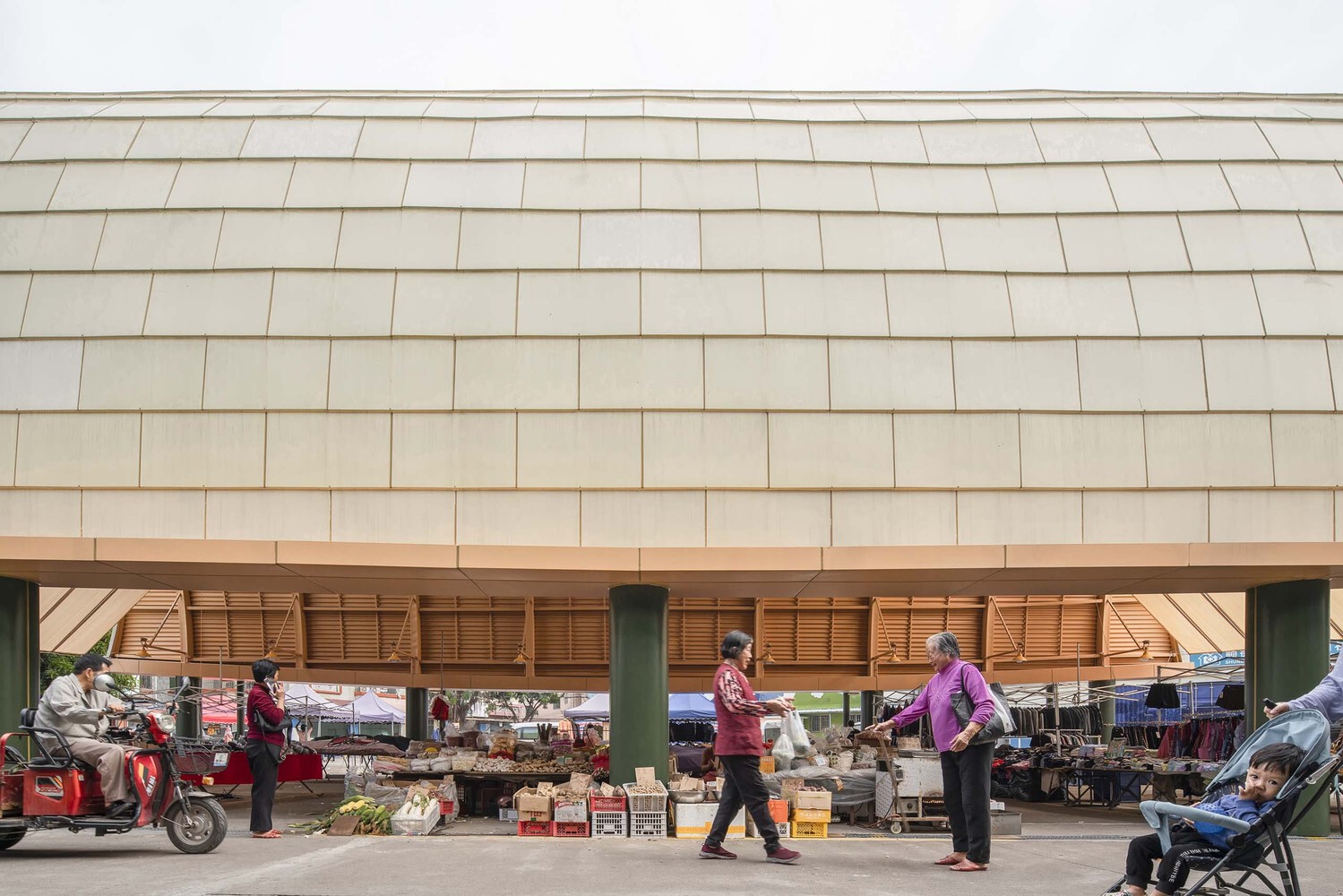
"The making of a place is not a difficult thing in principle; it is enough for people to come together in a regular set location for a purpose or activity, and a space becomes. This does not disregard the fact that a physical element needs to accompany this gathering for a space to become sheltering, accommodating, and alluring. This idea of the space that emerges from intent can most definitely be seen in one of the most ancient of functions,"
"For a market to become, the architectural element can be as simple as a light roof, which would harbor merchants and offer a non-spoken boundary to the place, or it can be as resourceful as adaptively reusing an existing building or site to fit new needs. Finally, it can be a temporary and lightweight structure pitched for certain events or needs and then removed to be used elsewhere, or for other means."
Places emerge when people regularly gather at a set location for a shared purpose or activity, and a modest physical element accompanies the gathering. Food and farmers' markets exemplify this, bringing communities together to exchange goods and produce with minimal spatial requirements beyond space to pitch a table or kiosk. Architectural responses range from simple light roofs that harbor merchants and define boundaries, to adaptive reuse of existing buildings or sites to accommodate market functions. Markets can also use temporary, lightweight structures that are pitched for specific events and later removed or relocated. Market design balances sheltering, accommodating, and alluring qualities.
Read at ArchDaily
Unable to calculate read time
Collection
[
|
...
]