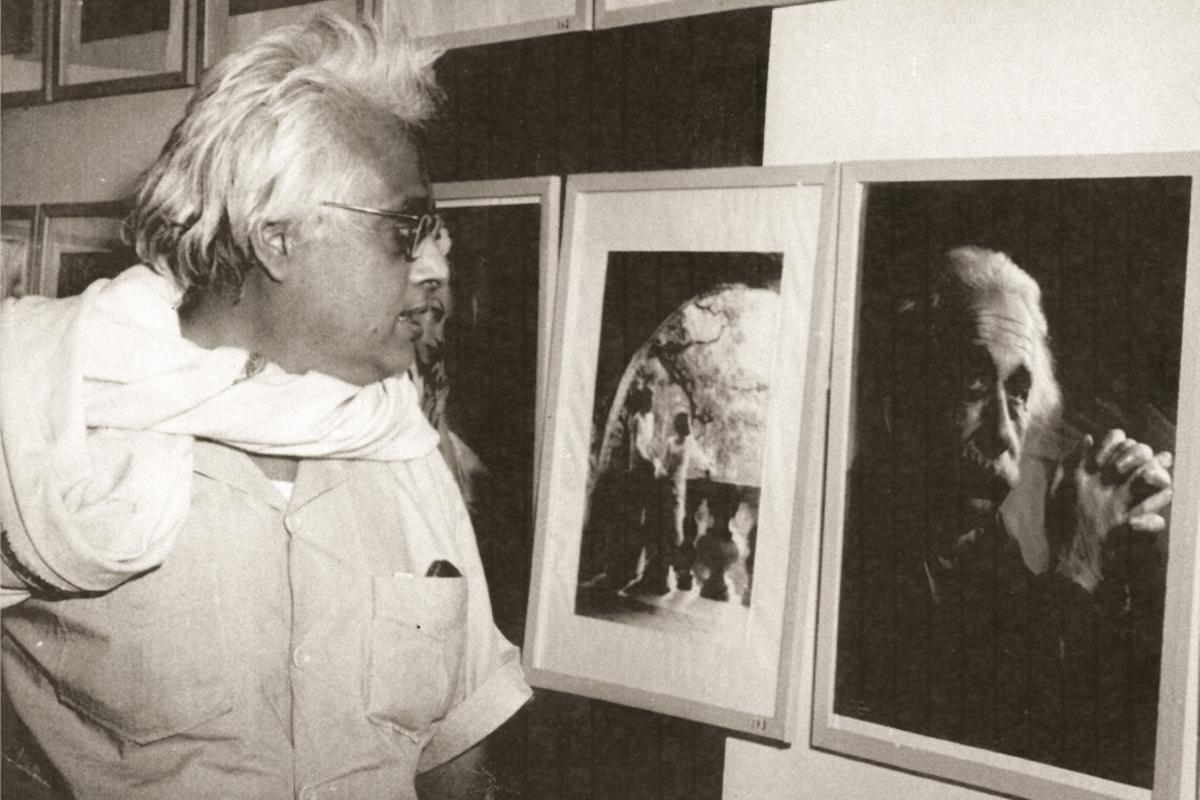
"In his letter, the 30-year-old Bose explained that he had found a more elegant way to derive one of the pivotal laws of physics (Planck's law of radiation) and asked for Einstein's help in publishing it. To Bose's astonishment, Einstein replied enthusiastically. He translated Bose's manuscript into German and arranged for it to be published in Zeitschrift für Physik, a leading physics journal of the time. Thus was born Bose-Einstein statistics, a cornerstone of quantum physics."
"In plain terms, Bose devised a new way to count and describe the behaviour of identical quantum particles, most famously, particles of light called photons. Unlike marbles or other distinguishable objects, these particles don't insist on personal space: they can crowd into the same state rather than each occupying a unique state. Bose showed that treating particles as indistinguishable leads to a new statistical lawthat correctly produces Planck's formula without taking recourse to classical physics."
On a summer day in 1924, Satyendra Nath Bose sent a paper and letter to Albert Einstein describing a new derivation of Planck's law of radiation. Einstein translated and facilitated publication, producing Bose-Einstein statistics. The statistics treat identical quantum particles as indistinguishable, allowing multiple particles to occupy the same state. Applying the idea to atoms, Einstein predicted the Bose-Einstein condensate (BEC), a state where particles clump into a single quantum state at low temperatures. BECs enable direct study of quantum behavior, new states of matter, and practical advances in quantum computing, atomic clocks, and related technologies.
Read at Aeon
Unable to calculate read time
Collection
[
|
...
]