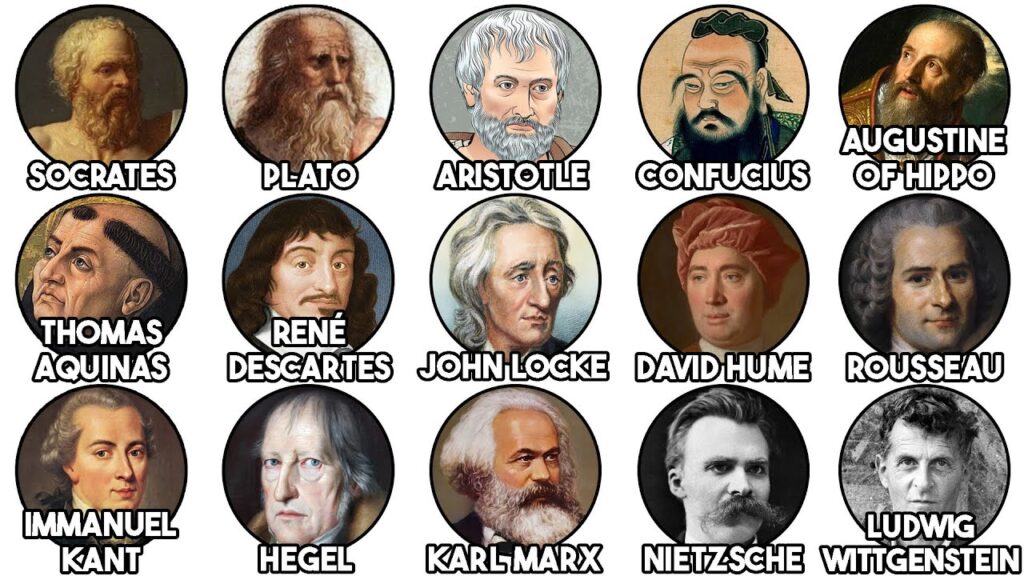
"In pursuit of truth, Socrates created the questioning method of dialogue that bears his name. Plato, Socrates' student, advocated for rule by the enlightened and the pursuit of knowledge through the contemplation of pure forms. Rejecting Plato's method, Aristotle dedicated himself to systematic empirical observation. On the other side of the world, Confucius spread teachings about the cultivation of moral virtue to maintain the social relationships he saw as the basic building blocks of civilizational order, which China eventually adopted as its state philosophy."
"The question of who are the fifteen most influential philosophers of all time may not arise at every conversation down at the pub - not outside the circle of Open Culture readers, in any case. But even among non-specialists, it could spark a livelier debate than you might imagine. Names like Socrates, Aristotle, Descartes, and Marx are known, after all, even among the general public who've never read a page of philosophical text."
"All of them appear in the million-viewed video from Jaydone History above, which takes its own crack at naming a top fifteen. Its 26 minutes also provide a brief biographical sketch of each one, informative if littered with odd mispronunciations, plus a capsulized sense of these philosophers' lasting ideas."
A list of fifteen influential philosophers is presented with short biographical sketches and condensed accounts of their lasting ideas. Socrates is credited with the questioning method of dialogue associated with his name. Plato is linked to rule by the enlightened and to pursuing knowledge through contemplation of pure forms. Aristotle is associated with systematic empirical observation. Confucius is described as teaching moral virtue cultivation to sustain social relationships that form civilizational order, later adopted in China as state philosophy. Augustine is described as synthesizing Christian theology with classical philosophy.
Read at Open Culture
Unable to calculate read time
Collection
[
|
...
]