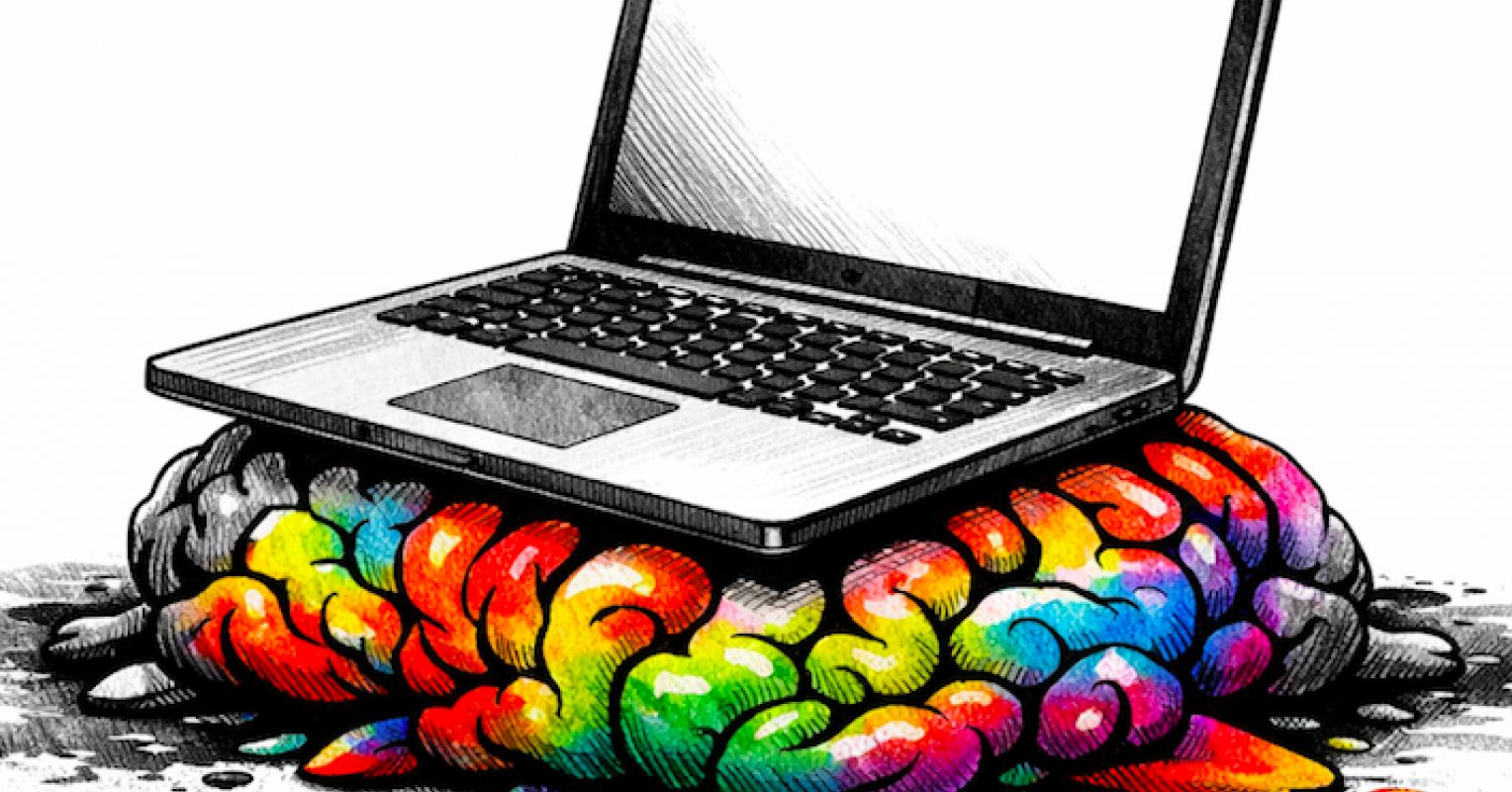
Imagination explores possibilities before knowledge settles on facts. Imagination functions as a mental searchlight, sketching tentative models and 'what if' scenarios that precede provable insight. Large language models can produce finished patterns that fit instantly, creating a resonance signal similar to hard-won understanding. That instant 'fit' bypasses the slow, generative work of picturing possibilities and may compress or eliminate the mental interval where original thought emerges. Resonance itself is an ancient cognitive mechanism experienced in sudden alignments like love at first sight. Loss of the imaginative interim could reduce the generation of novel hypotheses and weaken the cultivation of original creativity.
"In my recent post, " The Third State of Knowing," I described a new way understanding can arrive in the age of large language models. It's not through slow cognitive construction or embodied intuition, but through resonance. A finished pattern appears, it fits, and the mind experiences the same internal signal it once associated with hard-earned insight. The response to that piece was interesting. Many readers recognized this third-state feeling immediately-the clarity or even the sense of "this is exactly it.""
"Before we know, we first have to be able to picture. Every genuine act of discovery begins as a possibility that has not yet been confirmed. Imagination is the mental searchlight that sweeps across that unknown terrain and sketching shapes before they take form or are even proven. Knowledge comes later, and it's what remains after logic and experience have done their work. In that sense, imagination precedes knowledge the way a hypothesis precedes a proof."
Read at Psychology Today
Unable to calculate read time
Collection
[
|
...
]