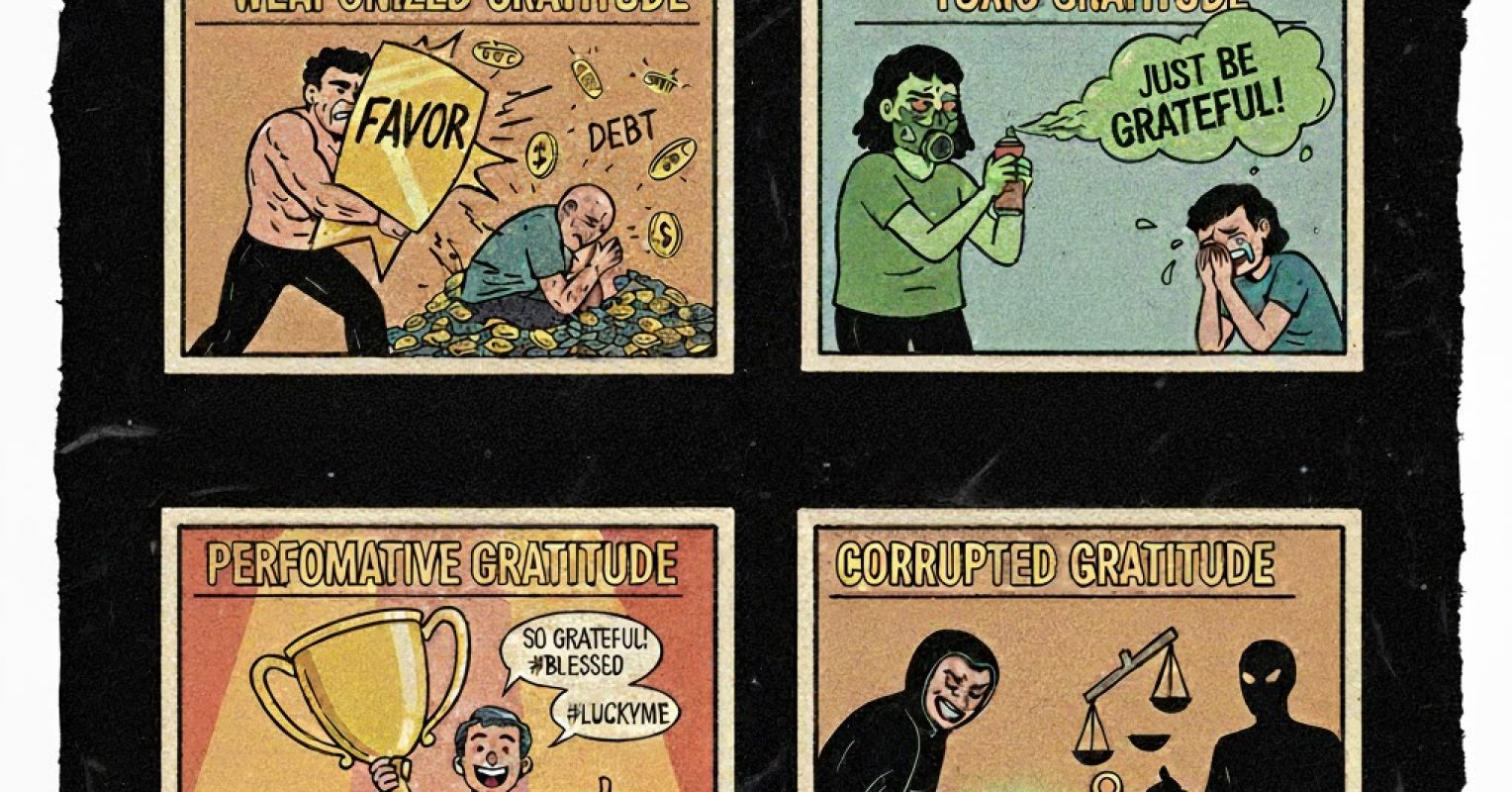
"But can gratitude become a problem? Far less attention has been paid to its dark side. Yet the idea that a virtue can, under certain circumstances, become a vice shouldn't surprise us. Aristotle observed that virtue involves doing the right thing at the right time, in the right way, with the right motive, toward the right objects and people. Context matters-and more isn't necessarily better. So let's unpack the ways gratitude can go rogue."
"Performative Gratitude Performative gratitude occurs when we express thanks not out of genuine appreciation but to burnish our social image. Like other forms of virtue signaling, it thrives on public display-especially on social media. After all, one can't boost their status without an audience. Sometimes, it's obvious, like that LinkedIn post thanking everyone who helped, which doubles as a résumé in disguise. But it can also take subtler forms-publicly thanking others not primarily to honor them, but to showcase ourselves as thoughtful and humble."
Gratitude correlates with better psychological health, lower loneliness, and increased positive social behavior. Gratitude can become problematic when expressed indiscriminately or for self-enhancement. Virtue requires acting at the right time, in the right way, with the right motive, and toward the right people; context matters and more gratitude is not always better. Performative gratitude is expressed to burnish social image, often via public display on social media, and can be driven by communal narcissism. Indiscriminate gratitude can slide into vanity, manipulation, Pollyannaism, or misplaced loyalty. The appropriate goal is not less gratitude but wisely calibrated, context-sensitive gratitude.
Read at Psychology Today
Unable to calculate read time
Collection
[
|
...
]