"Some citizens might see themselves as Christian nationalists simply because they are Christian and patriotic. Others, however, assert that the United States is rightfully a Christian nation that ought to be governed by Christian leaders, ethics and laws. As a historian, I'm aware that Christian nationalism relies upon a selective and often distorted view of American history."
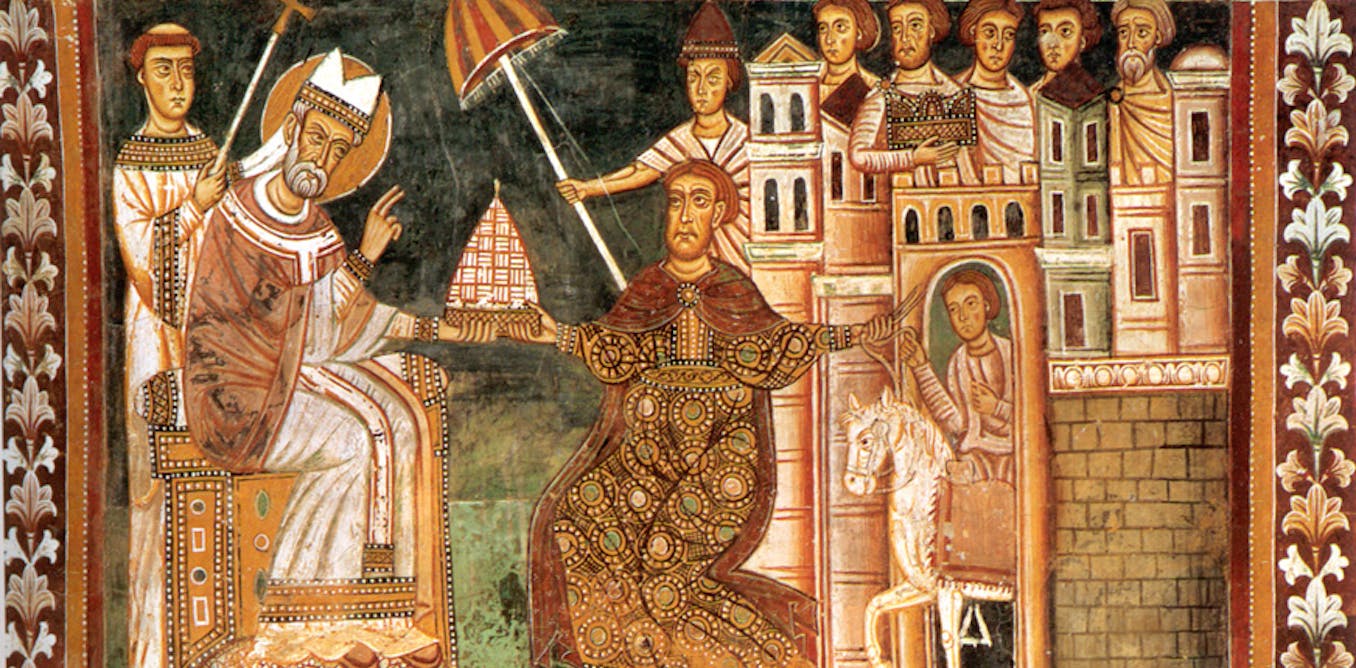
"It generally recalls a long period of time - 1,000 years, give or take - between the 'fall' of Rome around 500 C.E. and the beginning of the modern era around 1500. Christianity dominated European politics, society and culture. The Middle Ages really were an era when kings ruled in Christ's name, when the popes of Rome commanded obedience from believers around Europe, and when monasteries played a crucial role in the shaping of values and education."
Christian nationalism encompasses varying interpretations, from simply being Christian and patriotic to asserting the United States should be governed by Christian leaders and laws. This ideology often draws upon a selective and distorted understanding of American history. A related myth underlying some Christian nationalist claims involves the medieval Christian West, or Christendom, a thousand-year period from approximately 500 to 1500 C.E. when Christianity dominated European politics, society, and culture. During this era, kings ruled in Christ's name, popes commanded obedience across Europe, and monasteries shaped values and education. However, contemporary invocations of this historical period frequently employ ahistorical and romanticized interpretations.
#christian-nationalism #christendom #church-state-separation #medieval-history #historical-distortion
Read at The Conversation
Unable to calculate read time
Collection
[
|
...
]