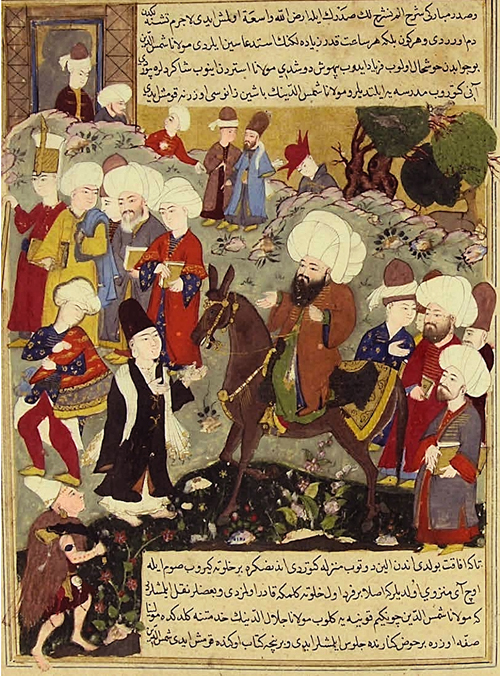
"Rumi argues that to love is to enter the unknown: to love is to empty the self of all self-knowledge entirely. He believes that emptiness is a paradoxical state of infinite fullness, allowing for the purest form of love and union with the divine."
"In the poem 'Craftsmanship and Emptiness', Rumi states that 'every craftsman searches for what's not there'—emptiness—implying that we must yearn for it rather than cling to material desires, as emptiness contains what we truly need."
Rumi, a prominent Sufi poet, posits that love requires a complete self-emptying, allowing for a deeper connection with the divine. He views emptiness not as a void but as a paradoxical state of fullness, essential for experiencing pure love. Rumi encourages embracing emptiness, suggesting it is a natural pursuit that leads to abundance and creativity. His poetry reflects on themes of love, identity, and the divine, advocating for a rejection of material attachments in favor of spiritual fulfillment through the acceptance of emptiness.
Read at Philosophynow
Unable to calculate read time
Collection
[
|
...
]