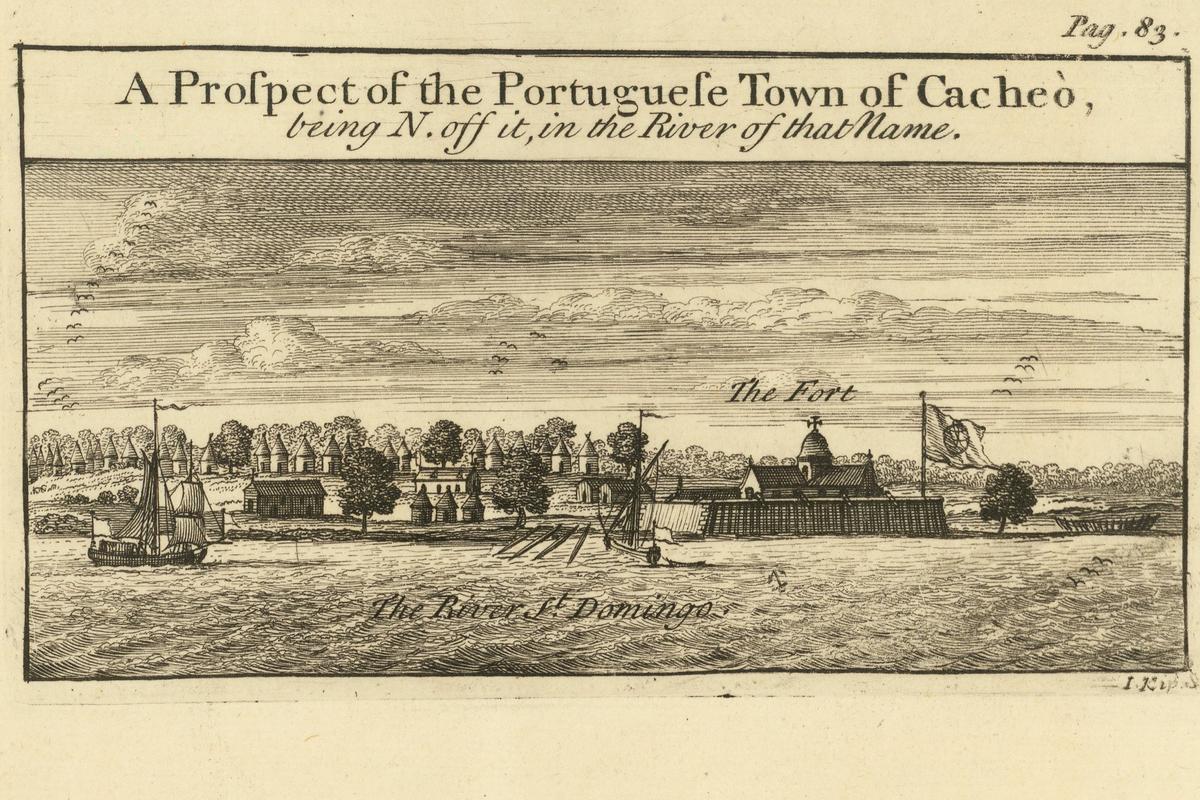
"this may be more important than ever, as shown by the history of a little-known woman from the town of Cacheu in today's Guinea-Bissau in West Africa. Crispina Peres was the most powerful trader in the town in the 1650s-60s: though readers may know little about her or about this part of the world, either now or in the distant past, it's often precisely by stepping into a little-known space that we can gain a richer sense of perspective on our own lives."
"As usually happened, the inquisitors charged Peres with heresy. Her crime was consorting with healers known as djabakós, whom she had sought to help heal her sick child. And yet, as the papers of her trial show, almost all of her accusers consulted the djabakós. For Portuguese traffickers and officials in Cacheu, Catholicism was not somehow hermetically sealed, as imperial theory demanded: it could be worshipped alongside making offerings at African shrines."
Crispina Peres was a mixed African-European woman born in the 1610s who became Cacheu's most powerful trader during the 1650s–60s. She married two successive Portuguese captain-generals and amassed wealth and influence. In January 1665 she was arrested after a conspiracy by rivals and tried by the Inquisition. The formal charge was heresy for consulting djabakós—African healers—when seeking treatment for her sick child. Trial records show many accusers also consulted djabakós and that Portuguese officials practiced Catholicism alongside African shrine offerings. Peres's blending of African beliefs with Catholic practice provoked the Inquisition's prosecution and imprisonment.
Read at Aeon
Unable to calculate read time
Collection
[
|
...
]