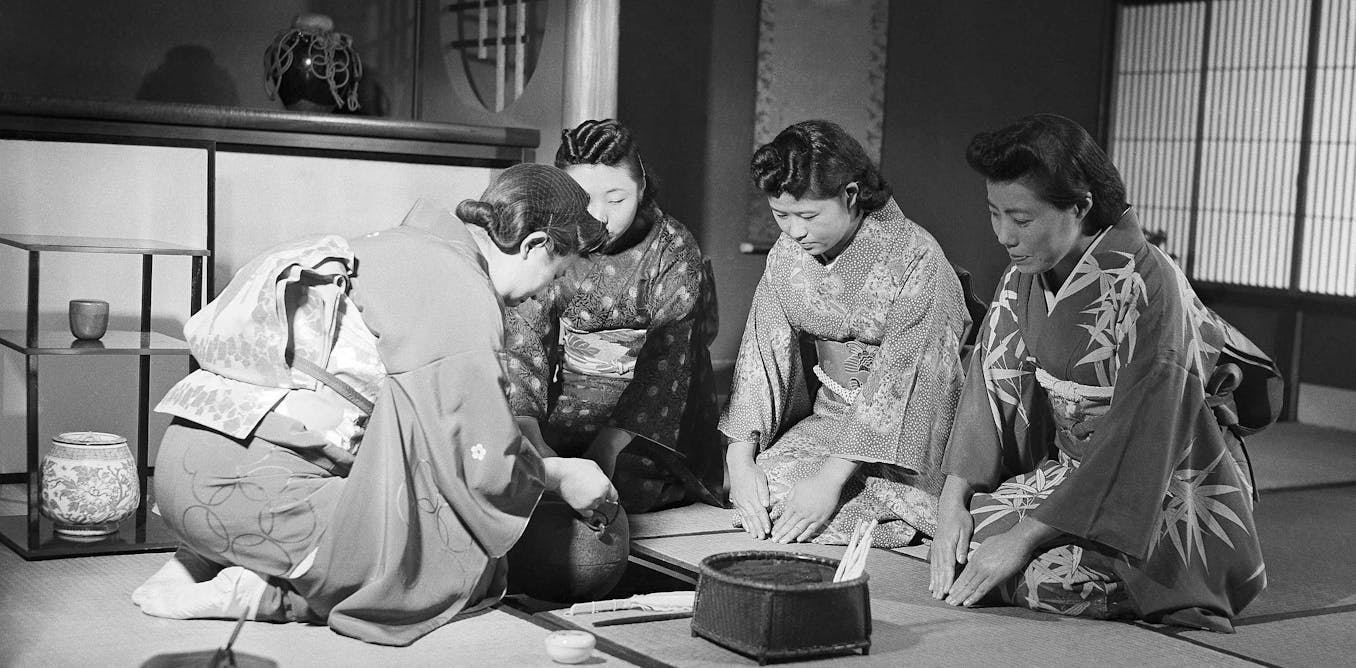
"One of Japan's most recognizable cultural practices - the Japanese tea ceremony, known as chanoyu, or chadō - is being reshaped by tourism, wellness culture and social media. Matcha, the Japanese powdered green tea that is used during the ceremony, has entered the global marketplace. Influencers post highly curated tearoom photos, wellness brands market matcha as a "superfood," and cafés worldwide present whisked green tea as a symbol of mindful living."
"The Japanese tea ceremony is deeply rooted in the ideals of Zen Buddhism, but the current matcha hype has little to do with the tea ceremony. Green tea has become part of the on-the-go coffee culture. On social media, a centuries-old spiritual practice is compressed into a 15-second reel. As a scholar of premodern Japanese literature and culture, I know that this commercialization is not without tension. The reflective values of the Japanese tea ceremony trace their origins to a monastic routine."
Matcha has moved from a monastic Zen ritual into a global consumer trend shaped by tourism, wellness marketing and social media. Influencers and cafes present whisked green tea as a symbol of mindful living while wellness brands promote matcha as a superfood. Tea arrived in Japan from China in the eighth century and powdered tea was served to Buddhist monks by Emperor Shōmu in 729 C.E. The Zen monk Eisai brought matcha seeds and ritual knowledge from China around the end of the twelfth century, after which matcha spread through monasteries and into the warrior class.
Read at The Conversation
Unable to calculate read time
Collection
[
|
...
]