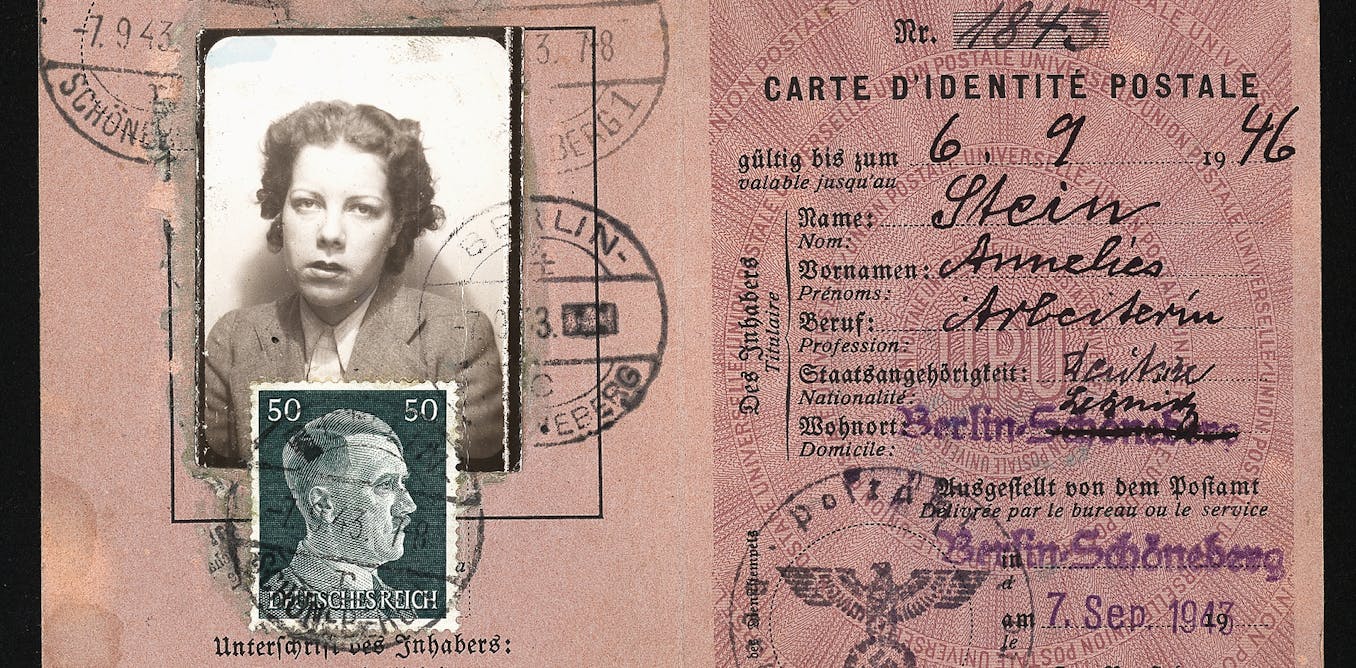
Jewish women often used passing as non-Jews during the Holocaust to survive and to participate in resistance. Some adopted cultivated Aryan appearances and false papers to cross ghetto borders, carry weapons, papers, or messages, and secure food or shelter. Gendered perceptions made passing more feasible for many women than for men, enabling work as domestic servants, movement between cities, and temporary safety. Most who passed did so primarily to stay alive under systemic threat of murder. Survivors frequently described passing as daily, pragmatic strategies rather than extraordinary heroism. Individual stories include Hela Schüpper Rufeisen and Blanca Rosenberg.
"During the Holocaust, trying to "pass" as non-Jewish was often more feasible for women than men. Some Jewish women, like Schüpper Rufeisen, took the risk in order to join resistance efforts against the Nazis and their collaborators. Most Jews who tried to pass, however, did so simply to remain alive in a system designed to murder them. Passing took many forms."
"It enabled some women to transport weapons, papers or messages, while allowing others to work as domestic servants, move between cities, secure food or sleep safely for another night. What united these experiences was the pressure of living under constant threat. Blanca Rosenberg escaped the Kolomyja ghetto - then Polish, now part of Ukraine - in 1942. As she recalled afterward,"
Read at The Conversation
Unable to calculate read time
Collection
[
|
...
]