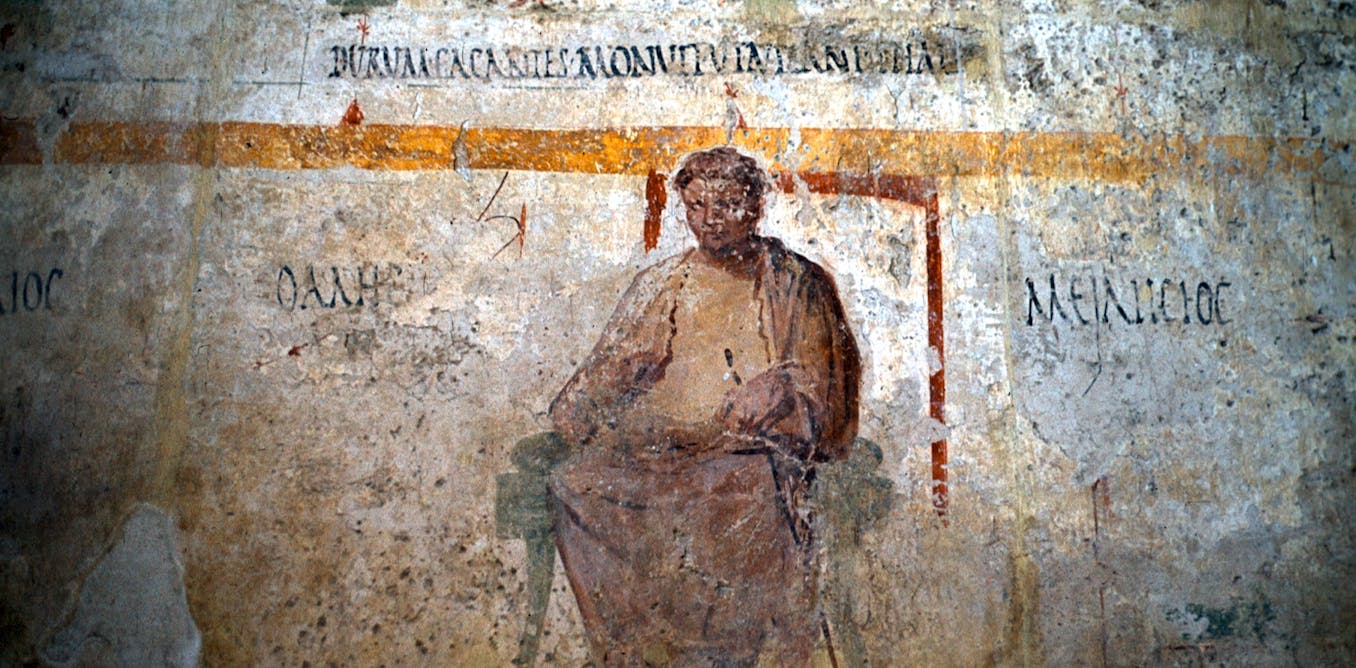
"The lone ancient Greek thinker who believed Earth orbits the Sun - Aristarchus of Samos - was universally dismissed by his contemporaries. Because these scientific beliefs are so different from our own, it may seem we have nothing to learn from long-dead scientists. However, thinkers 2,500 years ago already faced many problems that are today amplified by social media and artificial intelligence (AI), such as how to tell truth from fiction."
"Almost every ancient scientific text offers advice about observing or collecting data before making a decision. For example, in a 1st century CE text about astronomy, author Marcus Manilius explains that his scientific predecessors learned via detailed, long-term observations. He says they observed the appearance of the whole night sky and watched every star return to its original place [...] by doing this repeatedly, they built up their knowledge. Ancient astronomers, Manilius says, would look around and gather evidence before drawing any conclusions."
Ancient scientific beliefs often differ markedly from modern science, producing easily dismissed claims such as Earth suspended on water and bizarre medical remedies. Some innovators, like the early heliocentric proponent, were rejected by contemporaries. Thinkers 2,500 years ago confronted challenges in separating truth from fiction, challenges now amplified by social media and artificial intelligence. Ancient practice emphasized careful, repeated observation and data collection before drawing conclusions. Detailed, long-term observation of the night sky built knowledge about stellar positions. Ancient thinkers urged skepticism toward claims unsupported by evidence and warned about misleading information sources.
Read at The Conversation
Unable to calculate read time
Collection
[
|
...
]