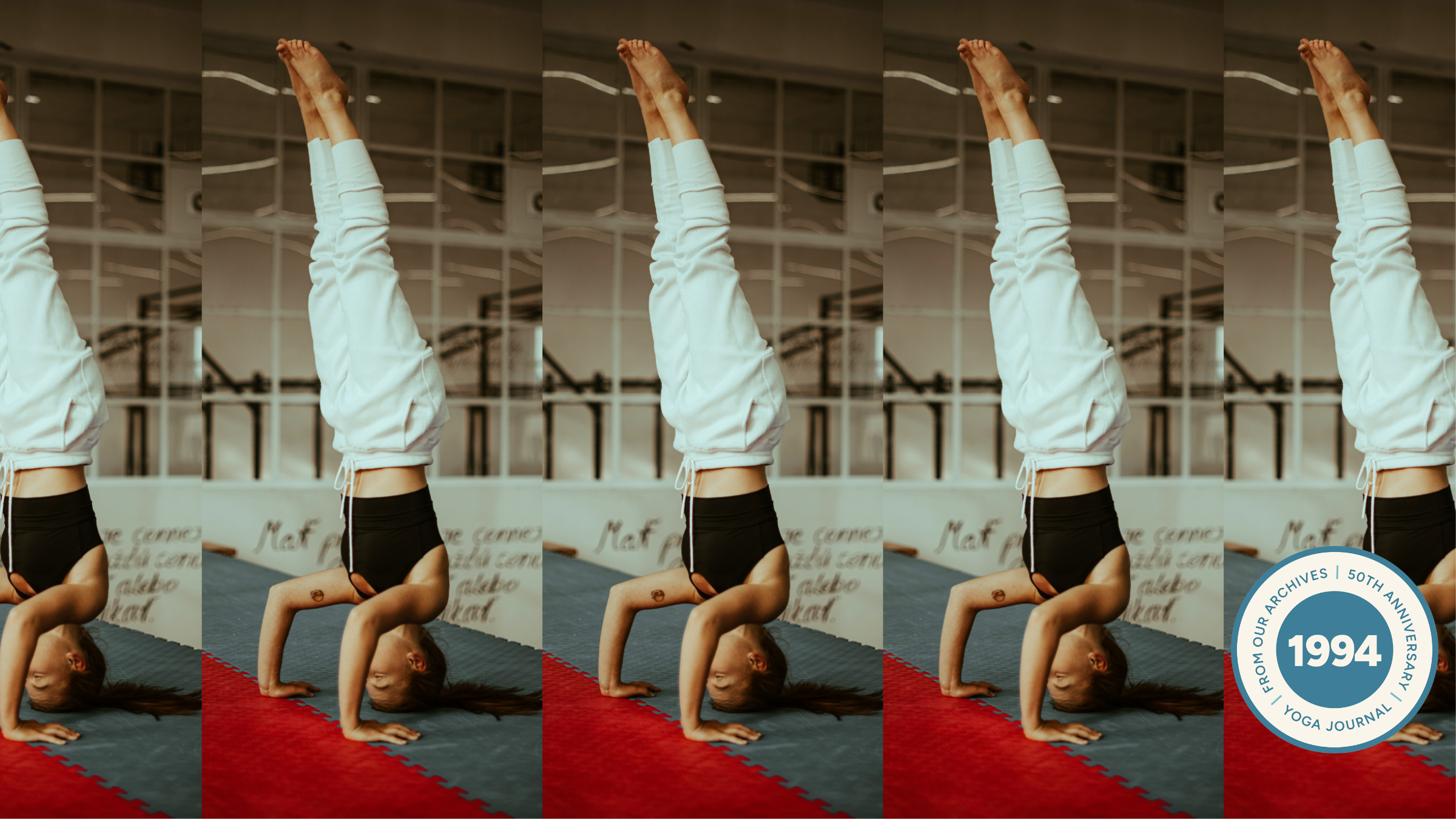
Headstand (Sirsasana) became widely associated with yoga during early popularization in America. The posture is described as unusual and precarious, often imagined as something practiced privately. Ancient yogis connected headstand and shoulderstand (Sarvangasana) with physiological effects that support health, well-being, and longevity. They believed the pineal gland acted as a cooling, lunar agent that secreted amrita, an immortality fluid. In upright posture, amrita was thought to drip down and be burned away by the solar plexus. Turning the body upside down, preferably for long periods, was believed to retain amrita as a regenerative elixir. Ancient yoga aimed primarily at purification rather than modern health outcomes.
"During the initial popularization of yoga in America in the 1960s, Headstand, or Sirsasana, became virtually synonymous with the word “yoga.” The kind of bizarre but impressive behavior usually associated with an eccentric aunt, it was considered best practiced behind closed doors. And to be fair, Headstand is a weird position to put the body into, when you consider the likelihood in the course of the average day of finding yourself precariously balanced upside down on a part of the anatomy usually reserved for hats."
"Both Headstand (Sirsasana) its counterpart Shoulderstand (Sarvangasana) and have powerful physiological effects that contribute to overall health, well-being, and longevity. Although there are plenty of Western explanations for how these poses might evoke such results, the ancient explanation is perhaps the most intriguing. Yogis thought that the pineal gland in the head-which they viewed as a cooling, or “lunar,” agent secreted a special fluid of immortality called amrita, which in upright posture would drip down and be burned away by the solar plexus."
"By turning the body upside down, preferably for long periods, the amrita might be retained as a regenerative elixir, creating vibrant, glowing health. But health and longevity-obsessed as we are with these qualities today-were not the primary focus or concern of the ancient yogis. The fundamental intention of all yoga practices, from devotional chanting and meditation to pranayama and asana practice, was to purify an"
Read at Yoga Journal
Unable to calculate read time
Collection
[
|
...
]