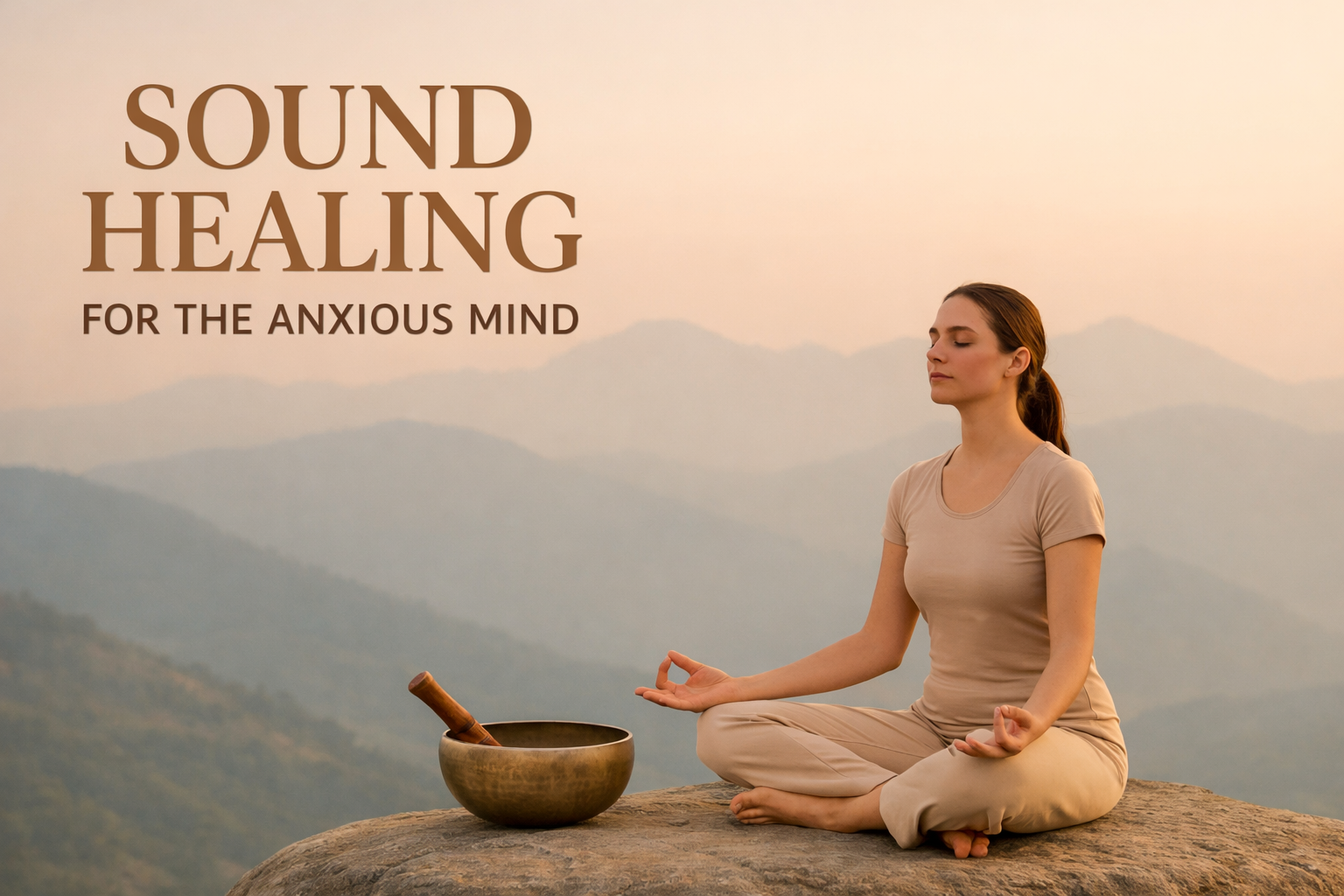
"In a world that never stops talking, your mind can often feel like an overcrowded room. If you are struggling with anxiety, you know that the "noise" isn't just external; it's a persistent, jagged frequency within your own body. Perhaps you've tried traditional meditation only to find that the silence is too loud, or your racing thoughts simply won't be still."
"Anxiety is not merely a "mental" issue; it is a physiological state of being out of sync. When you are anxious, your nervous system is in a state of sympathetic dominance, more commonly referred to as the "fight or flight" response. Your heart rate is elevated, your breath is shallow, and your brain is firing high-frequency Beta waves (13-30 Hz)."
"Our brains have a natural tendency to synchronize with external rhythmic stimuli, a process known as brainwave entrainment. When you listen to the sustained, low-frequency tones of a Tibetan singing bowl or a gong, your brain begins to "downshift". Alpha Waves (8-12 Hz): These move you into a state of relaxed alertness and light meditation. Theta Waves (4-8 Hz): This is the "twilight state" where deep emotional healing and profound relaxation occur."
Anxiety reflects physiological nervous system dysregulation characterized by sympathetic dominance, elevated heart rate, shallow breathing, and high-frequency Beta brainwaves. Sound therapy uses sustained low-frequency tones from instruments such as Tibetan singing bowls and gongs to induce brainwave entrainment, encouraging alpha (8-12 Hz) and theta (4-8 Hz) rhythms linked to relaxation and deep emotional processing. Physical vibrations from sound instruments stimulate the vagus nerve, engaging the parasympathetic nervous system. Research by Goldsby et al. (2017) found that a 60-minute sound healing session can significantly reduce tension and physical pain and shift the body out of survival mode.
Read at YOGMAY
Unable to calculate read time
Collection
[
|
...
]