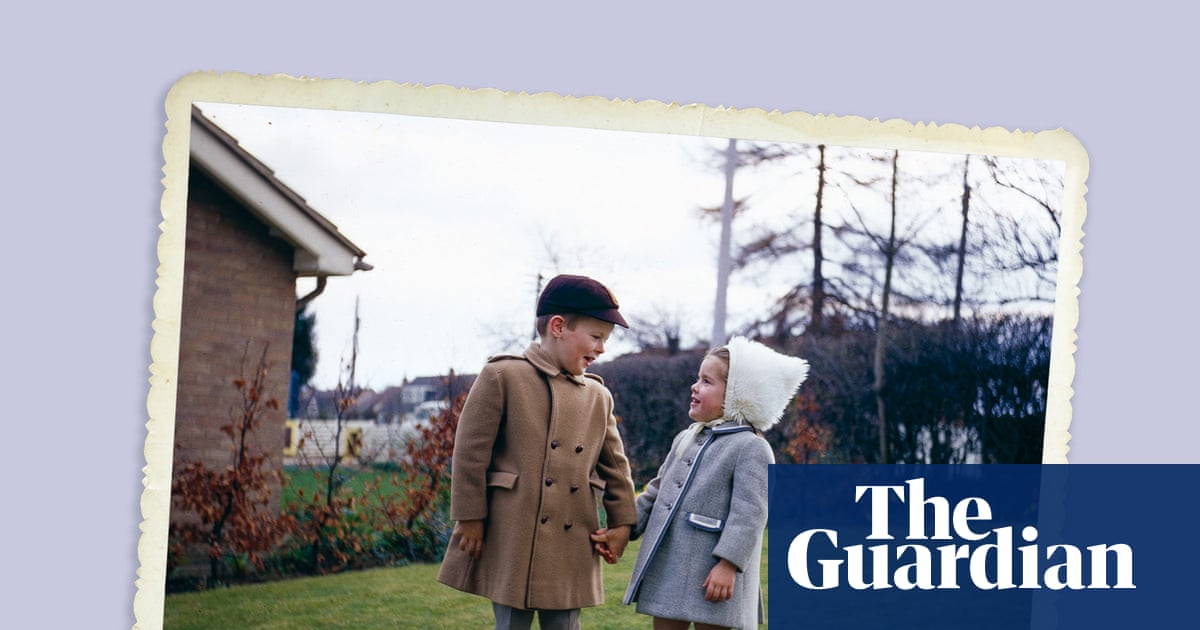
"cardiganed grandmothers eating roadside picnics beside Morris Minors, pale men sunbathing in shoes and socks on stripy deckchairs, Raleigh Choppers and caged budgerigars and faux leather pouffes I feel a wave of what can't properly be called nostalgia, because the last thing I'd want is to return to that age and those places where I was often profoundly unhappy and from which I'd have been desperate to escape if escape had been a possibility."
"Is it that, as children, we live inside a bubble of focused attention that gives everything inside a memorable fierceness? The way one could lie, for example, on a lawn and look down into the jungle of the grass to see earwigs and woodlice lumbering between the pale green trunks like brontosauri lumbering between the ferns and gingkos of the Late Jurassic."
"I lived, for the first 15 years of my life, with my parents and Fiona, my younger sister, at 288a Main Road, New Duston, on the outskirts of Northampton. Dad didn't design it but it was an architect's house nevertheless, a hint of Scandinavian modernism in the external wood panelling, the semi-open-plan ground floor and the boxy glass lobby. Hinged, teak double doors separated the dining room and a living room dominated by an uncarpeted staircase with open risers."
Washed-out photographs of English life in the 60s and 70s can evoke a complex longing that differs from true nostalgia because returning to those times would be undesirable. Childhood perception concentrates attention and amplifies sensory details, turning grass into jungles, bedspreads into mountain ranges and toys into aerial landscapes. Constant objects and household fixtures offer consolation amid unpredictable, distant or unloving adults. A specific childhood home combined Scandinavian influence, a semi-open-plan layout, teak doors, a sandstone chimney breast and a Philips radiogram that played jazz and pop, anchoring memory through sound and material presence.
Read at www.theguardian.com
Unable to calculate read time
Collection
[
|
...
]