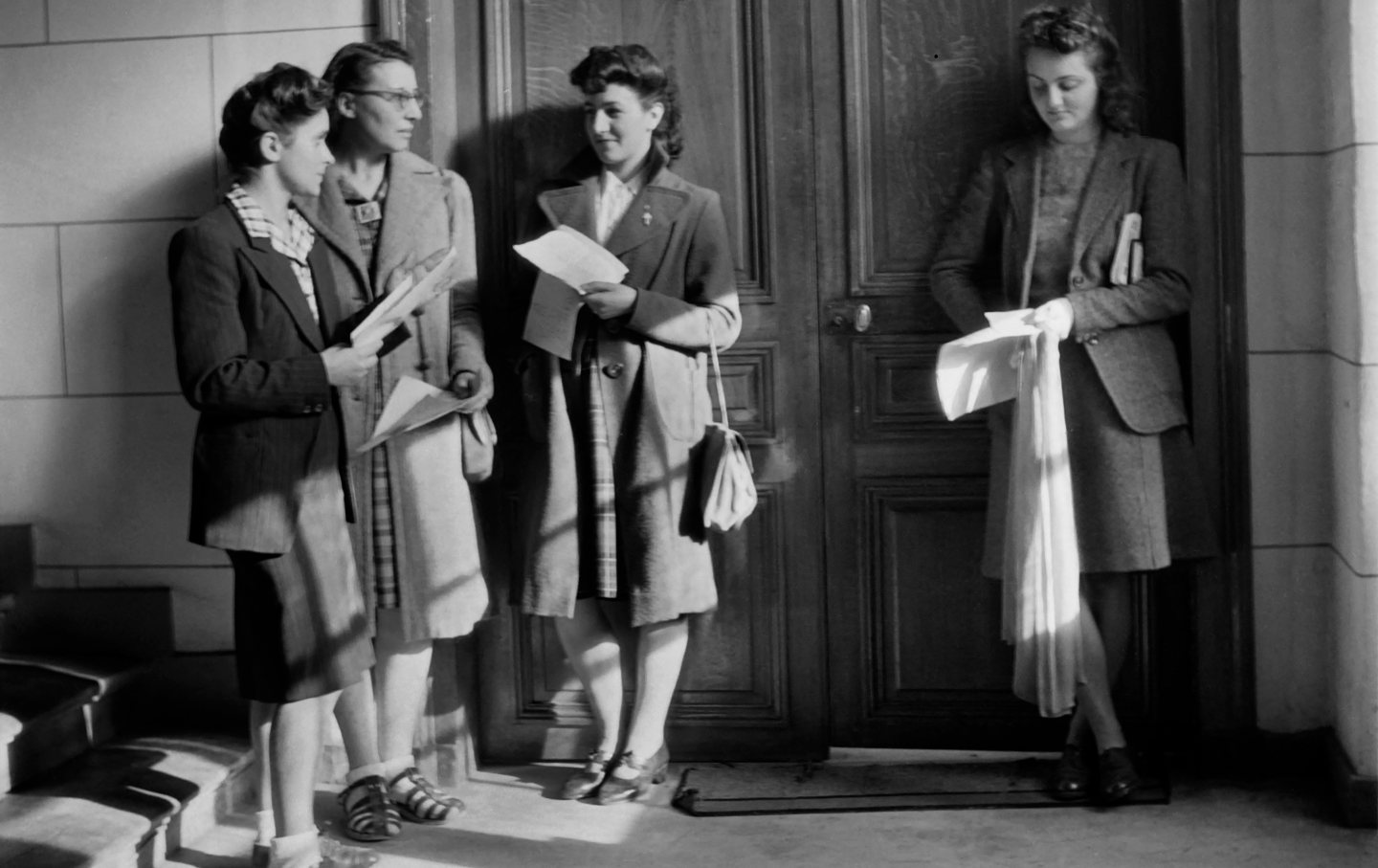
"The most militant people I've ever met have been women in mourning. They grieve in anger and with purpose. Women in mourning know that there are no times of peace; no reprieves from suffering. There are only the times when they're expected to behave as though they believe peace to be possible even if there is demonstrable proof of the opposite."
"It is in the book's first section where mourning is written as a feeling that reshapes one's world and worldview. According to Duras, these first pages are a diary of the days she spent waiting to find out if her husband, Robert Antelme, had survived after being arrested and deported to a concentration camp for being a member of the French Resistance."
"Duras disowns the memoir before giving it to us. She claims to have found it in her home in Neuphle-le-Chateau, but with 'no recollection of having written it.' The exercise books found in her blue cupboards are hers, she knows. She knows the people and places written in there; she recognizes her own handwriting. And yet, 'I can't see myself writing the diary.'"
Marguerite Duras's 1985 work 'The War' explores mourning as a transformative emotional force that reshapes worldview and identity. Published 40 years after World War II, the book combines memoir, found texts, and fiction across three chapters, centering on Duras's experience waiting for news of her husband Robert Antelme's survival after his arrest and deportation to a concentration camp for Resistance activities. The opening section presents a diary from April 1945, documenting her anguish during the liberation of camps while uncertainty persists about Antelme's fate. Duras distances herself from the discovered manuscript, expressing disorientation about its authorship despite recognizing her handwriting and the intimate details within, suggesting profound psychological displacement caused by grief.
Read at The Nation
Unable to calculate read time
Collection
[
|
...
]