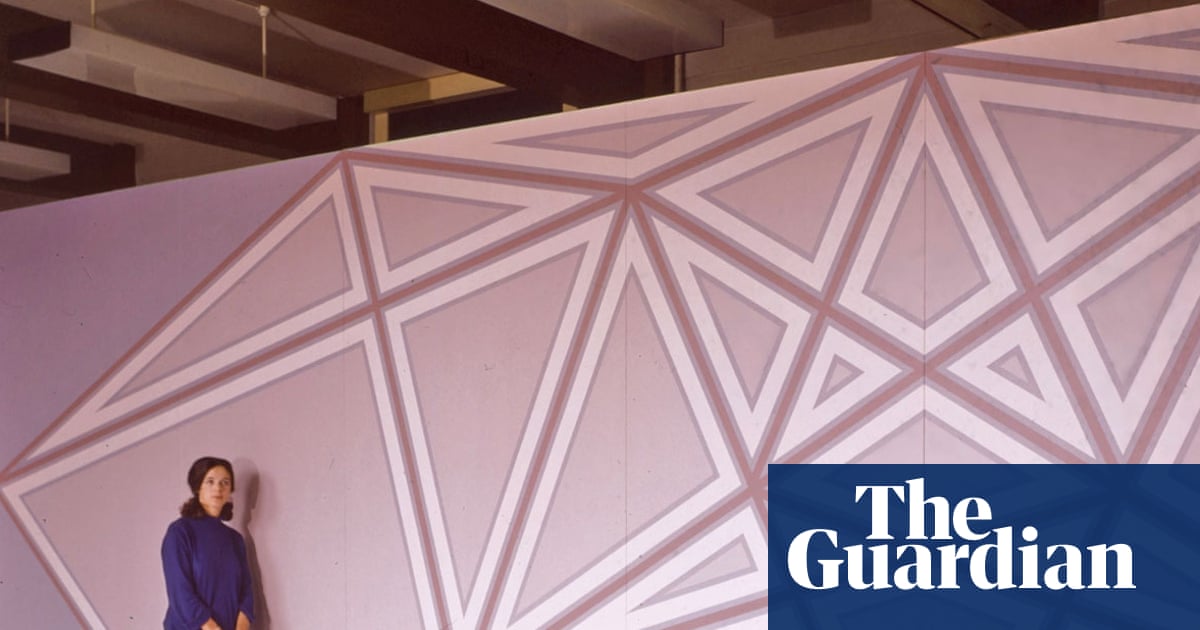
In 1960, Tess Jaray traveled to Italy on a scholarship from the Slade School of Fine Art. In Florence, she was deeply affected by buildings by Brunelleschi, Bramante, and Alberti, despite earlier focus on painters like Giotto and Duccio. She later concluded that creating space defines selfhood and offers protection. This insight shaped her art, especially her move toward abstraction. In the late 1950s, exhibitions at the Tate introduced non-figurative American painting to London, changing British art. By 1962, Jaray produced abstract works with architectural allusions, using flat geometric lines that also suggested movement, leading to frequent misunderstandings.
"Going to Italy was like opening a door into paradise. It was truly shocking, in a wonderful way. Suddenly seeing, and moving in and around, buildings by Brunelleschi, Bramante and Alberti I didn't understand why one should be so affected by these extraordinary spaces. It took many years before I grasped that creating space is how we define ourselves, how we protect ourselves. This revelation would shape Jaray's art."
"Nobody who heard Gombrich speak has ever forgotten it, Jaray recalled 60 years later, but he never talked about architecture. Jaray arrived in Florence with her head full of painting, of Giotto and Duccio and Cimabue. It was not these, though, who were to move the 22-year-old student most. The buildings by Brunelleschi, Bramante and Alberti became the lasting influence."
"In the late 1950s, a series of exhibitions introduced non-figurative American painting to an awe-struck London. Shows such as Modern Art in the United States (1956) and The New American Painting (1959), both at the Tate, changed British art overnight. It was slightly annoying that the Americans should have done it first, but there you are, Jaray told the Art Newspaper in 2023. They were serious people."
"By 1962, Jaray was making abstract paintings with such allusive titles as Cupola Blue that did not replicate architecture so much as evoke it. The work's geometric lines were both insistently flat and suggestive of movement, a duality that sometimes led to Jaray being mis"
Read at www.theguardian.com
Unable to calculate read time
Collection
[
|
...
]