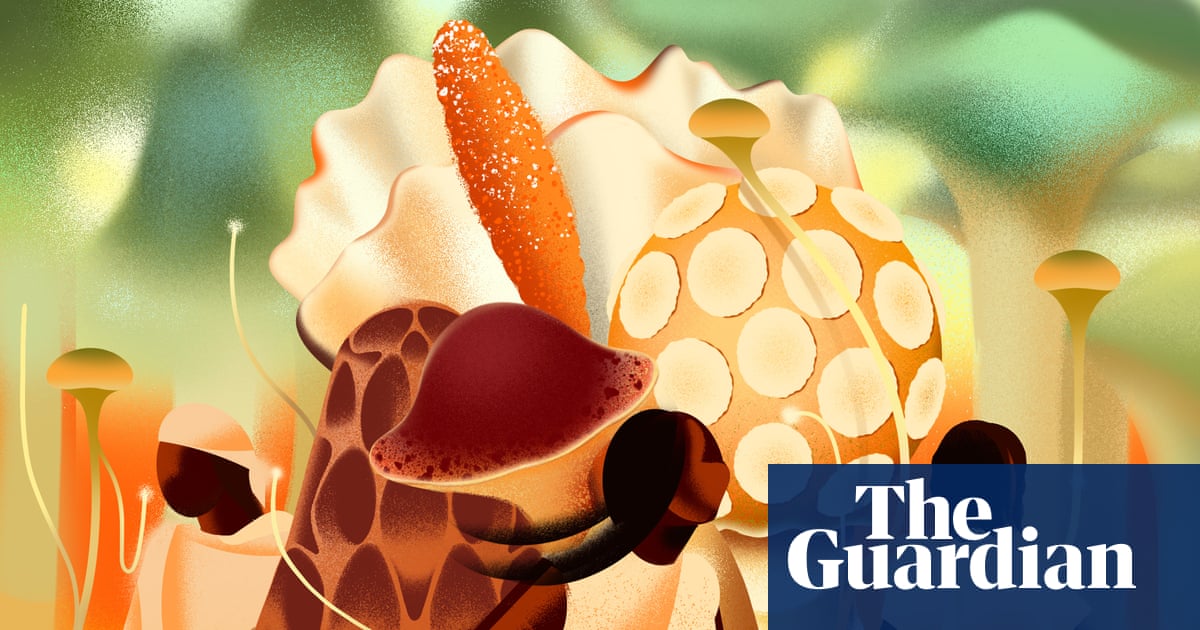
Maria Pinto encountered a glowing yellow American yellow fly agaric mushroom during a walk in Newton, Massachusetts, and became deeply interested in mycology. She later dedicated much of her life to studying fungi and exploring how the African diaspora connects to mushrooms. In her book Fearless, Sleepless, Deathless, she interviewed Black people growing and documenting mushrooms throughout the Americas. Mycology has expanded as citizen scientists help identify new species, since only a small fraction of Earth’s estimated fungal species have been described. Fungi research remains relatively new in biology, with fungi recognized as a distinct kingdom only in 1969. Black mushroom enthusiasts contribute to understanding fungi and human relationships to them, often working in isolation.
"It was the first time Pinto was enthralled by a mushroom — the American yellow fly agaric, a poisonous fungus that is relatively common where Pinto lives in Massachusetts. It forced me down on my knees to examine it further, because it didn't look real, Pinto, a naturalist and writer, said. It looked like it was from another dimension. On that day in 2013, she captured the mushroom from dozens of angles on her phone."
"More than a decade later, Pinto has dedicated much of her life to mycology, the burgeoning study of fungi. As a Jamaican American woman, Pinto stands apart in the mostly white hobby through her pursuit of exploring the African diaspora's connection to mushrooms. In her recent book, Fearless, Sleepless, Deathless: What Fungi Taught Me about Nourishment, Poison, Ecology, Hidden Histories, Zombies, and Black Survival, Pinto interviewed Black people who are growing and documenting mushrooms throughout the Americas."
"Mycology has flourished in recent years, with citizen scientists, or amateur researchers, often leading the way in identifying new species owing to the small number of professional mycologists. Only about 5% of an estimated 3m species of fungi on Earth have been described, leaving a wealth of discovery for the curious. The study of fungi — including molds, yeast and mushrooms — is still relatively new; fungi wasn't recognized as a distinct kingdom in biology until 1969."
"We exist, but in isolation around the country, Pinto said about Black mushroom lovers. I think there are definitely efforts to mitigate that, or to actually get us together, but n"
Read at www.theguardian.com
Unable to calculate read time
Collection
[
|
...
]